About this place
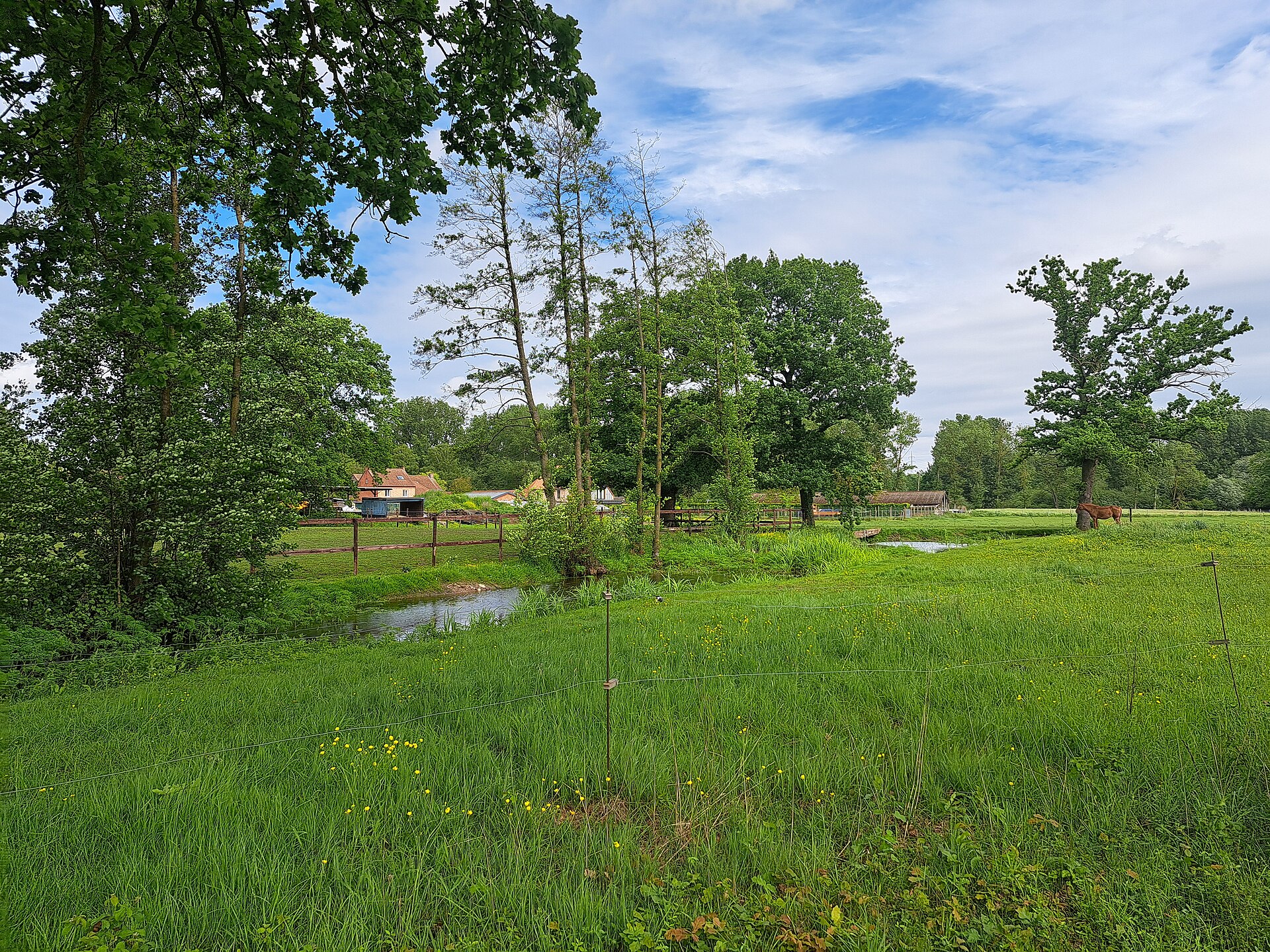
Dauteweyers is a small but ecologically rich cluster of ponds in Diepenbeek, in the Belgian province of Limburg. Covering roughly 11 hectares, the area lies northeast of the town centre, near Sint-Servatiusstraat and the hamlet of Lutselus. It's one of those quiet corners of Flanders where an industrial past has quietly given way to a thriving refuge for rare wildlife.
Where did these ponds come from?
The chain of ponds strung along the Dautebeek stream isn't a natural formation — it dates back to the 18th century, when iron ore was mined in the area. The old excavation pits gradually filled with water, creating the distinctive string of pools still visible today. The name "Dauteweyers" most likely derives from "De oude wijers," Dutch for "the old ponds," a name already used for the site on the Ferraris map of 1769, one of the earliest detailed surveys of the territory that is now Belgium.
Why is this place so valuable for nature?
Dauteweyers is an exceptionally water-rich area, which makes it an important habitat for both birds and amphibians. Together with the neighbouring Pomperik-Dorpsbemden area, it forms a connected ecosystem within the Demer valley in Diepenbeek. The ponds and surrounding meadows support close to 70 species of breeding birds, ranging from common wetland residents to species that depend on clean, undisturbed water.
The area's real claim to fame, however, is its amphibians. The clean water of Dauteweyers has created ideal conditions for one of the rarest amphibians in the country: the European tree frog. It's a species highly sensitive to habitat quality, and its presence here is a strong indicator of how well-preserved this ecosystem is. Alongside the tree frog, the ponds are also home to other rare amphibians, including the fire-bellied toad, a species protected across Europe due to shrinking wetland habitats.
Who looks after the area?
Dauteweyers is managed by Natuurpunt, Flanders' largest nature conservation organisation. Its ongoing work — maintaining the ponds, managing water levels, and keeping invasive vegetation in check — is what has allowed such sensitive species as the tree frog to keep breeding here year after year.
What can visitors do here?
The area is freely accessible year-round via a network of walking paths that wind through the site and around the ponds. It's a spot that suits both Diepenbeek locals looking for a short walk close to home and birdwatchers or nature photographers, particularly in spring and early summer when breeding birds and amphibians are most active. With no heavy tourist infrastructure and a genuinely calm atmosphere, Dauteweyers rewards visitors looking for nature without the crowds.
Frequently asked questions
Is entry to Dauteweyers free? Yes, the area is open to the public and can be visited free of charge throughout the year.
How large is Dauteweyers? The area covers approximately 11 hectares.
Where does the name Dauteweyers come from? It likely derives from the Dutch "De oude wijers" ("the old ponds"), a name already recorded for the site on a 1769 map.
What wildlife can be seen here? Around 70 species of breeding birds, along with rare amphibians such as the European tree frog and the fire-bellied toad.
Who manages the site? The Belgian nature conservation organisation Natuurpunt.
Nearby places

Earn badges for the places you visit
Download NextOnTrip, discover new places and check off your trails.