About this place
De Maten is one of the oldest nature reserves in Flanders, spreading across the countryside between the towns of Genk and Hasselt in the Belgian province of Limburg. Covering more than 500 hectares, it forms part of the larger De Wijers pond network and is protected under the Natura 2000 framework, reflecting its importance for regional biodiversity.
How did the ponds come to be?
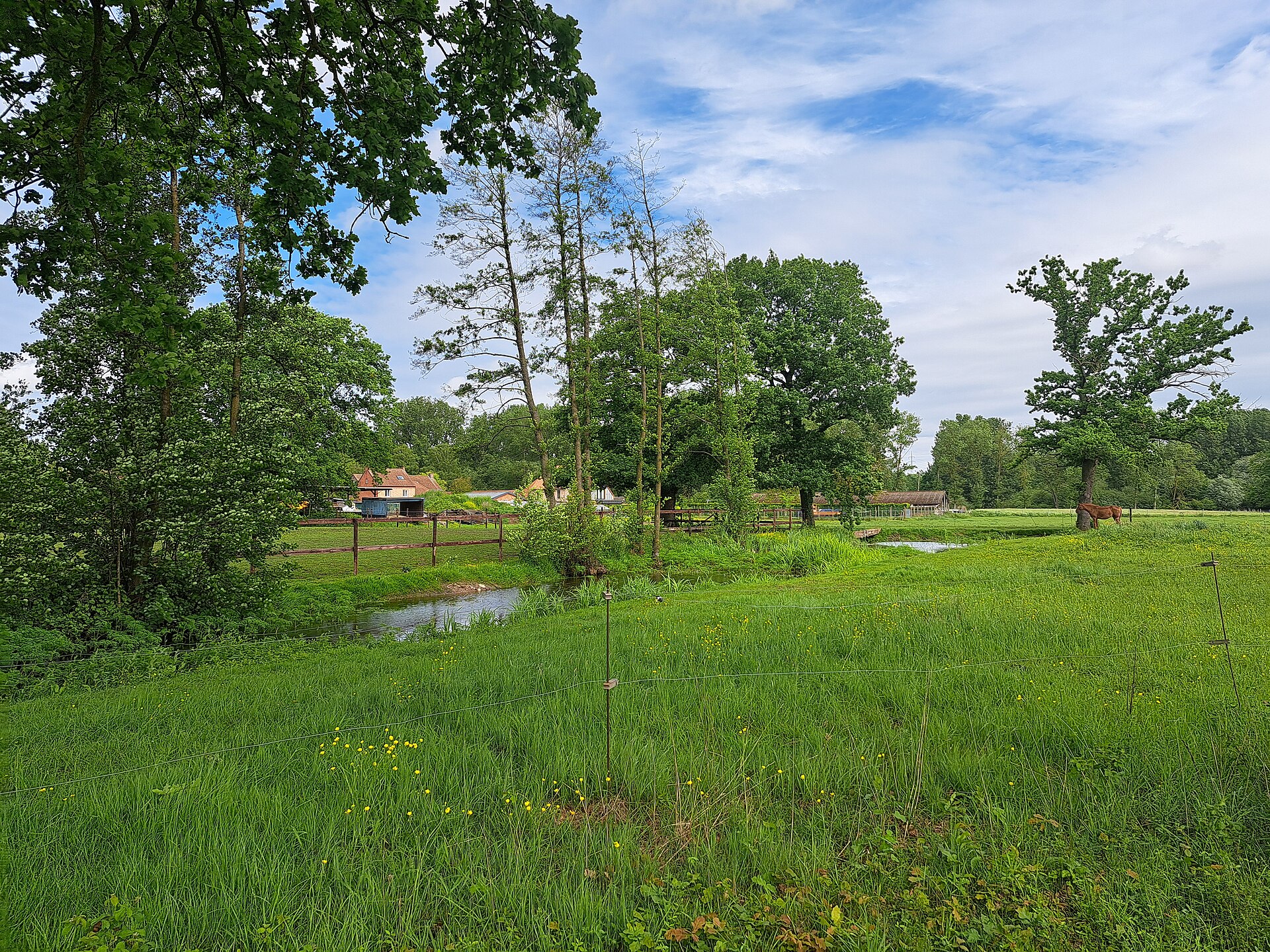
The landscape of De Maten was shaped by human hands centuries ago. Back in the early Middle Ages, heathland farmers began building small dikes across a brook that ran between two sandy ridges, creating the first modest ponds in the valley. The name De Maten already appears in written records dating back to 1437, pointing to the area's long history. Over time, further damming of the Stiemerbeek stream produced long chains of ponds along the valley, which were used to raise fish for food — a tradition whose traces are still visible in the layout of the reserve today.
What is there to see?
De Maten is a patchwork of heathland, wetlands, wooded patches, and numerous ponds fringed with reed beds. This variety of habitats makes it a haven for many species of water and marsh birds. The extensive reed fields provide breeding grounds for birds such as the bluethroat and reed bunting, while the ponds — including the Augustijnenvijver — serve as an important resting point for migratory birds passing through on their journeys south or north. With a bit of patience and luck, visitors watching from the viewing platforms may even spot a bittern, a notoriously shy and rarely seen bird.
How can visitors explore the reserve?
A network of marked walking trails runs through De Maten, with different colour codes indicating different route options, so visitors can choose a walk that matches their time and energy. The paths alternate between open heathland and the banks of ponds lined with reeds swaying in the wind. The terrain is largely flat, with no significant changes in elevation, making it accessible to walkers of varying fitness levels, including families with children. The area is also crossed by the De Wijers cycling route, signposted with numbered junction points, offering another way to discover the reserve on two wheels.
Why is De Maten worth a visit?
De Maten combines natural and historical value: a landscape once shaped by medieval fish farming now serves as a refuge for birds and other wetland-dependent species. Its calm atmosphere, abundance of water, and rich birdlife make it a draw both for birdwatchers and for anyone looking for a peaceful walk away from the bustle of nearby Genk and Hasselt.
Frequently asked questions
Where exactly is De Maten located? The reserve lies in the province of Limburg, between the towns of Genk and Hasselt in Flanders, Belgium.
How large is the reserve? It covers more than 500 hectares and forms part of the De Wijers pond complex.
Can visitors go birdwatching there? Yes, the area is especially valued by birdwatchers — its ponds and reed beds attract both breeding and migratory birds, and species such as the bittern can sometimes be spotted from the viewing platforms.
How did the ponds in De Maten originate? They were created by farmers damming the Stiemerbeek stream as early as the Middle Ages, originally for fish farming.
Is the reserve suitable for families with children? Yes, the terrain is flat and the marked trails allow visitors to choose a walk length that suits the group.
Nearby places

Earn badges for the places you visit
Download NextOnTrip, discover new places and check off your trails.