About this place
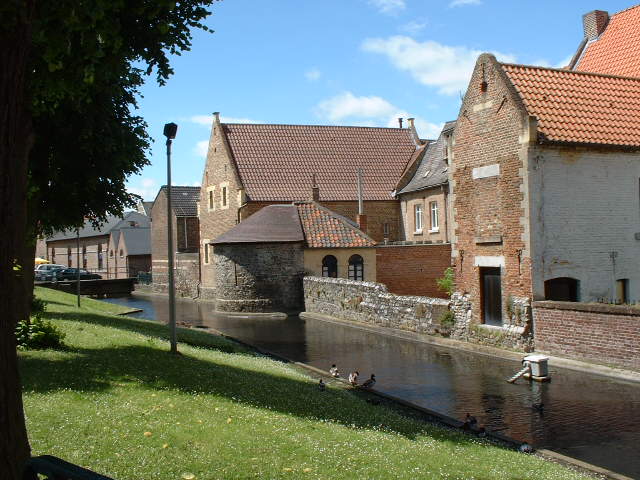
Blaarmolen is a historic watermill standing on the Jeker river, within the Belgian municipality of Tongeren-Borgloon, close to the former hamlet of Blaar just east of the Tongeren city centre. It's a quiet, picturesque stop for visitors interested in industrial heritage and the rural landscape of Belgian Limburg, away from the busier tourist trail.
Where does the name come from?
The mill takes its name from the small hamlet of Blaar, which once formed part of the so-called Tongeren Town Liberty before being absorbed into the city itself around the turn of the 19th century. Today the old hamlet survives mainly in place names — including the mill itself and the surrounding roads and fields.
How far back does its history go?
Remarkably far, even by the standards of milling in this region. The earliest known mention dates to 1235, when Latin documents referred to it as "molendinum de Blale." Further historical references follow in 1364, 1386, 1450, 1544 and 1596, pointing to an almost continuous presence of a mill on this spot for centuries. The building visitors see today, however, dates from 1836, the result of a later rebuilding in the site's long history.
Who owned the mill over the centuries?
Ownership passed through a succession of noble and patrician families. The mill was traditionally held by the van Hamal family as a fief granted by the counts of Loon. Later owners included the lords of 's Herenelderen (before 1450), the Renesse family (from 1544), the Hermans family (from 1780), followed by de Becker Remy (from 1855) and the Jorissen family (from 1931) — the source of one of the mill's alternative names, "Molen Jorissen."
How did the mill work, and what was it used for?
Blaarmolen is an undershot watermill, meaning its wheel was turned by water striking its lower section rather than falling from above. For most of its working life it served as a grain mill, grinding cereal into flour for farms in the surrounding area. In its final decades of operation, its role shifted: the mill was used instead to grind ingredients for livestock feed, reflecting changing agricultural needs in the region.
Why did the mill stop operating, and what happened to it afterwards?
Milling activity ended in 1968, after the course of the Jeker river was redirected, cutting off the water flow the mill depended on. The building then stood unused for decades until a thorough restoration in 2013 returned it to working technical condition. Today the mechanism can once again be operated, though no longer for commercial production.
Is the mill legally protected?
Yes. In recognition of its historical and architectural value, Blaarmolen was listed as a protected monument on 28 December 1994. That status safeguards both the building itself and its associated water infrastructure from further deterioration or unsympathetic alteration.
Frequently asked questions
Where exactly is Blaarmolen located? The mill sits on the Jeker river, within the Tongeren-Borgloon municipality in Belgium's Limburg province, near the eastern edge of the city of Tongeren.
Can visitors go inside the mill? It's a privately owned heritage building, so interior access can be limited — it's worth checking current local information before planning a visit.
Does the mill still grind grain today? Following the 2013 restoration the mechanism is in working order, but the mill no longer runs regular commercial production.
Is the mill known by any other names? It's also referred to as Molen van Blaar or Molen Jorissen, after some of its more recent owners.
Nearby places

Earn badges for the places you visit
Download NextOnTrip, discover new places and check off your trails.