About this place
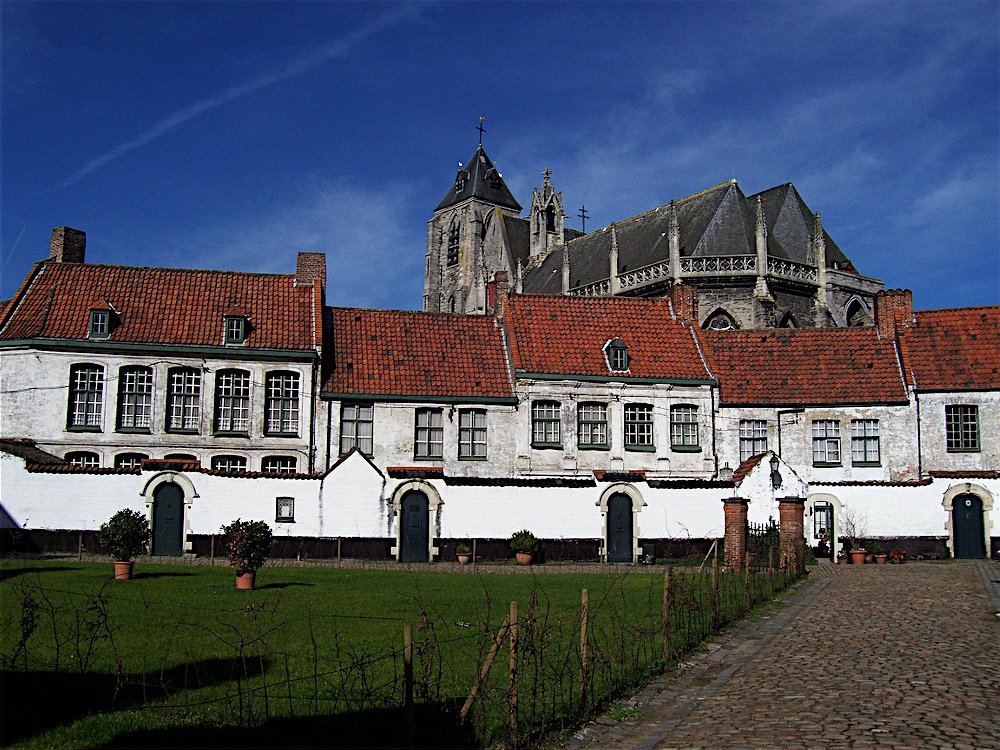
The Béguinage of Courtrai (Kortrijk Béguinage), also known as the Saint Elisabeth Beguinage, is one of the best-preserved lay religious communities in Belgium and was inscribed on the UNESCO World Heritage List in 1998 together with twelve other Flemish béguinages. It sits right in the heart of Kortrijk, close to the Leie river, and still feels like a secluded, quiet village tucked inside the city.
When was the béguinage founded?
The community traces its origins back to 1238. Beguines were women who chose to live a religious life of prayer and work for the benefit of their community, without taking permanent monastic vows and without fully withdrawing from the outside world; settlements of this kind sprang up across Flanders from the 13th century onward. Over the following centuries the béguinage in Kortrijk was destroyed several times, including during armed conflicts that swept through the region. Its present appearance largely reflects a rebuilding effort carried out in the 17th century.
What can visitors see inside the béguinage today?
The core of the site consists of around forty Baroque houses, each with its own enclosed front garden facing the lane. Narrow cobblestone streets run between the rows of small houses, creating an intimate, almost village-like atmosphere in the middle of the city. Three chapels stand within the grounds; the most significant is the Gothic Saint Matthew Chapel, dating from 1464, which was partly remodeled in the Baroque style during the 18th century.
Who were the beguines, and why is this place special?
Beguines were not nuns in the strict sense: they did not take lifelong vows and were free to leave the community and return to secular life, though in practice many spent their entire lives within the béguinage, supporting themselves through work, often lacemaking, alongside communal prayer. Communities of this kind developed in the Low Countries from the 13th century as a response to the needs of women who wanted to pursue a spiritual life without entering a convent. The Kortrijk béguinage is particularly well known because of Marcella Pattyn, the last living beguine in the world, who resided here from 1960 until her death in 2005.
Why was the béguinage of Courtrai added to the UNESCO list?
In 1998, UNESCO inscribed thirteen Flemish béguinages on the World Heritage List as evidence of a socio-religious movement of lay women that was unique in Europe. The Kortrijk béguinage was recognized for the good state of preservation of its historic buildings and for its coherent, authentic urban layout, a network of lanes, houses, and chapels that has changed very little since the 17th-century reconstruction.
What should you know before visiting?
The béguinage lies right in the center of Kortrijk, making it an easy stop on a walking tour of the city. The grounds are open to the public and can be explored on foot, with the architecture best appreciated from the outside, since most of the houses are still inhabited or used for community purposes and are not open to visitors. Nearby, a dedicated experience center covers the history of the beguines and daily life within the community across the centuries. It is worth visiting outside peak tourist hours to fully appreciate the quiet, contemplative atmosphere of the site, so different from the lively city center just beyond its walls.
Frequently asked questions
Is the béguinage of Courtrai a UNESCO World Heritage Site? Yes, since 1998, as one of thirteen Flemish béguinages inscribed together.
When was the béguinage of Kortrijk founded? The community dates back to 1238, though most of the current buildings stem from a 17th-century reconstruction after earlier destruction.
Who was Marcella Pattyn? The last living beguine in the world, who lived at the Kortrijk béguinage from 1960 until her death in 2005.
Can visitors go inside the houses? Most houses are inhabited or used for other purposes, so visits are mainly limited to walking through the grounds, admiring the architecture from outside, and seeing the chapels.
Nearby places

Earn badges for the places you visit
Download NextOnTrip, discover new places and check off your trails.