About this place
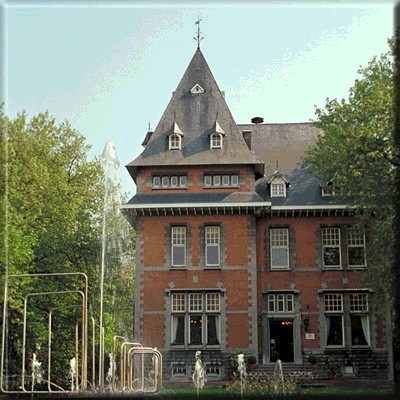
The former town hall of Zwevegem is a historic villa on Otegemstraat 100 that served for more than seventy years as the seat of local government in this municipality in West Flanders, Belgium. Although the administration has since moved elsewhere, the building remains one of the most notable architectural landmarks in Zwevegem.
How to get there?
Zwevegem lies in the province of West Flanders, southeast of Kortrijk, in a region known for its industrial past centered on flax and iron works. The former town hall stands on Otegemstraat, in the central part of the municipality, easily reachable by car or by local public transport from nearby Kortrijk. The surrounding area features parks and green spaces typical of Flemish towns of this size.
What can you see?
The building was constructed around 1907 as a private residence for the industrialist Eduard Van Leynseele. It combines features of neoclassical architecture with elements of the "cottage" style, a fashionable trend in Belgium at the time inspired by English rural architecture and characterized by a picturesque silhouette, varied rooflines and decorative facade details. This blend of styles was typical of residences built for wealthy industrialists at the turn of the twentieth century, who wished to underline their social standing while still embracing a more relaxed, countryside aesthetic.
The building's ownership history is as interesting as its architecture. In 1940, the Van Leynseele family's property passed into the hands of local brewer Ceriel Bafcop. Shortly afterward, the municipality of Zwevegem purchased the estate, and from 1941 onward the building served as the town hall — the place where local administrative decisions were made, council sessions were held, and residents' official business was handled for the following decades.
The situation changed in September 2013, when municipal services relocated to a new, more modern building on Blokkestraat, better suited to the needs of contemporary local administration. Having lost its official function, the former town hall was not left abandoned — the municipality decided to give it a new purpose through a concession agreement with a private partner, who carried out a renovation and modernization of the property while preserving its historic character.
Today, the building stands as an example of successful revitalization of the region's post-industrial architectural heritage — a testament to an era when local industrialists invested in representative residences that later found new uses in the public life of the municipality.
When to visit?
The exterior of the former town hall can be admired year-round, but spring and summer are especially suited to longer walks through Zwevegem's center and its surrounding green spaces. A visit here pairs well with exploring other sites of the municipality's industrial heritage, tied to the region's history of flax processing and iron production.
Frequently asked questions
When was the former town hall of Zwevegem built? The building was constructed around 1907 as a private residence for the industrialist Eduard Van Leynseele.
Since when did the building serve as the town hall? The municipality of Zwevegem purchased the property from the Bafcop family in the early 1940s, and it became the seat of local government in 1941.
Is the building still used as a town hall? No — since September 2013, the municipal administration has been based in a new building on Blokkestraat, and the former town hall has been given a new purpose following renovation by a private partner.
In what architectural style was the building constructed? It combines neoclassical features with elements of the cottage style, popular in Belgium at the turn of the nineteenth and twentieth centuries.
Nearby places

Earn badges for the places you visit
Download NextOnTrip, discover new places and check off your trails.