About this place
Algarra Castle overlooks the village of Algarra, a tiny settlement in the province of Cuenca, in the Castilla-La Mancha region of Spain. It rarely makes it into mainstream guidebooks, yet it rewards the trip with a strong sense of isolation and layered history rarely found in more polished tourist sites.
Where exactly is the castle located?
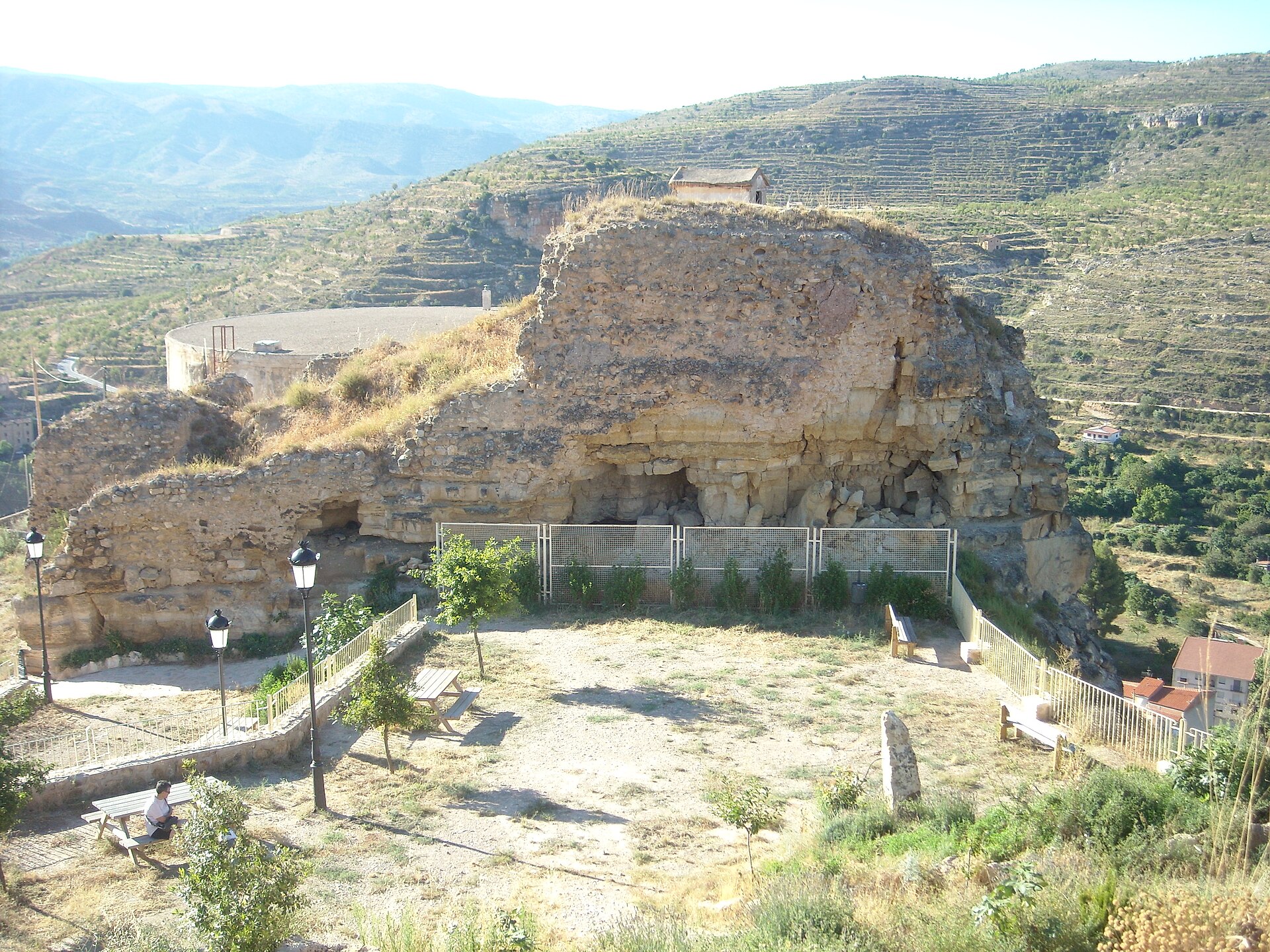
The ruins crown the highest point of the hill on which Algarra was built. This rocky spur once served as a natural lookout over the surrounding valley, allowing whoever held it to control the mountain pass along with the nearby fields and pastures. Algarra itself is now one of the least populated municipalities in the region — as of 2020 it counted only 24 residents, a striking contrast with the site's former military relevance.
Who built the fortress, and when?
The exact origins of the castle are uncertain, much like the origins of the village itself — researchers assume the two are likely connected. The most commonly cited version dates the structure to the 13th–14th centuries and attributes it to Muslim builders. A separate theory traces the first, modest rock fortress to the arrival of Berber families around the 10th century, who are said to have turned the area into an independent fiefdom of the Caliphate of Córdoba, with shepherds' dwellings gradually forming at the base of the hill.
Notably, the castle is absent from the chronicles documenting the Christian conquest of the area in the early 13th century, which suggests that — if it existed at all by then — its significance was minimal. The area was later occupied by Santiago knights as part of King Alfonso VIII's advance during Castile's push across the Tagus frontier in the 12th century. By the 17th century the territory fell under the Marquisate of Moya, and in the 18th century Algarra became a town under the lordship of the Marquisate of Villena.
What does the castle look like today?
Only scattered wall fragments survive from the original structure. The fortress had an elongated layout with an irregular perimeter shaped by the rocky terrain — a classic "rock castle," built with a tactical-strategic purpose: guarding the mountain pass and the surrounding farmland. Its condition is poor, and matters were made worse when a cemetery and a water tank were later built directly on the site, destroying part of the remaining walls.
Can visitors explore the site?
Yes, access to the ruins is free and unrestricted. Expect to find wall remnants and the general outline of the old fortification rather than a restored building. This is a destination for travelers drawn to regional history and rugged landscape, not for those seeking dramatic architecture.
Is the castle under legal protection?
Yes. It is protected under the general heritage declaration set out in the decree of April 22, 1949, as well as under Spain's Historical Heritage Law (Ley 16/1985).
Frequently asked questions
Where is Algarra Castle located? In the village of Algarra, province of Cuenca, Castilla-La Mancha, Spain, on top of the hill overlooking the settlement.
How old is Algarra Castle? The most widely accepted dating places it in the 13th–14th centuries with Muslim origins, though some researchers link the first fortifications on the site to Berber settlement as early as the 10th century.
Is there an entrance fee? No, the ruins are freely accessible at no cost.
Why is the castle in such poor condition? Besides natural decay over the centuries, a significant part of the walls was destroyed when a cemetery and a water tank were later built directly on the site.
Nearby places

Earn badges for the places you visit
Download NextOnTrip, discover new places and check off your trails.