About this place
Abdij van Sinnich is a former priory tucked among the fields and woods of the Voeren municipality, right next to the village of Teuven, in the corner of Belgian Limburg that borders both the Netherlands and Germany. The site blends monastic and aristocratic history in equal measure, which is why locals also refer to it as the castle of Sinnich, even though its origins are firmly religious.
When was the priory founded?
The community traces its roots to the mid-13th century, when monks and canonesses arrived from the abbey of Rolduc (Kloosterrade) near Kerkrade, not far from Maastricht. From around the middle of that century, a community of Augustinian canonesses settled at Sinnich, drawing members from the mother house at Rolduc as well as from the nearby priory of Scharn. What made this particular house distinctive was its admission policy: only women of noble birth were accepted, giving Sinnich a genuinely elite status reserved for daughters of the regional aristocracy.
What survives from the oldest buildings?
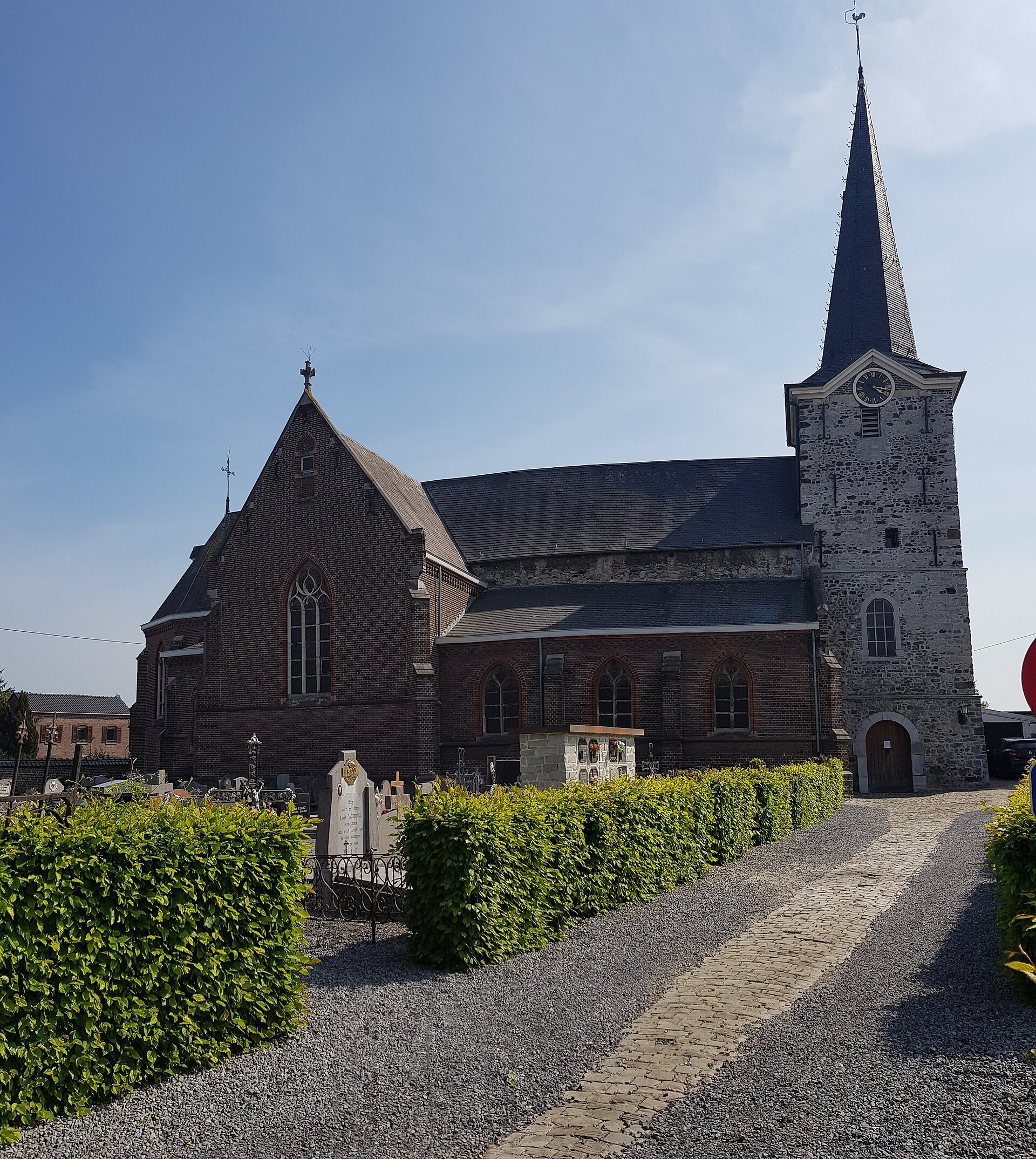
The most striking surviving element today is the Romanesque tower, raised back in the 13th century — the clearest physical proof of the site's medieval origins. The priory church itself was consecrated toward the end of that same century, meaning several decades passed between the community's first settlement and the moment it could fully use its own place of worship. The complex was expanded and reshaped over the following centuries, so what stands today layers medieval austerity with later residential remodeling.
Why did the priory come to an end?
Like many religious houses across the region, Sinnich's fate was sealed by the French Revolution. The community was dissolved as part of the wider secularization of church property at the end of the 18th century, and the buildings were vacated in early 1797. This was the common pattern across territories under revolutionary French control at the time: church estates passed into private hands and monastic life simply stopped.
What happened to the property afterward?
Following secularization, the former priory changed hands much like any modest country estate. It was purchased by the Reul family of Teuven at the end of the 18th century, passed to the Soumagne family by the mid-19th century, and later came into the possession of the Coenegracht family. Each of these owners managed it as a secular residence rather than a monastery, which is how the "castle" nickname took hold in local usage.
What traces did the Second World War leave?
The complex did not escape damage during the Second World War: a bomb struck the eastern wing of the buildings toward the end of the conflict, causing serious harm to that part of the estate. Despite this loss and centuries of alteration, the site retained enough historical value to be granted protected heritage status today.
Can visitors explore the site?
Abdij van Sinnich sits within the gently rolling landscape of Voeren, a region well known for its network of walking and cycling routes linking villages on both sides of the language border. The complex itself remains private property, so access to the interior is not generally available — but it makes a worthwhile landmark on a walk or bike ride around Teuven, where visitors can admire the building's silhouette and its medieval tower from the outside.
Frequently asked questions
Is Abdij van Sinnich a castle or a monastery? Historically it was a priory of Augustinian canonesses, but after secularization and its acquisition by noble families it functioned as a private residence, which is why it is also known as a castle.
How old is the oldest part of the building? The Romanesque tower dates from the 13th century and is the oldest surviving element of the complex.
Why did the priory stop functioning? The community was dissolved following the secularization of church property after the French Revolution, and the buildings were abandoned in 1797.
Was the building damaged during the war? Yes, a bombing near the end of the Second World War destroyed the eastern wing of the complex.
Nearby places

Earn badges for the places you visit
Download NextOnTrip, discover new places and check off your trails.