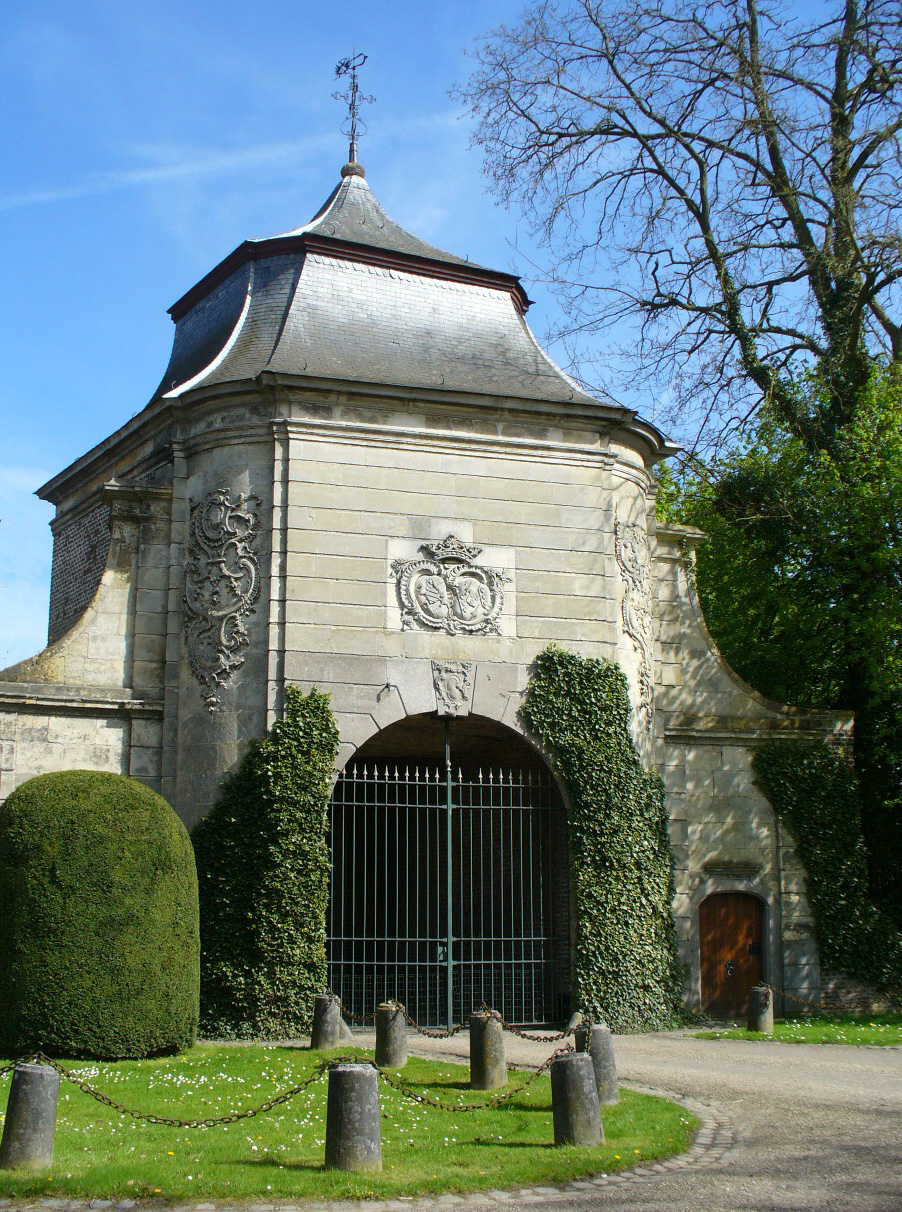
About this place
Abdij van Hocht is a former Cistercian abbey in Lanaken, in the Belgian province of Limburg, situated on the banks of the river Meuse. It was founded around 1180 by Lord Theodorus (Diederik) van Pietersheim, who asked the abbot of the monastery of Eberbach — itself a daughter house of the famous Clairvaux — to send a group of monks to establish a new community. As part of the endowment, the monks received a water mill along with fishing and toll rights on the Meuse.
Why is the abbey dedicated to Saint Agatha instead of Our Lady?
This is one of the more curious details of its history. Cistercian abbeys were, as a rule, dedicated to the Virgin Mary, yet Hocht broke with this convention from the very start by being dedicated to Saint Agatha. The exception suggests that local religious tradition, or perhaps the founder's own wishes, outweighed the order's usual practice.
How did monks become nuns?
In 1216, only a few decades after its founding, the Cistercian monks left Hocht to establish the new Abbey of Val-Dieu. Their place was taken by Cistercian nuns arriving from the monastery of St. Salvator in Aachen. This shift changed the character of the community for centuries to come — from that point on, Hocht functioned as a women's religious house.
A convent for noblewomen
Over time the abbey evolved into a chapter of secular canonesses with a distinctly aristocratic character. Candidates were required to prove four generations of noble ancestry, a requirement that became stricter under Abbess Aleyde de Mérode (1574–1577), when the threshold was raised to eight generations of nobility. Notably, the vow of poverty was only strictly observed from the middle of the 13th century onward, while the vow of chastity in practice applied solely to the abbess herself — a telling sign of just how secular the community's character had become.
What standing did the abbey achieve in the region?
The abbey's wealth and influence grew steadily over the centuries. A high point came in 1708, when Abbess Marie-Ursule de Minckwitz purchased the lordship of Neerharen. From that moment the abbess of Hocht carried the title "Lady of Neerharen," a clear indication of the economic and political power this small religious community had accumulated over roughly five and a half centuries of existence.
What should visitors know before going?
Abdij van Hocht is located in the municipality of Lanaken, close to the Dutch border, in the scenic Meuse valley. While the former abbey buildings today serve purposes different from their heyday as a religious house, the site remains an important witness to the region's history — from its medieval Cistercian foundation, through its transformation into an aristocratic chapter of canonesses, to its role as a local center of feudal power.
Frequently asked questions
Who founded Abdij van Hocht? The abbey was founded by Theodorus (Diederik) van Pietersheim around 1180.
Which saint is the abbey dedicated to? Saint Agatha — unusual for a Cistercian foundation, which were normally dedicated to the Virgin Mary.
Were the original residents monks or nuns? Monks first. The Cistercian monks left in 1216 to found the new Abbey of Val-Dieu, and Cistercian nuns from St. Salvator in Aachen took their place.
What noble ancestry was required of candidates? Initially four generations of nobility, raised to eight generations under Abbess Aleyde de Mérode (1574–1577).
Nearby places

Earn badges for the places you visit
Download NextOnTrip, discover new places and check off your trails.