About this place
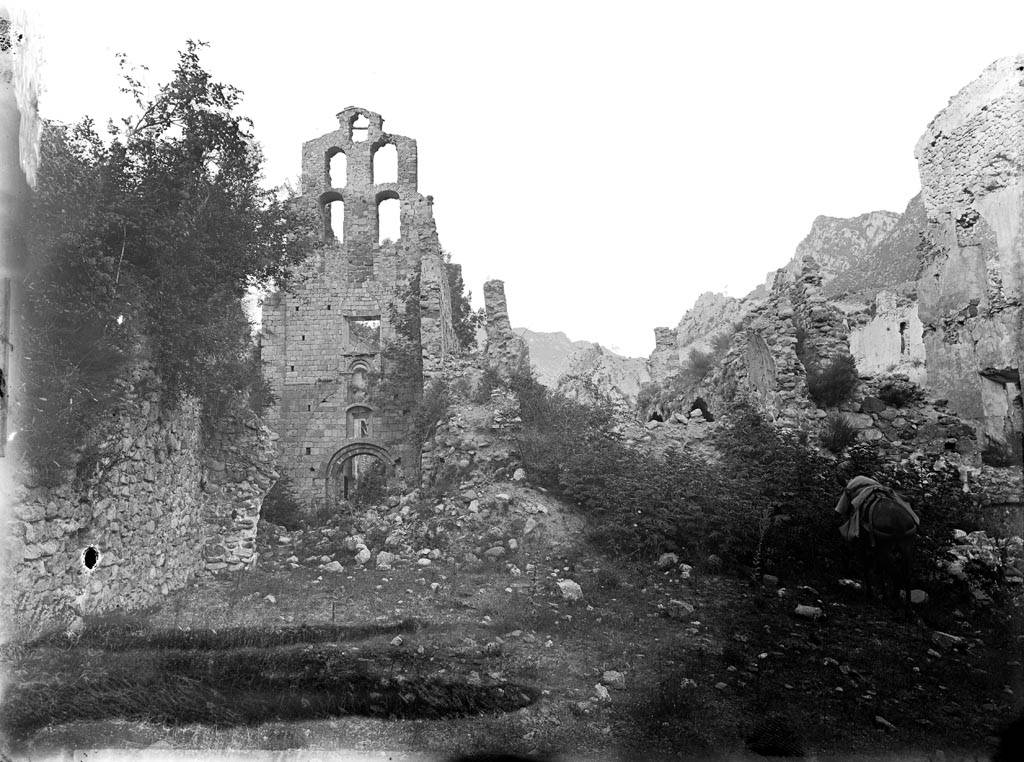
The Abbey of Santa María de Alaón stands near Sopeira, a small village in the Pyrenees, in the historic county of Ribagorza, in the Aragonese province of Huesca. It is a place where early medieval monastic history meets a rugged mountain valley landscape along the Noguera Ribagorçana river.
What is the history behind the abbey?
A religious community existed at this site as early as the 6th or 7th century, but the monastery as it operated for centuries was formally established around the late 11th or early 12th century. It began as a Benedictine abbey and later came under Cluniac influence, functioning as a priory attached to the wider Cluniac network. This shift — from an independent abbey to a priory tied to a larger monastic congregation — was common among Pyrenean foundations of the period, many of which sought the protection and resources of larger religious organizations.
Set in the hard-to-reach Ribagorza valley, the monastery remained a significant religious and economic hub for the surrounding area for generations, before later secularization processes and administrative changes reduced its role.
What architectural style does Alaón represent?
The abbey is a notable example of Lombard Romanesque architecture — a regional variant of Romanesque that developed in northern Italy and spread along pilgrimage and trade routes into Catalonia and Aragon. Its hallmarks include blind arcading (the so-called Lombard bands), pilaster strips dividing façades into vertical panels, and plain stone surfaces that favor structural clarity over the elaborate figurative carving seen in later Romanesque work. In the Pyrenees, this style found fertile ground: local builders adapted Italian models to regional stonework, producing buildings that are simple in form but structurally solid.
How do you get to Sopeira and the abbey?
Sopeira sits deep in the Aragonese Pyrenees, within the Ribagorza region, along routes linking Catalonia and Aragon through the Noguera Ribagorçana valley. The area is best known to travelers for its proximity to dramatic mountain gorges and the Canelles reservoir, so many visitors combine a stop at the abbey with a longer trip through the surrounding Pyrenean valleys. Given the mountainous terrain, driving is the most practical way to reach the site, along narrow but scenic valley roads.
What will you see on site?
Visitors can expect architecture that is modest in ornament but distinctive in form — typical of Pyrenean Romanesque foundations. Stone walls, simple vaulting, and the characteristic Lombard-style decorative banding give a sense of what monastic life looked like in this isolated corner of the Pyrenees. The surrounding landscape — the sparsely populated, mountainous terrain of Ribagorza — reinforces the atmosphere of a place that served for centuries as a spiritual refuge far from major population centers.
When is the best time to visit?
Because of its mountain setting, spring, summer, and early autumn are the most reliable times to visit, when access roads are fully passable and temperatures in the Pyrenees are comfortable for sightseeing and walking in the area. Winter conditions can make access more difficult, as is typical for mountain terrain.
Frequently Asked Questions
What was the Abbey of Santa María de Alaón? It was a Benedictine monastery, later reorganized as a Cluniac priory, established around the late 11th or early 12th century on the site of an earlier religious foundation from the 6th or 7th century.
Where is the abbey located? In Sopeira, in the historic county of Ribagorza, in the Aragonese Pyrenees, in Huesca province, Spain.
What architectural style does the building represent? Lombard Romanesque, characterized by blind arcading and pilaster strips — a style that originated in northern Italy and spread to Catalonia and Aragon along trade and pilgrimage routes.
Is it worth combining with other attractions in the area? Yes — Ribagorza and the Noguera Ribagorçana valley are a scenically valuable region, so a visit to the abbey is best planned as part of a longer route through the surrounding Pyrenean valleys.
Nearby places

Earn badges for the places you visit
Download NextOnTrip, discover new places and check off your trails.