About this place
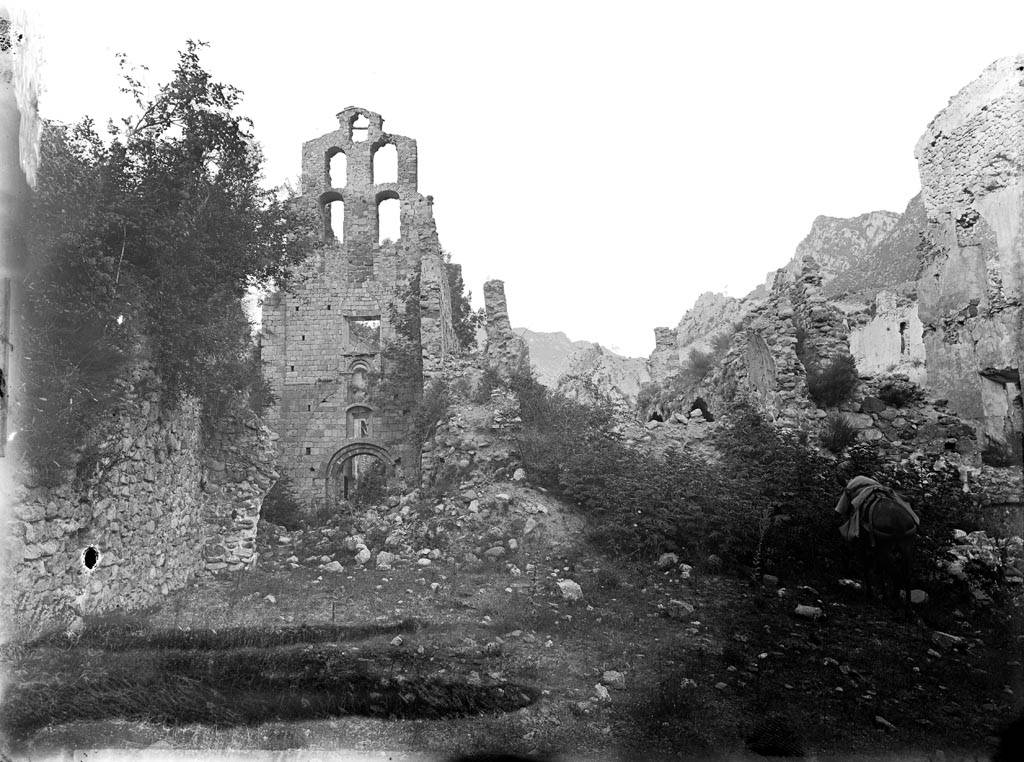
Santa Maria de Lavaix is what remains of a Romanesque Benedictine monastery, tucked along the shore of the Pantà d'Escales reservoir in the municipality of El Pont de Suert, in the Alta Ribagorça comarca of Catalonia. It's a stop for travelers drawn to the Pyrenees who want a thousand-year backstory rather than another fully restored monument with a gift shop.
Where are the monastery ruins located?
The site sits within El Pont de Suert, the administrative center of Alta Ribagorça, one of the most mountainous and sparsely populated comarcas of the Catalan Pyrenees. The ruins lie right at the edge of the Pantà d'Escales reservoir, and that proximity to open water is not incidental — it's the very reason the monastery looks the way it does today.
What is the history behind Santa Maria de Lavaix?
The monastery is first documented in the 10th century, making it one of the older monastic foundations in this stretch of the Pyrenees. Its fortunes were tied to the region's feudal powers for centuries: by the 13th century, Lavaix had come under the authority of the Barony of Erill, an important noble house in the area. A turning point came in 1223, when the community adopted the Cistercian rule and the monastery became a Cistercian abbey — part of a broader wave of reform that swept through many previously Benedictine houses across the Iberian Peninsula during that period.
Why did the monastery disappear?
From the early 19th century onward, Lavaix followed a familiar pattern of decline. The community lost standing until 1835, when the monastery was finally shut down as part of the Ecclesiastical Confiscations of Mendizábal, the Spanish government's sweeping seizure and sale of monastic property nationwide. The building's fate, however, was sealed by engineering rather than politics: in June 1955, construction of the Escales Dam was completed, and the reservoir that formed behind it flooded the old monastery grounds. That moment permanently changed the site's character — from an abandoned but still-standing structure to a partially submerged archaeological remnant.
What can still be seen today?
Of the once-functioning monastic complex, only fragments of the walls and traces of the northeast corner of the church's nave survive. That's a modest footprint compared with the original establishment, but for visitors interested in regional history and industrial-era archaeology — since it was the Escales Dam project that ultimately shaped the site's present-day form — the remains of Lavaix offer tangible evidence of how 20th-century hydroelectric development reshaped the Pyrenees' cultural landscape.
Who is this site for?
Santa Maria de Lavaix isn't built for mass tourism. It suits travelers exploring Alta Ribagorça who, alongside better-known regional draws such as the Romanesque churches of the Boí Valley, want to encounter a less obvious chapter of local history: an abbey that survived nearly a thousand years of shifting fortunes only to end up beneath the waters of a man-made reservoir.
Frequently asked questions
What was Santa Maria de Lavaix? A Romanesque Benedictine monastery, later a Cistercian abbey, located in the municipality of El Pont de Suert in Alta Ribagorça.
When was the monastery founded? It is first mentioned in historical records from the 10th century.
Why was the monastery closed? It was finally shut down in 1835 during the Ecclesiastical Confiscations of Mendizábal, following a period of decline that began in the early 19th century.
What happened to the monastery buildings? In June 1955, after the Escales Dam was completed, the resulting reservoir flooded the monastery site. Today only fragments of the walls and traces of the nave's northeast corner remain.
Nearby places

Earn badges for the places you visit
Download NextOnTrip, discover new places and check off your trails.