About this place
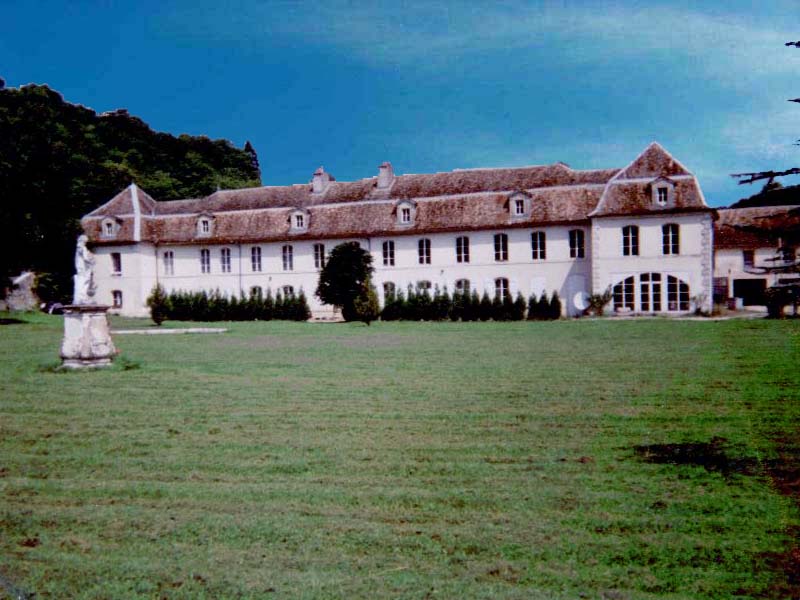
Abbaye Notre-Dame de l'Étanche is a former Cistercian abbey located in the hamlet of L'Étanche, part of the commune of Rollainville, in the Vosges department of France. Little of the original monastic complex has survived, but the site remains a quiet trace of medieval religious life in Lorraine and a point of interest for visitors curious about the region's lesser-known heritage.
Who founded the abbey?
The convent was established in 1148 at the request of Duke Matthew I of Lorraine's mother, the dowager duchess Adelaide. After the death of her husband, Duke Simon I, in 1139, Adelaide had retired to the Cistercian abbey of Notre-Dame du Tart in Burgundy. From there, together with her son Matthew I and his wife Bertha of Swabia, she arranged the endowment of a new convent in a spot then known as Val-le-Duc. From its founding, the community followed the Cistercian rule and was made up of nuns - a women's house rather than the more commonly documented male Cistercian monasteries of the era.
What happened to the abbey over the centuries?
The community's history was far from peaceful. The buildings suffered damage during armed conflicts in 1431 and 1552, and the Thirty Years' War brought even heavier destruction. Facing the French occupation of Lorraine, the nuns were forced to abandon the site around 1636 and take refuge in nearby Neufchâteau, having first moved their most valuable possessions to Langres for safekeeping. Despite these setbacks, the community endured and eventually rebuilt. The last major reconstruction took place in 1778, and it is from this period that the surviving building dates.
What remains of the original abbey today?
The convent was dissolved during the French Revolution and its property sold off as national assets. Of what was once a much larger monastic complex, only a single substantial building from 1778 survives, topped with a distinctive mansard roof. It has since been restored and now serves as a private residence. This means the site has no visitor infrastructure, museum, or regular public access - it is better understood as a point of historical interest for anyone tracing Cistercian settlement in Lorraine or exploring the Vosges' quieter corners of heritage.
Where exactly is L'Étanche?
L'Étanche lies within the commune of Rollainville, in the Vosges department, part of the Grand Est region in eastern France. The surrounding countryside is gently rolling and rural, typical of southern Lorraine, dotted with small villages and former monastic sites - the area is sometimes referred to informally as a route of Vosges abbeys because of how many such foundations cluster in this part of the department.
Is it worth a visit?
For travellers looking for a fully developed tourist attraction with open access, probably not - the building is privately owned, so entry is restricted. But for those drawn to local history, ecclesiastical architecture, or the fate of women's religious communities in pre-revolutionary France, the site carries genuine interest. The name itself, "Étanche," echoes the French word for pond ("étang"), hinting at a landscape long associated with water and the damp, wooded terrain characteristic of this part of the Vosges.
Frequently asked questions
Which religious order founded the abbey at L'Étanche? It was a Cistercian convent, home to a community of nuns, founded in 1148.
Who endowed the abbey? Duke Matthew I of Lorraine, acting on the request of his mother, the dowager duchess Adelaide, together with his wife Bertha of Swabia.
Do the original abbey buildings still stand? Only one building survives from the complex, dating to 1778 and featuring a mansard roof; it is now used as a private residence.
Where is L'Étanche located? Within the commune of Rollainville, in the Vosges department, in the Grand Est region of France.
Can the abbey be visited? No - the building is privately owned, so there is no regular public or museum access.
Nearby places

Earn badges for the places you visit
Download NextOnTrip, discover new places and check off your trails.