- Sacred Monuments
- Religious monuments
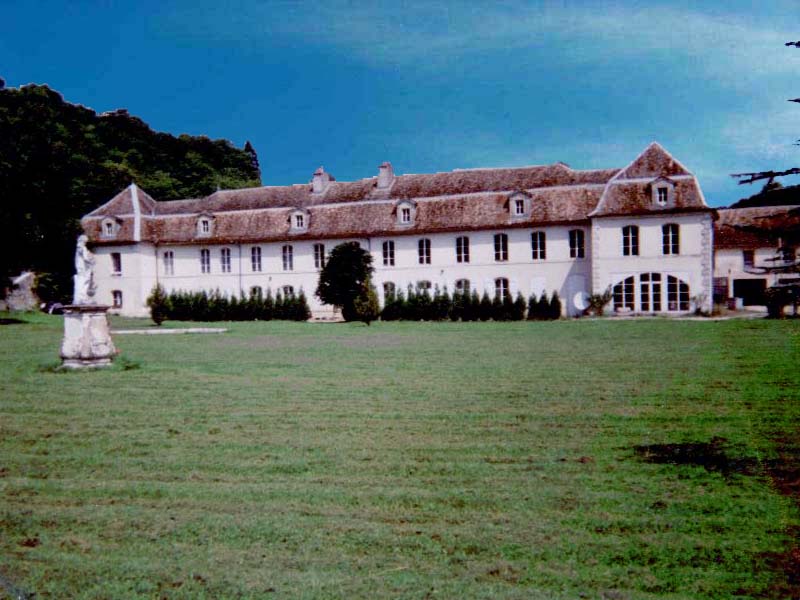
Monastère Notre-Dame de Châtel-sur-Moselle
About this place
Monastère Notre-Dame is a former convent complex in Châtel-sur-Moselle, a small town on the Moselle river in the Vosges department, in France's Grand Est region. The building stands on rue des Capucins, in the historic core of the town, and belongs to a relatively rare category of Vosges heritage: a former religious institution that survived the upheavals of the French Revolution and the changing ownership of the following centuries.
When was the monastery built?
The current building dates from the early 18th century, with construction work recorded for the years 1706 and 1710. This places it firmly within a wave of French convent building of the period, when religious congregations were expanding their presence in provincial towns, combining spiritual life with local education and charitable work.
Why is it called Notre-Dame?
The name is not incidental. It ties the building to the Congrégation Notre-Dame, a congregation of Augustinian canonesses founded in 1597 by Saint Pierre Fourier. Fourier entrusted a school in Mattaincourt, another Vosges town, to a small community of women led by Blessed Alix Le Clerc. The congregation grew quickly across Lorraine, opening houses dedicated to the education of girls. The monastery in Châtel-sur-Moselle followed this same pattern, functioning as both a place of prayer and a center of teaching for the town.
What role did the town play in this history?
Châtel-sur-Moselle has a turbulent past. Between 1636 and 1670, the town repeatedly suffered sieges and destruction, a pattern typical of this border region of Lorraine during and after the Thirty Years' War. Rebuilding after these losses demanded real resilience from the townspeople, and religious and charitable institutions were part of how the town gradually recovered its footing.
Is the building protected as a heritage site?
Yes. The facades and roofs of the Monastère Notre-Dame were listed as a monument historique by decree of 24 June 1977, under reference number PA00107108. The property is recorded in the cadastral register under plot AB 18, and it is now owned by the municipality of Châtel-sur-Moselle — a common outcome for former religious buildings in France after church property passed into public hands.
What should visitors know before coming?
The monastery sits within the dense historic fabric of central Châtel-sur-Moselle, close to the town's other heritage sites, making it easy to combine with a walk through the old center. Since the official protection covers only the facades and roofs, the interior is not set up as a conventional visitor attraction — this is primarily an architectural trace of the town's religious and educational past, best appreciated from the outside while exploring the Vosges.
Frequently asked questions
When was the Monastère Notre-Dame built? Construction is dated to 1706 and 1710, placing it in the first quarter of the 18th century.
Which congregation does its name come from? The name refers to the Congrégation Notre-Dame, a congregation of Augustinian canonesses founded in 1597 by Saint Pierre Fourier and Blessed Alix Le Clerc in nearby Mattaincourt.
Is it a listed historic monument? Yes — its facades and roofs were registered as a monument historique on 24 June 1977, under reference PA00107108.
Who owns the building today? The monastery is owned by the municipality of Châtel-sur-Moselle, where it stands.
Nearby places

Earn badges for the places you visit
Download NextOnTrip, discover new places and check off your trails.