About this place
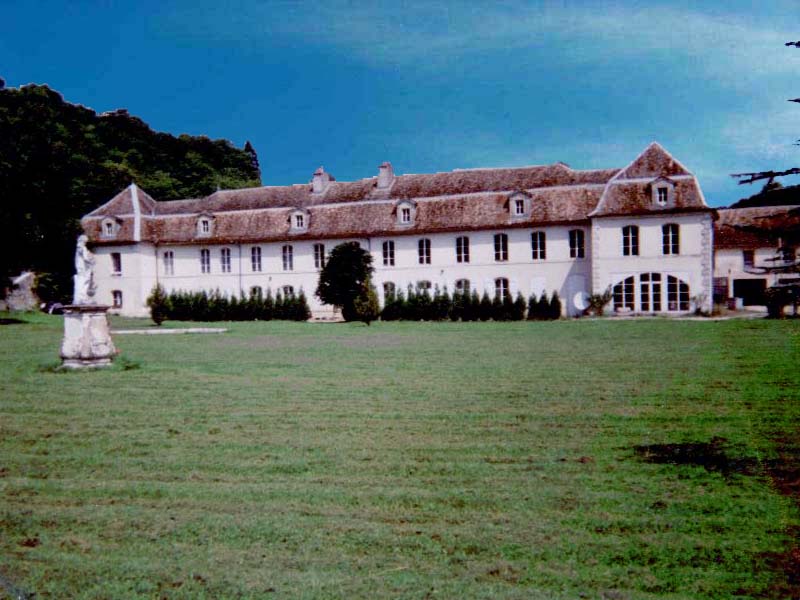
Prieuré de Belval (Belval Priory) is a former Benedictine monastery east of Portieux, in the Vosges department of France, tucked into the small hamlet of Belval beside the Rochon stream, a tributary of the Moselle river. Its history runs from a medieval pilgrimage site to an 18th-century estate, and today the grounds serve as a residential facility for adults with disabilities.
Who founded the priory, and why here?
The priory was established in 1107 by Gérard I of Vaudémont, younger son of Duke Gérard I of Lorraine. The foundation honored the monk Hugues, who had travelled from the abbey of Saint-Hydulphe in Moyenmoutier to live as a hermit on the site as early as 1097. The new Benedictine house was also meant to serve as a burial place for its founder and his wife; their remains stayed at Belval until 1718, when they were moved to the abbey of Saint-Léopold in Nancy.
What turned Belval into a pilgrimage destination?
In 1104, even before the priory's official founding, the relics of Saint Spinulus - known locally as Saint Spin - were brought to the monastery church. The site quickly became a pilgrimage centre: chronicler Jean de Bayon recorded that countless miracles were said to occur at the saint's intercession. The cult outlasted the monastery itself - the relics are still kept today in a gilded wooden reliquary in the church of the Exaltation of the Holy Cross in Portieux.
What happened to the priory after the 16th century?
Belval had joined the Benedictine congregation of Saint-Vanne, but on 29 December 1616 Pope Paul V suppressed the priory. The monks relocated to the abbey of Saint-Léopold in Nancy, ending monastic life on the site. The buildings suffered further during the French Revolution, when much of the monastic complex was destroyed.
What remains to see today?
Despite the losses of the Revolutionary period, several traces of the old priory survive. Visitors can still see the base of a round tower and two Romanesque windows from the former chapel - the oldest architectural fragments on site, dating back to the Middle Ages. Alongside them stands an elegant classical-style facade added in a later period, and the grounds include buildings from the 18th century. Carved capitals and a statue of Saint Fiacre have also survived; both have been listed as protected heritage items in the Palissy database since January 1965.
What is the site used for today?
The former monastic buildings have not been left empty. They now house a residential facility for adults with disabilities, meaning the historic fabric coexists with an active care function - a fairly common fate for former religious sites in this part of France.
Frequently asked questions
Where exactly is the Prieuré de Belval located? The priory sits east of Portieux, in the Vosges department, in the hamlet of Belval beside the Rochon stream, a tributary of the Moselle. It is reached via departmental road D87.
When was the priory founded? It was founded in 1107, although the site's hermit origins go back to 1097, when the monk Hugues settled there.
Why was the site significant for pilgrims? Because of the relics of Saint Spin (Spinulus), brought to the priory church in 1104 and credited with numerous miracles.
Can the Prieuré de Belval be visited today? The site functions as a residential care facility for adults with disabilities, so it is not a conventional tourist attraction open to the public - check local access conditions before planning a visit.
Are the buildings protected as heritage sites? Yes, several elements - including the carved capitals and the statue of Saint Fiacre - have been listed in the Palissy database since 1965.
Nearby places

Earn badges for the places you visit
Download NextOnTrip, discover new places and check off your trails.