Sacred Monuments in Croatia
A guide to 97 Sacred Monuments in Croatia — with descriptions, photos and traveler visits from the NextOnTrip community. Locations spread across 62 cities and towns. Most visited by the community: Kutjevo Abbey, Grad Trebnje, Samostan Dragović.
-
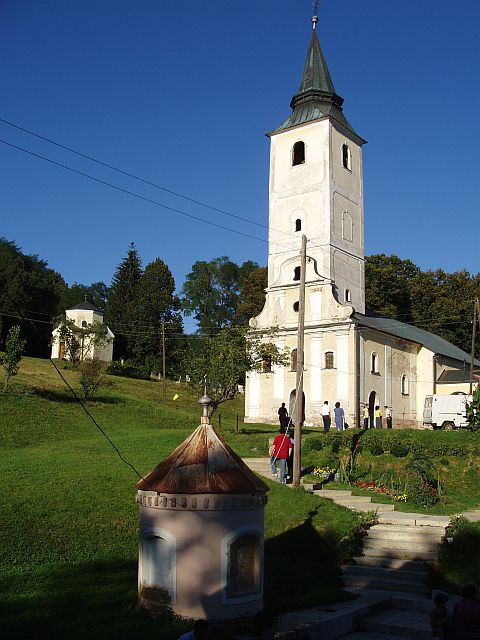
Lepavina Monastery
Lepavina
Lepavina Monastery Lepavina Monastery is a Serbian Orthodox monastery in northern Croatia, in the village of Lepavina near Sokolovac, not far from Koprivnica. It belongs to the Metropolitanate of Zagreb and Ljubljana of the Serbian Orthodox Church and is one of only two active monasteries in that eparchy. It suits travellers who enjoy quiet, little-known sacred sites away from the usual tourist trail. Where is Lepavina Monastery? The monastery lies in a peaceful rural area north of Zagreb, close to the Hungarian border. Its coordinates are roughly 46.10° N, 16.67° E. The complex consists of a Baroque church and residential buildings, and it functions as a closed religious community. There is no typical tourist infrastructure around it, so the visit pairs well with a stop in nearby Koprivnica. How did the monastery begin? The origins go back to around 1550 and are linked to a monk from Hilandar, the Serbian monastery on Mount Athos. Only a few years later, in 1557, Ottoman Turks destroyed the foundation. It was rebuilt in 1598, and the site has continued as a centre of monastic life ever since. Why did Lepavina matter? Its importance grew when the nearby Marča monastery passed into Greek Catholic hands. Lepavina then became the main Orthodox centre in northern Croatia. For a time it was also the seat of the bishops of Lepavina and Severin, which makes it a significant point on the map of Orthodox Serb history in the region. What to see The Baroque church, the central element of the monastic complex. A 16th-century icon of the Mother of God, venerated by pilgrims. The quiet surroundings, a rural landscape that invites a pause for reflection. Practical tips This is a working monastery, so visitors are expected to show respect to the monks and worshippers. Dress modestly (covered shoulders and knees), keep quiet, and ask permission before taking photos inside. Check visiting arrangements in advance, because the monastery is not a conventional attraction with fixed ticketing. Driving is the most convenient way to get there, and Koprivnica makes a sensible base. Frequently asked questions Which church does Lepavina Monastery belong to? The Serbian Orthodox Church, within the Metropolitanate of Zagreb and Ljubljana. When was it founded? Around 1550. It was destroyed in 1557 and rebuilt in 1598. Is the monastery still active? Yes, it is one of two functioning monasteries of the Zagreb and Ljubljana eparchy. Can I see the icon? The monastery keeps a 16th-century icon of the Mother of God, but as a place of worship it has its own visiting rules, so ask ahead about access. Is it a good day trip? Yes, if you are interested in the history of Orthodox Christianity in Croatia and in calm places off the main routes, for example as a stop near Koprivnica.
-
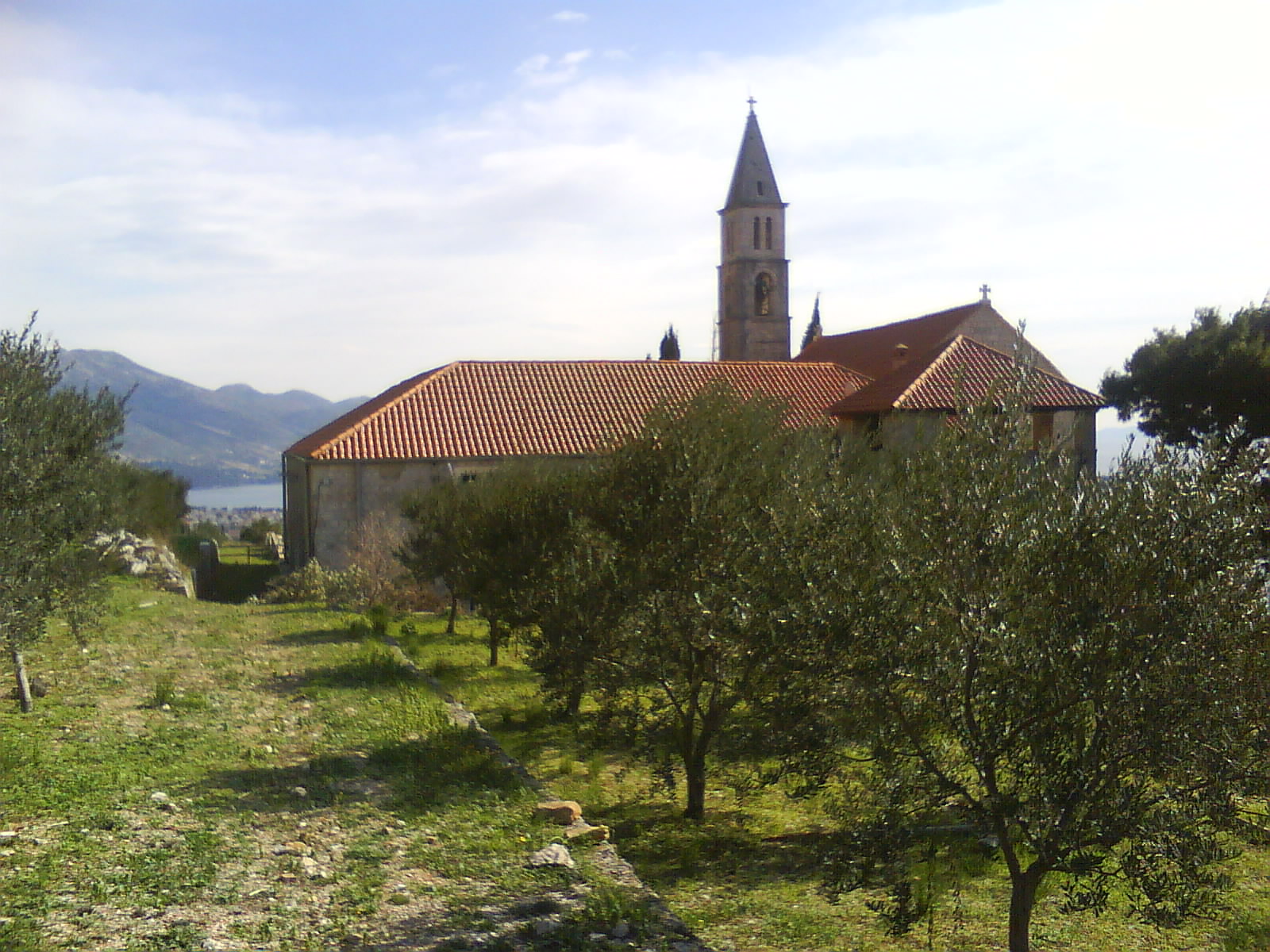
Our Lady of Angels
Podgorje
Our Lady of Angels is a Franciscan monastery on a hill above Orebić, in the Podgorje area of the Pelješac peninsula, Dubrovnik-Neretva County, Croatia. Dating from the late 15th century, it looks across the channel toward the island of Korčula and is one of the most atmospheric historic sites near Orebić, closely tied to the town's seafaring past. What is the history of the monastery? The monastery was built at the end of the 15th century, when Orebić was governed by the Republic of Ragusa (Dubrovnik), which ruled it from 1333 to 1806. Some travel sources give the construction period as roughly 1470 to 1480, at the foot of Saint Elijah's hill. Franciscans built it. A popular story says the spot was also chosen as a lookout over passing ships: Pelješac belonged to Dubrovnik while Korčula was under Venice, so a vantage point mattered. What can you see inside? The church holds the icon of Our Lady of the Angels, venerated as a protector of sailors. The interior includes marble reliefs of the Madonna and Child, a crucifix, and a main altar attributed to the Italian sculptor Maffe da Verona. A small votive museum next to the church displays a painting of the Madonna said to have washed up on the Orebić shore in the 15th century. Offerings left by sailors reflect the maritime character of the place. What is the tradition tied to sailors? Orebić was famous for its sea captains and shipowners, and the monastery served as a landmark for them. According to local accounts, captains returning home saluted the Virgin by sounding their ships' horns as they passed beneath the hill, and the monks answered by ringing the church bell. The custom features in many descriptions of the site and shows how closely the community lived with the sea. What else is nearby? Behind the church lies the Captains' Graveyard. Its best-known monument is the mausoleum of the Mimbelli family, the work of the sculptor Ivan Rendić. A stroll among the graves shows the names of old seafaring families from the area. Practical tips The monastery stands on a hill above Orebić, so expect an uphill walk and bring water. The views over the channel and Korčula are best in daylight and clear weather. Opening hours of the church and museum can change, so check locally before you go. It is a working sanctuary, so dress modestly and keep noise down. Frequently asked questions Where is Our Lady of Angels? On a hill above Orebić, in Podgorje, on the Pelješac peninsula in southern Croatia. When was it built? At the end of the 15th century, under the Republic of Ragusa. Some sources point to 1470-1480. Who built it? Franciscans, who are still associated with the site. What is it best known for? The icon of Our Lady protecting sailors, the votive museum, and the neighbouring Captains' Graveyard with the Mimbelli family mausoleum. Is it worth visiting? Yes, if you enjoy maritime history and wide views over the Pelješac channel and Korčula. It fits well into a walk around Orebić.
-
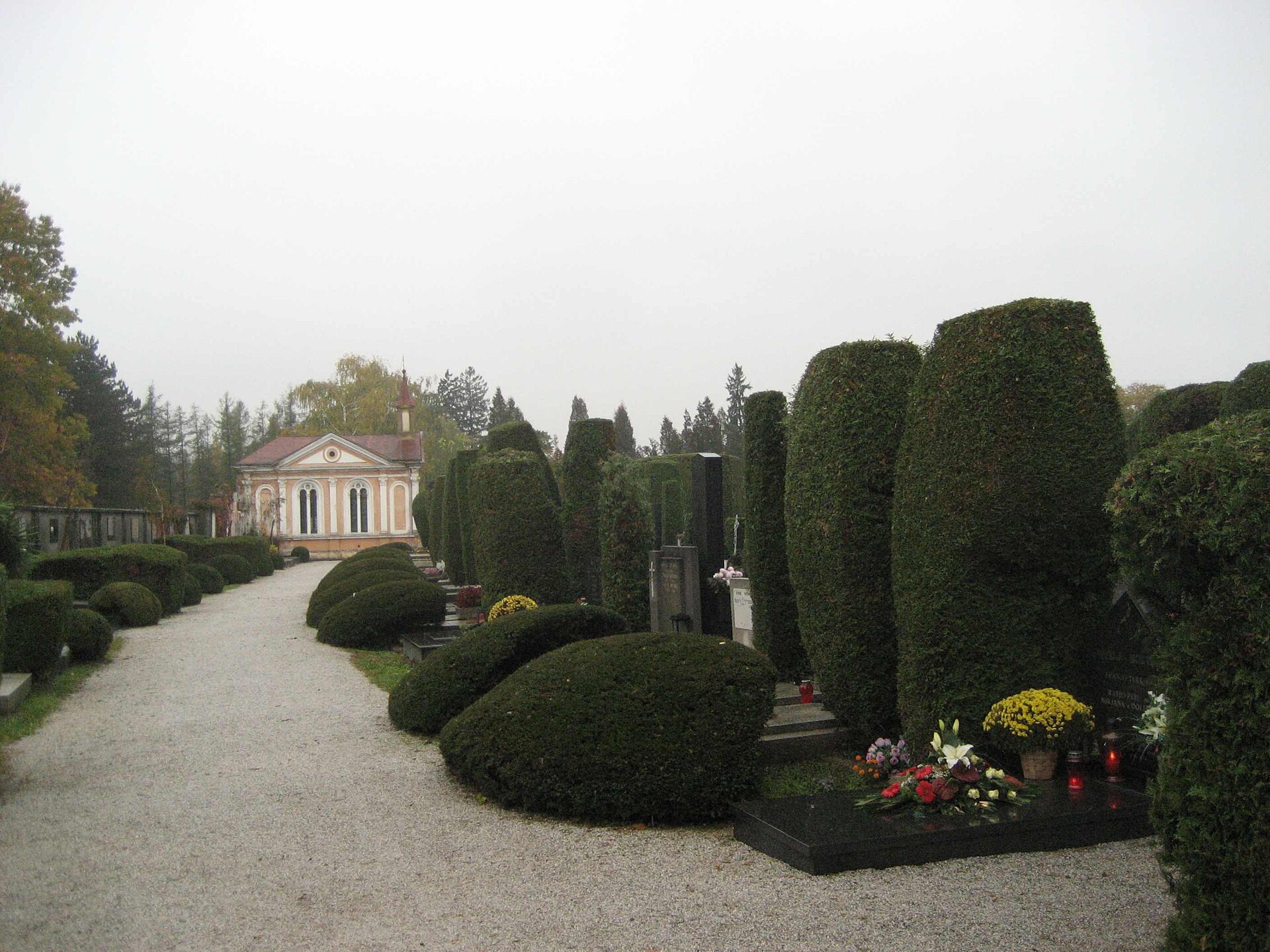
Varaždin City Cemetery
City of Varaždin
Varaždin City Cemetery is one of the most visited places in northern Croatia and a burial ground that has been regarded as a landscape park for more than a century. It lies in the town of Varaždin, near 46.309 N, 16.323 E, and is protected as a cultural monument. When was the cemetery founded? The necropolis dates back to 1773. For a long time it looked ordinary: rows of headstones broken up by the occasional chestnut tree. Its character changed at the turn of the 20th century, when successive gardeners from the Haller family took over the grounds. Who was Hermann Haller and what did he change? The key figure in the cemetery's story is Hermann Haller, stepson of the earlier manager Stjepan Haller. From the early 1900s he turned the site into a garden, planting magnolia, ash, cypress, maple, red beech and boxwood. Around 1905, by most accounts, some 7,000 trees and shrubs went into the ground. Haller drew on parks of the Habsburg era; Vienna's Schönbrunn is often named as a model. He wanted a burial place that felt calmer and gentler, rather than one dominated by heavy stone statuary and gloomy symbolism. What does it look like? The planting was clipped into geometric forms. Trimmed cypress and thuja create avenues, arbours, hidden corners and niches, giving the whole a French-style park feel. Among the greenery stand family vaults, for which respected sculptors were commissioned. What should you see? The "Angel of Death" by Robert Frangeš-Mihanović, counted among the most valuable monuments here. The tomb of Vatroslav Jagić, the renowned linguist. Avenues of sculpted trees and small secluded nooks designed for strolling. Is it a tourist attraction? Yes. The cemetery is sometimes cited as an example of "dark tourism", but most visitors come simply to walk among greenery and funerary art. The grounds are maintained by the municipal company Parkovi. In 2023, marking 250 years since the first burial, the Varaždin City Museum prepared an exhibition, and the town hosted an international conference on cemeteries. Frequently asked questions Is the cemetery still in use? Yes. It is an active burial ground, so respectful behaviour is expected: keep quiet, and be careful when photographing graves, especially during a ceremony. How long does a visit take? A relaxed walk along the main avenues usually takes 30 to 60 minutes. Photographers and garden enthusiasts will stay longer. When is it most beautiful? In spring, when the magnolias bloom, and in autumn, when beech and maple leaves change colour. In summer the tree shade is pleasantly cool. Is it a good stop for history and art lovers? Definitely. The mix of 19th-century burial tradition, works by Croatian sculptors and an early-20th-century garden concept sets it apart from other cemeteries in the region. Who is it for? People who enjoy quiet walks, garden history, sculpture and funerary architecture. If you are exploring Varaždin's baroque centre, the cemetery is a natural, calming addition that shows a very different side of the town. Practical tips Wear comfortable shoes, since paths are long and the surface can be uneven. Check current opening hours before you go, and expect more visitors around 1 November, when candles and flowers fill the grounds. Keep a respectful distance from people visiting the graves of relatives.
-
Lovrinac Cemetery
Split
Lovrinac Cemetery is the main municipal cemetery of Split, located east of the city centre on Croatia's Dalmatian coast. It is the burial place of the city's residents and a site where several strands of Split's twentieth-century history meet. It is not a typical sightseeing stop, but for visitors interested in local history and remembrance culture it can be a meaningful visit. How did Lovrinac Cemetery come about? After the Second World War, the old cemetery on the Sustipan peninsula was destroyed, and Lovrinac took over as the main communal burial ground. Sustipan had served that purpose since 1832, when the area became Split's first communal cemetery. Today the former cemetery site is a memorial park, while everyday burials take place at Lovrinac. What can you see at the cemetery? The cemetery includes several distinct sections that reflect the region's complex history. German war graves The grounds hold a German plot where the graves of German soldiers who died around Split during the Second World War were gathered. More than 1,000 people are buried here, and the plot has room for about 3,200. The Jewish section Lovrinac also has a Jewish section with 56 gravestones. The oldest dates from 1949 and the newest from 2018. The section was established after the Second World War and is still in use, making it a living record of Split's Jewish community. Graves from the 1990s war Members of the Croatian army and police, as well as victims of the Ovčara crime from the Croatian War of Independence, are also buried at the cemetery. Getting there and etiquette The cemetery lies at roughly 43.5119° N, 16.4933° E, east of Split's historic centre. You can reach it by city transport or taxi from the centre. It is an active cemetery, so keep quiet, dress modestly and respect visiting families. Keep photography of other people's graves to a minimum. Frequently asked questions Is Lovrinac Cemetery a tourist attraction? Not in the classic sense. It is a working municipal cemetery, but its war plots and Jewish section interest people studying the region's history. Are there German soldiers' graves at Lovrinac? Yes. A separate plot holds more than a thousand burials, with space planned for about 3,200. Is there a Jewish cemetery here? Yes, a dedicated section with 56 gravestones dated 1949 to 2018, still in use. What happened to the old Sustipan cemetery? It was destroyed after the Second World War, and communal burials moved to Lovrinac. The site is now a memorial park. Is Lovrinac worth visiting during a stay in Split? If you are interested in twentieth-century Dalmatian history, yes. A short, quiet visit is enough.
-
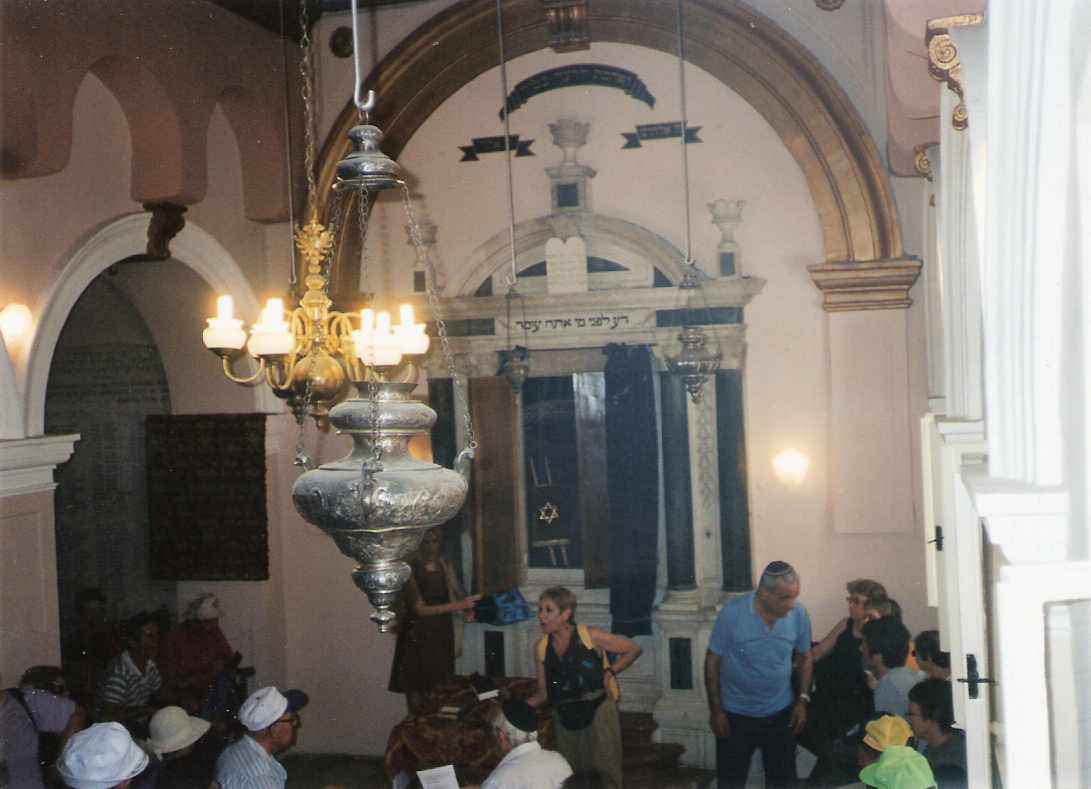
Split Synagogue
Split
Split Synagogue is an Orthodox Jewish synagogue in Split, Croatia, and one of the oldest Sephardic synagogues still in use today. It was built in the early 16th century, with its consecration usually dated to around 1507. It sits inside Diocletian's Palace, in the former Jewish quarter, and is a rewarding stop for anyone curious about Dalmatia's layered, multicultural past. Where is the Split Synagogue? The synagogue stands in the historic centre, within the walls of the Roman emperor Diocletian's palace, a UNESCO World Heritage site. It is not a free-standing building: the prayer hall occupies the upper floor of two medieval houses squeezed into the old ghetto. One source describes it as built into the palace's western wall. The coordinates are roughly 43.509 N, 16.439 E, so after seeing the Peristyle and the Golden Gate you can reach it on foot in a few minutes. How did a Jewish community end up in Split? Jews are mentioned in the city from the Middle Ages, and in the 15th and 16th centuries new waves of Sephardic refugees arrived, fleeing the Inquisition in Spain and Portugal, often by way of Italy. The newcomers built homes, a community and their own house of prayer. Two groups are usually distinguished in Split: the Ponentini, with roots in the Iberian Peninsula, and the Levantines, tied to the eastern Mediterranean and the Ottoman world. The synagogue follows the Nusach Sefard rite. What should you know about its history? The synagogue has endured for five centuries, though not without losses. According to some sources, the archives and furnishings of the old synagogue were destroyed in 1942, and after the war most of the community emigrated to Israel. Today Croatia's Jewish community is small, at around one hundred people. The building has been the subject of heritage preservation efforts because its historical value reaches far beyond the local level. What else is nearby? Another piece of Split's Jewish story is the cemetery on Marjan Hill, founded in 1573. It holds about 700 tombstones in the Sephardic style. Visiting both places helps you grasp how deeply the community was woven into the fabric of the city. Frequently asked questions Is the Split Synagogue still active? Yes. It is a working Orthodox synagogue and one of the oldest Sephardic ones in use anywhere. How old is it? It dates to the early 1500s, with consecration around 1507. Is it a separate building? No. It occupies the upper floor of two medieval houses in the former Jewish quarter, inside Diocletian's Palace. Which rite does it follow? Sephardic, Nusach Sefard. Can visitors go in? Check opening hours and entry rules with the local Jewish community before you go, since this is a place of worship. Dress modestly and keep a quiet manner, as in any house of prayer. The Split Synagogue is a small but telling relic of centuries of Sephardic Jewish life on the Adriatic coast. For travellers it complements the city's Roman and Venetian landmarks, showing that Split was a meeting point of many cultures and faiths from the Middle Ages to today. For many visitors it becomes the quietest and most memorable stop on a walk through the old town, especially if they want to see more than Roman walls and the seafront promenade.
-
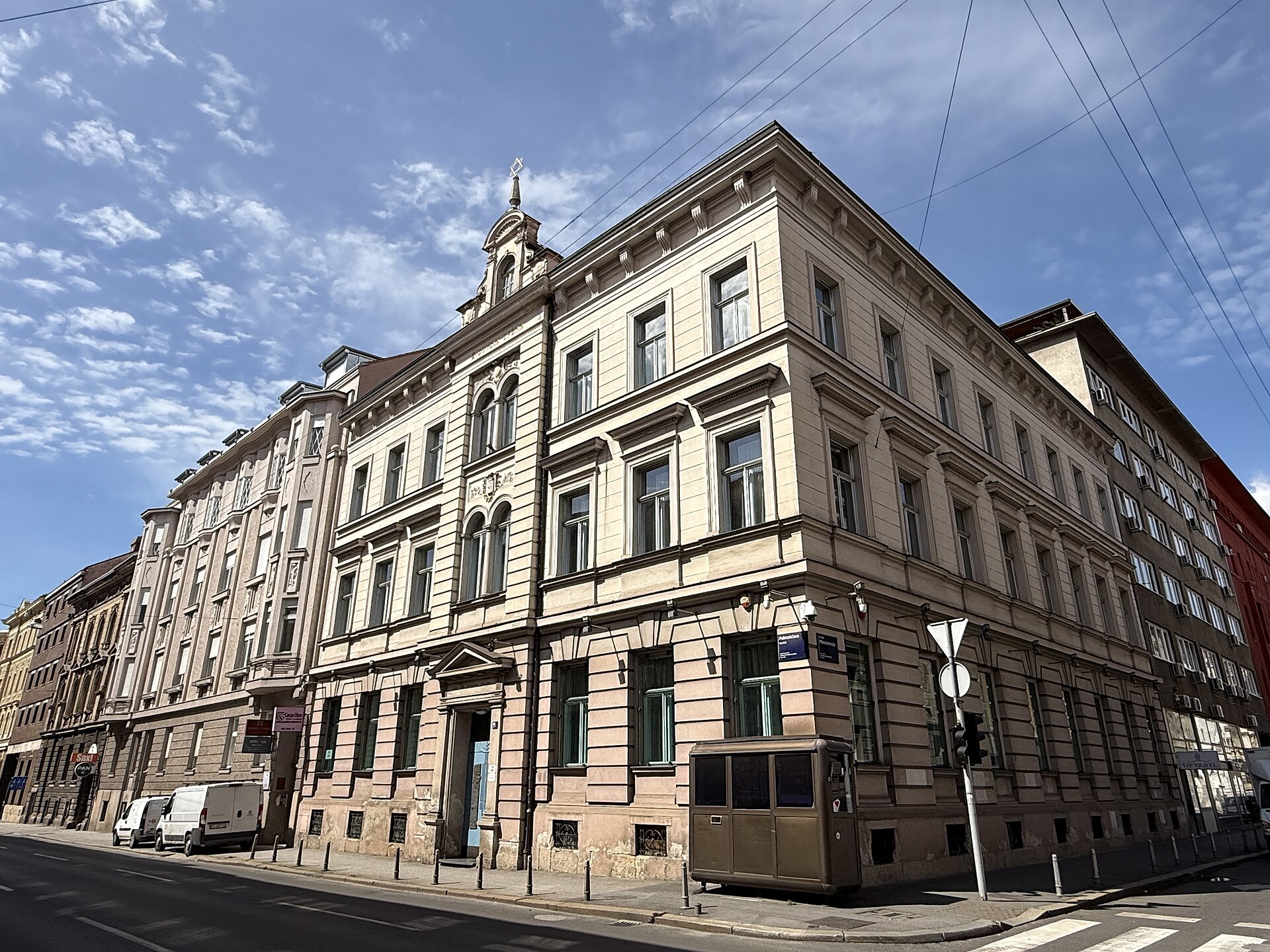
Synagogue of the Jewish Community of Zagreb
The Synagogue of the Jewish Community of Zagreb is the active place of worship on Palmotićeva Street in Zagreb, Croatia. It sits within the complex at number 16, which serves as the headquarters of the city's Jewish community. For anyone interested in Jewish history in Central Europe, it is one of the most meaningful stops in the Croatian capital. What is this place? The synagogue operates inside a building that has long been the hub of community life. The same address houses the community offices, a Holocaust research and documentation centre, a kindergarten, an art gallery and rooms for gatherings and events. It is also home to the Ladislav Šik Library, regarded as the largest Jewish library in the Balkans. The site therefore works as a religious, educational and cultural centre at once. What is the history of the community? The Jewish Community of Zagreb was founded in 1806 and grew to be the largest in Croatia. In 1867 it gained a grand Moorish Revival synagogue designed by Franjo Klein, standing on what is today Praška Street. That building was demolished at the end of 1941 under the Ustasha regime. The land was returned to the community in 1999, and plans for a new Jewish complex there have been discussed since. What happened during and after the war? In April 1941, German security police entered the community's premises at Palmotićeva 16, confiscated its property and sealed the building. After the war only this building was handed back to the community; other communal properties were returned gradually from the 1990s. In August 1991 the building was badly damaged in a bombing attack, and it reopened in September 1992 after repairs. Is it worth visiting? Yes, if you care about Jewish heritage, twentieth-century history, or less obvious corners of Zagreb. Keep in mind that this is a living institution rather than a museum, so respect its character and any entry rules. Frequently asked questions Where exactly is the synagogue? On Palmotićeva Street in Zagreb, at number 16, inside the Jewish community complex. Is it the same synagogue that once stood on Praška Street? No. The monumental 1867 synagogue on Praška was demolished in 1941. The current one operates in the community's headquarters on Palmotićeva. What else is in the building? Community offices, a Holocaust documentation centre, a kindergarten, a gallery, meeting rooms and the Ladislav Šik Library. Do I need to arrange a visit in advance? Entry rules are set by the community, so check its current information or contact it directly before you go. Who is the place for? Anyone seeking to learn about the Jews of Croatia, the community's fate during the Second World War and its life today. Summing up The synagogue on Palmotićeva combines prayer, remembrance of the Holocaust and the daily life of a community that has existed in Zagreb for more than two centuries. While you are there, take a short walk around the neighbourhood to trace the past and present geography of Jewish Zagreb.
-

Monastery of St. Mary of Mercy
Prvić Luka
Monastery of St. Mary of Mercy stands in Prvić Luka, the main settlement on the small island of Prvić in Šibenik-Knin County, Croatia. The complex combines a church and a monastery, and it is among the most important historical landmarks on the island. What is the history of the monastery? Construction of the church and monastery began in 1461, after Glagolitic friars had settled in Prvić Luka. These friars turned the village into a notable centre of Slavonic liturgy, which used the Glagolitic script. Some travel guides describe the monastery as Franciscan, so the sources differ on the order, but they agree on the starting year. Building work was still under way in 1479, which suggests that the complex took years to finish. Over the centuries the monastery was rebuilt several times. A major fire in 1884 destroyed much of it, and it was completely renovated afterwards. The bell tower dates from 1885. The fire also took a heavy toll on the archive: many documents written in Glagolitic were burned. What can you see inside the church? The church has five baroque altars that decorate its interior. Set into one of its walls is an early Christian fragment carved with a cross, a reminder that the island was settled long before the monastery was founded. Who is buried here? The church is the resting place of Faust Vrančić, the scientist and inventor from the Šibenik region. He died in Venice in 1617, but according to his own wish his remains were brought back to Prvić Luka and laid in the Church of Our Lady of Mercy. In 2012 a memorial centre dedicated to him opened in the village, so a visit to the monastery fits naturally with a walk to the centre. Visiting tips Prvić Luka is a small, quiet harbour village, and everything is within walking distance. The monastery is close to the waterfront, so you can combine it with a stroll along the harbour. Dress modestly, since this is an active place of worship. Opening hours vary by season, so check locally before you go. Frequently asked questions Where is the monastery? In Prvić Luka, on the island of Prvić near Vodice, in Šibenik-Knin County. When was it built? Work started in 1461, and it was still continuing in 1479. Why did it need renovation? A big fire in 1884 damaged it, and the monastery was fully renovated afterwards. Is there a link to Faust Vrančić? Yes. His remains were transported to the church here, according to his wish, after he died in 1617. Can I see the interior? The church has five baroque altars and an early Christian cross fragment in a wall, but access depends on local opening times.
-
Franciscan monastery and St. Mary's church in Makarska
Makarska
The Franciscan Monastery and St. Mary's Church in Makarska form one of the town's key landmarks, standing right beside the seafront promenade and the main square. The complex brings together a working monastery, a church and a shell museum, so a single visit covers history, sacred architecture and Adriatic natural history. How did the Franciscan monastery in Makarska begin? The Franciscans settled in Makarska in the late 15th century, outside the town of the time and close to a church dedicated to the Virgin Mary. Construction of the monastery is dated to 1502, and in 1518 the community was formally recognised as a monastery. From the start the friars played an important pastoral and social role, and the monastery became a reference point for people across the coastal strip below the mountains. A turbulent history The fate of the complex follows the story of Dalmatia itself. In 1572, during the War of Cyprus, the Venetians demolished the monastery for military reasons. The rebuilt ensemble later suffered fire during the Cretan War, and in 1667 a powerful earthquake caused further damage across the region. As a result the walls show layers of several eras, and the older part of the monastery is protected as a cultural monument. St. Mary's Church Next to the monastery stands the church dedicated to the Blessed Virgin Mary. A medieval church tradition exists on the site, while the present, larger church was begun around 1910 and finished in the 1940s. The interior is bright and spacious, and its calm atmosphere contrasts with the buzz of the seaside cafes across the square. The Malacological Museum The old part of the monastery houses the Malacological Museum. It was founded by the Franciscan Dr. Fra Jure Radić and opened on 30 April 1963. The collection holds more than three thousand specimens of shells and snails, mostly from the Adriatic but also from seas around the world, plus a small fossil collection. Families with children tend to enjoy it, because it shows shapes and colours you rarely spot on an ordinary beach walk. Frequently asked questions Where is the monastery? In central Makarska, near the harbour, the promenade and the main square, within easy walking distance of most hotels. Can I visit the shell museum? Yes, it is inside the older part of the monastery. Opening hours change with the season, so check the museum's website before you go. How long should I plan? About half an hour for the church and monastery; with the museum, usually one to one and a half hours in total. What should I wear? Dress suitable for a place of worship: covered shoulders and knees, and quiet respect for people who are praying. Is it a good rainy-day stop? Yes. The church and museum interiors are a good alternative to the beach when the weather turns. Combine the visit with a stroll through the old town and along the waterfront. From the square you can see the Biokovo range rising behind the buildings. It is a quiet stop that shows Makarska is more than beaches: it carries over five centuries of Franciscan presence, destroyed and rebuilt many times by the townspeople.
-
Franjevački samostan i crkva sv. Dujma u Kraju
Kraj
The Monastery of Saint Dujam (Croatian: Samostan svetog Dujma) is a Franciscan monastery in the village of Kraj on the island of Pašman, Croatia. Tourist guides call it the most important sacred building on the island, and its story reaches back to the late 14th century. Where is the monastery? The monastery stands in Kraj, a small coastal settlement on Pašman in Zadar County. A bridge links Pašman to neighbouring Ugljan, so reaching it from Zadar is straightforward: take a ferry to Ugljan, then continue along the island road and across the bridge. The village is quiet and seaside, a good stop on a trip through central Dalmatia. What is its history? The origins are tied to Zadar. Researchers say the first church was built in 1384 as a modest endowment of the Grisogono family. A few years later, in 1389, the property passed to the Franciscans, who had come to Zadar as refugees from Bosnia. The foundation is also linked to the will of Pelegrina Saladin, a widow from Zadar; a copy of that document is kept by the Benedictine nuns' convent in Zadar. From the start, then, the monastery was woven into the circle of Zadar patrons and religious orders. What can you see? Visitor descriptions mention mainly: arcades and a Renaissance cloister, the calm courtyard being the most characteristic part of the complex, a monastic library, a valuable feature reflecting centuries of the order's work, a small museum with historical artifacts from the monastery and its surroundings. This is a living religious house, so visitors are expected to keep quiet and respect the friars who live here. Can you stay overnight? According to travel sites, the monastery welcomes overnight guests, and meals are served in the refectory. It is a rare chance to share a little of Dalmatian monastic life, away from crowded resorts. Given the nature of the place, book ahead and ask about house rules. Frequently asked questions Is the monastery open to visitors? Yes, but hours can be limited. One source lists afternoon hours on weekdays, yet I found no official confirmation, so check the current schedule locally or by phone before you go. Which order runs it? It is a Franciscan monastery, established on Pašman since the late 14th century. How old is it? The first church dates to 1384, and the friars took over the property in 1389. The present complex, with its Renaissance cloister, results from later building phases. Is it worth a short visit? Yes, if you are exploring Pašman. An hour is enough for the arcades, cloister and museum, leaving time for the sea around Kraj. How do I get there? From Zadar by ferry to Ugljan, along the island road, over the bridge to Pašman, then on to the village of Kraj.
-
Krka monastery
Općina Kistanje
Krka Monastery (Monaster Krka) is an Orthodox monastery for monks set in the valley of the Krka River, about 3 km east of Kistanje in central Dalmatia, Croatia. It lies within Krka National Park and belongs to the Eparchy of Dalmatia of the Serbian Orthodox Church. It is among the most significant centres of religious life for Orthodox Serbs in Croatia and carries special importance for Serbian culture in the region. Where is Krka Monastery and how do you get there? The monastery sits in a quiet, wooded valley, far from the crowded waterfalls the river is famous for. The nearest settlement is Kistanje, in the municipality (općina) of the same name. The setting is typical Dalmatian countryside, rocky and green, along the river inside the protected national park. What is the history of the monastery? The exact founding date is debated. Monastic tradition links the beginnings to the mid-14th century and Princess Jelena Nemanjić Šubić; other sources give 1359, and some historians point to the late 16th century. According to the national park, there is no reliable record of when it was built; it most likely grew in the 15th century on the foundations of an earlier hermitage. Little-explored catacombs lie beneath the buildings, and the site is associated with Roman-era remains. Over time Krka became the spiritual centre of Orthodoxy in Dalmatia. In 1578 the abbot was appointed exarch of the Dalmatian Orthodox Church, and until 1810 the monastery remained the main Orthodox centre in the region. In 1615 a theological school opened here, which later developed into the seminary in Zadar. What can you see on site? The main building is the Church of St Michael the Archangel, whose current form dates to 1422 and which was restored several times over the centuries. Visitors can see the monastic complex, usually made up of the church, the monks' living quarters and stone-walled grounds. The church interior is a place of worship, so modest dress and quiet behaviour are expected. Frequently asked questions Is Krka Monastery near the Skradinski Buk waterfalls? No. It lies in a different part of the park, near Kistanje, and is not a main stop on the waterfall routes. Which church does the monastery belong to? The Serbian Orthodox Church, under the Eparchy of Dalmatia. When was it founded? There is no single confirmed date. The 14th century, the 15th century and the late 16th century are all proposed, and monastic tradition gives 1345 or 1350. Why is the place important? From 1578 to 1810 it was the main centre of Orthodoxy in Dalmatia, and a theological school has operated here since 1615. Can I go inside the church? It is a working monastery, so the monks set visiting hours and rules. Check current information before you go and dress appropriately. Who is it for? It suits travellers interested in Dalmatian history, Balkan culture and sacred architecture, and those who want a calmer, less touristy side of Krka National Park. It combines well with visits to other nearby towns in the Šibenik-Knin region.
-
Orahovica Monastery
Grad Orahovica
Orahovica Monastery is a Serbian Orthodox monastery in the village of Duzluk, part of the town of Orahovica in eastern Croatia's Slavonia region. It is one of the oldest known Orthodox centres in this part of the country, and its church is a valuable architectural monument. What is this place? The monastery belongs to the Serbian Orthodox Church. It stands in Duzluk, within the municipality of Orahovica, in what was once Virovitica County. Its coordinates are roughly 45.488 N, 17.878 E, so it is easy to find on a map. How old is it? The monastery was founded before the end of the 15th century. An Ottoman register from 1579 lists it as the "monastery of Remeta". By 1583 it appears as the seat of the Požega metropolitanate and an important cultural and religious centre. For the story of Slavonia under Ottoman rule, that is a significant sign of continued spiritual life. What is worth seeing? The highlight is the Church of St. Nicholas, built in 1592. It is the only example of the Morava architectural school in Slavonia, which makes it exceptional within the region. Inside are frescoes, among them a rare depiction of the genealogy of the Nemanjić dynasty, the medieval rulers of Serbia. A turbulent history The monastery complex was burnt and destroyed several times and rebuilt each time. The last major reconstruction took place in 1938. The buildings suffered damage again during the Second World War and in the 1990s war. Conservation today In 2018 the Croatian Conservation Institute carried out interdisciplinary research on the Church of St. Nicholas. A project begun in 2023 covers conservation of the icons and iconostasis, and restoration of the church dome is also under way. Work is still under way, so check before a visit which parts of the site are open. Frequently asked questions Where is Orahovica Monastery? In the village of Duzluk, within the town of Orahovica in Slavonia, north-eastern Croatia. Which church does it belong to? The Serbian Orthodox Church. When was the church built? The Church of St. Nicholas dates from 1592, while the monastery itself is older, founded before the end of the 15th century. What makes the building special? It is the only example of the Morava school in Slavonia, and its frescoes include a rare genealogy of the Nemanjić family. Has it been restored? Yes. It was rebuilt several times, most recently in a major way in 1938, and conservation work is continuing now. Who should visit? The site appeals to lovers of history, sacred architecture and church art. It pairs well with exploring Orahovica itself and the wider Slavonia area. For anyone interested in the heritage of the Balkans, it is a rewarding stop that shows how cultural and religious influences intertwined here over several centuries.
-
Gomirje Monastery
Musulini
Gomirje Monastery is a Serbian Orthodox monastery in western Croatia, in the village of Gomirje near the town of Ogulin in the Gorski Kotar region. It is regarded as the westernmost monastery of the Serbian Orthodox Church. It belongs to the Eparchy of Gornji Karlovac and is dedicated to St John the Baptist. Where is Gomirje Monastery? The monastery stands in the western part of Croatia, close to the village of Gomirje and not far from Ogulin, at roughly 45.34° N, 15.11° E. It sits in a quiet, hilly corner between Zagreb and the Adriatic coast, which makes it an easy stop on the way to the sea or part of a Gorski Kotar road trip. What is the history of the monastery? The monastery's beginnings are tied to the year 1600. In that year Juraj Frankopan granted the depopulated village of Gomirje to 325 Serb refugees from the Udbina and Korenica areas, which were then under Ottoman rule. The site had earlier held a Frankopan castle with a church of St Mary, destroyed during the wars with the Ottomans. The settlers also served as defenders of the frontier. Tradition says the first settlers brought six or seven monks from the Krka monastery in Dalmatia. This is a local legend rather than a confirmed fact. The monastery is dated to around 1600. What is there to see? The main monument is the church of the Nativity of St John the Baptist, built in 1719. It is a three-nave building with a semicircular apse, a dome and a bell tower at the front. The tower has its own story: in 1621 Vuk Krsto Frankopan built a tower beside the monastery, which was turned into a bell tower in 1719, with the church attached to it. Local tourist materials therefore call it the bell tower of monks and soldiers. For anyone interested in sacred architecture and frontier history, it shows how the influence of the Frankopan family, Serb settlement and Orthodox tradition came together in one place. Frequently asked questions Is Gomirje Monastery an active Orthodox monastery? It is a Serbian Orthodox monastery in the Eparchy of Gornji Karlovac. Check current opening hours and visiting rules before you go, as this page gives no current details. When was it founded? It dates to around 1600. The present church dates from 1719. Is it really the westernmost Serbian monastery? Yes, it is described as the westernmost monastery of the Serbian Orthodox Church. How do I get there? The monastery is near the village of Gomirje close to Ogulin. Driving is the most convenient option; head for Ogulin in Gorski Kotar. Who will enjoy a visit? Readers interested in Croatian history, Orthodox church architecture and the Frankopan family, and travellers looking for quiet places away from the coast.
-
Monastery of St. Francis Assisi
Zadar
The Monastery of St. Francis in Zadar (Croatian: Samostan sv. Frane) is a Franciscan complex dating to the 13th century, set in the city's historic centre. Beside it stands the Church of St. Francis, regarded as the oldest Gothic church in Dalmatia. It is also the place where the Peace of Zadar was signed in 1358, an agreement that shaped the political map of the Adriatic coast. What is the history of the monastery? The layout visitors see today took shape between the middle of the 13th century and the early 14th century, when the church, the sacristy and the first cloister were built. The church was consecrated in 1280, and an archival document confirms that the cloister existed by 1380. After the general chapter held in Cologne in 1393, the monastery became the seat of the Franciscan Province of St. Jerome in Dalmatia. Friars of that province still look after the complex. In the middle of the 15th century the reconstruction of the choir was completed, including a podium made by Juraj Dalmatinac, one of the leading master builders of Dalmatian architecture of his era. Why does the sacristy matter? The sacristy doubled as the chapel of St. Louis and as the chapter hall. In 1358 it hosted the signing of the Peace of Zadar between King Louis I of Anjou, ruler of Hungary and Croatia, and the Republic of Venice. The treaty placed Dalmatia under the Hungarian-Croatian crown for roughly half a century. Because of this, the monastery is tied to the region's political history as much as to monastic life. A European distinction The complex has been awarded the European Heritage Label as one of the sites linked to the theme of peace. The award was presented in a ceremony in Brussels, underlining the monastery's importance beyond Zadar and Croatia. Visiting tips The monastery lies within the old town, so it fits easily into a walk around the Zadar peninsula alongside other landmarks. It remains a working religious site, so modest dress and quiet behaviour are appropriate. Opening hours and entry rules can vary with services and the season, so check locally before you go. Frequently asked questions How old is the monastery? It dates to the 13th century; its present layout formed between the mid-13th and early 14th centuries. What was signed at the Monastery of St. Francis in Zadar? The Peace of Zadar, concluded in 1358 in the sacristy between Louis I of Anjou and the Republic of Venice. Who runs the monastery? Franciscans of the Province of St. Jerome. Is the church really the oldest of its kind? It is considered the oldest Gothic church in Dalmatia and was consecrated in 1280. Is it still an active religious site? Yes. It is a working Franciscan monastery, so visitors should keep to a respectful, quiet manner.
-
Church and monastery of St. Euphemia
Split
Church and Monastery of St. Euphemia, Split The Church and Monastery of St. Euphemia is a medieval Benedictine complex in Split, of which mostly foundations and wall fragments survive today. It appeals to anyone interested in Dalmatian sacred architecture and the monastic past of the city. What was this place? The complex began as part of a Benedictine monastery. The church was built shortly before 1069, and its foundation is linked to Archbishop Lovro of Split, who held office from 1060 to 1099. Some studies say the church was originally dedicated to St. Benedict, with the name of St. Euphemia attached later. The community living here was a convent of Benedictine nuns, and building work on the complex continued in stages from the 11th century into the 18th. What did the church look like? It was a three-aisled building covered by a dome, with three semicircular apses on the eastern side. This layout makes it an important case study of the domed church in medieval Dalmatia, and scholars have devoted separate articles to it. In 1444 a late Gothic chapel was added on the south side, connected with the cult of a blessed archbishop venerated in Split. What happened to the monastery? The French authorities closed the monastery in 1806. The buildings were afterwards put to military use, including as a hospital. In 1877 a fire destroyed the entire complex, and further damage followed during the Second World War. Today the church's original appearance is known mainly from earlier drawings and archaeological research. Is the site protected? Yes. The ensemble is registered as immovable cultural property of Croatia under number Z-3424. Frequently asked questions Can I go inside? The church no longer exists as a working building. Foundations and traces of walls remain, so think of it as a short stop to see the traces of history rather than a traditional interior visit. Was it a monastery of monks or nuns? Studies describe it as a Benedictine convent, although some texts use the more general phrase "Benedictine monastery". Why is so little left? The main cause was the 1877 fire, after which the complex was not rebuilt, followed by later wartime damage. Who is it for? Lovers of Romanesque and Gothic architecture, fans of Split's history, and travellers who want lesser-known monuments away from the main route around Diocletian's Palace.
-
Monastery of Saint Jerome in Ugljan
Ugljan
The Monastery of Saint Jerome in Ugljan is a Franciscan monastery on the island of Ugljan, just off the coast of Zadar in northern Dalmatia, Croatia. Locals know it simply as Mostir, and it is one of the oldest and most valuable monuments on the island. When was the Monastery of Saint Jerome built? The church and the monastery date to 1430. According to tourism and heritage sources, they were built with the support of noble families from Zadar, and the Benja family of Zadar is associated with the site. That makes the complex a good example of how wealthy mainland families invested in religious buildings on the Zadar islands during the 15th century. What does the monastery look like? The complex combines Gothic and Romanesque elements. The church is Gothic, while the cloister has a Romanesque colonnade with carved capitals. The result is a calm, enclosed space of stone arches and a courtyard, typical of late medieval monastic architecture in Dalmatia. The cloister is sometimes used as a venue for summer concerts, which suits its acoustics and atmosphere. What can you see inside and around it? Several details make the visit worthwhile: The Ugljan polyptych by the painter Ivan Petrov, a Gothic altarpiece that one source describes as among the most valuable Gothic paintings of medieval Croatia. The epitaph of Šimun Kožičić-Benja (1460-1536) in the courtyard. He was a bishop and humanist linked to the Benja family, and he is remembered for the first book printed in Glagolitic script, a milestone in Croatian cultural history. The cloister itself, with its carved capitals and shaded courtyard. Is the monastery open to visitors? Opening is seasonal. Sources report that the monastery can be visited in summer, while the church is open during services. Hours change from year to year, so it is worth checking locally or with the Zadar archipelago tourist information before you go. Dress modestly, as this is still a religious site. How do you get there? Ugljan lies a short ferry ride from Zadar, with regular connections to the island's ports. Once on the island, the monastery can be reached by bike, car or on foot along local roads. The island is flat and green, covered with olive groves and pines, so cycling between the villages and the monastery is a popular way to explore. Frequently asked questions Who founded the Monastery of Saint Jerome? It was built in 1430 with the support of noble families from Zadar. What style is it? A mix of Gothic and Romanesque, with a Gothic church and a Romanesque cloister. What is the most important artwork? The Ugljan polyptych by Ivan Petrov. Who is commemorated in the courtyard? Šimun Kožičić-Benja, associated with the first printed Glagolitic book. Is it worth visiting? Yes, for history, art and a quiet stop away from the busy beaches, especially if you are already exploring Ugljan by bike.
-
Boninovo Cemetery
Dubrownik
Boninovo Cemetery is a multi-confessional burial complex in Dubrovnik, set just outside the Old Town walls in the neighbourhood of the same name. It brings together several adjoining sections: a municipal cemetery, an Orthodox one and a Jewish one. It is a quiet place where the city's layered past can be read from its gravestones. What is Boninovo Cemetery? Boninovo is Dubrovnik's main municipal cemetery and, at the same time, a cluster of separate burial grounds belonging to different religious and national communities. The land is owned by the City of Dubrovnik and managed by the municipal company Boninovo d.o.o. The cemetery is protected by the Croatian Ministry of Culture, which underlines its value as a heritage site. How did it come about? The Boninovo area was once home to summer estates of Dubrovnik's nobles and wealthy citizens. During the Russian-Montenegrin siege of Dubrovnik in 1806, the countryside around the city was devastated and many villas in Boninovo were burnt. Cemeteries were later laid out on these former properties. The Orthodox section was created in the garden of one of the ruined villas, and the chapel of the municipal cemetery was rebuilt on another burnt villa. The layout still carries a trace of the old suburban villa landscape. Who is buried here? The Orthodox section holds mostly Serbs, along with Montenegrins, Greeks and Russians. Among the Russians are many émigrés who left their homeland after the 1917 revolution and found refuge in Dubrovnik. For anyone interested in twentieth-century history, it is a telling trace of the Russian diaspora on the Adriatic. The Jewish section The Jewish cemetery at Boninovo is part of the complex and has roughly two hundred tombstones. Some were moved from the older Jewish cemetery, preserving the memory of a long-rooted community in the city. Sources give different founding dates for this section, placing it around the turn of the twentieth century. The property was nationalised in 1958 but kept its status as a historical landmark. Dubrovnik's Jewish community is among the oldest in the region, so this burial ground matters well beyond the local level. How to visit Boninovo is not a typical ticketed attraction with a set route. It is a working cemetery, so respect is expected: quiet dress and behaviour, no loud conversation, and no photographing of funeral attendees. It is best to explore each section in turn, noticing the differences in the form of the gravestones, the inscriptions and the symbolism. Latin, Cyrillic and Hebrew lettering reflect distinct traditions that coexisted in one city for decades. Frequently asked questions Is Boninovo Cemetery open to tourists? It is a working municipal cemetery, so visitors are welcome as long as they keep the dignity of the place and avoid disturbing ceremonies. Who is buried here? Dubrovnik residents of several faiths: Catholics, Orthodox Christians (including Serbs, Montenegrins, Greeks and Russian émigrés) and members of the former Jewish community. Is the cemetery a protected monument? Yes. It is under the protection of the Croatian Ministry of Culture, and the Jewish section holds historical landmark status. What is the link between Boninovo and the 1806 siege? Many summer villas in the area burned during the siege, and cemeteries were later established on some of the burnt estates. Who manages the cemetery? It belongs to the City of Dubrovnik and is run by Boninovo d.o.o.
-
Bulgarian Military Cemetery, Vukovar
Vukovar
Bulgarian Military Cemetery in Vukovar is a war cemetery in eastern Croatia where 1,027 Bulgarian soldiers and officers lie buried. They died in 1944, in the closing phase of the Second World War in Yugoslavia, during the fight to liberate Vukovar from fascist forces. It is one of the quieter memorial sites in a town whose 20th-century history is marked by more than one war. What is the Bulgarian Military Cemetery in Vukovar? The cemetery is a collective burial ground for men of the 1st Bulgarian Army. In late 1944 this formation held the Syrmia Front line, a stretch running from Sotin through Grabovo, Berak and Orolik. The soldiers buried here fell in those battles, and the grave holds the remains of 1,027 people in total, both rank-and-file soldiers and officers. Where is it located? The site lies southeast of the centre of Vukovar, next to the New Cemetery of Dubrava. Anyone visiting the larger memorial cemetery for the victims of the Homeland War will therefore find the Bulgarian plot close by, which makes it easy to combine both stops in one walk through the town's remembrance sites. How did the memorial develop over time? The place was first marked in 1965. During the Croatian War of Independence in the 1990s the memorial was damaged, and Bulgarian accounts describe it as destroyed. A commemorative plaque was placed there in 1999. Between 1999 and 2002 the Bulgarian Embassy in Zagreb and the Bulgarian Ministry of Defence carried out a three-year restoration, completed in 2002. On 26 April 2016 a monument bearing the names of everyone buried at the cemetery was consecrated, giving each of the 1,027 men a place in the written record of the site. Is the cemetery still used for ceremonies? Yes. Every year around 6 May, on the Day of Valour and Holiday of the Bulgarian Armed Forces, a memorial ceremony is held here to honour the fallen. Bulgarian state delegations also come to pay respects: President Rumen Radev laid tribute at the cemetery on 15 July 2025. What can a visitor expect? This is a place for quiet reflection rather than a typical sightseeing stop. It suits travellers interested in the Second World War in the Balkans, in military history, or in the layered memory of Vukovar, where memorials from different eras and different nations stand within a short distance of each other. Visitors should dress modestly, keep voices low and treat the grounds with the respect due to a war grave. The monument with the list of names is the focal point of the visit, and reading it gives a sense of the scale of the losses on the Syrmia Front. Frequently asked questions Who is buried in the Bulgarian Military Cemetery in Vukovar? 1,027 Bulgarian soldiers and officers of the 1st Bulgarian Army, killed in 1944. Which battles are linked to the cemetery? The fighting along the Syrmia Front, which ran from Sotin to Grabovo, Berak and Orolik, and the liberation of Vukovar at the end of the war. Was the cemetery damaged in the 1990s? Yes. It was damaged during the Croatian War of Independence and later restored, with work completed in 2002. When is the best time to visit? Around 6 May, when the annual ceremony for the Bulgarian Armed Forces holiday takes place, although the cemetery can be visited at any time of year. Is there an entrance fee? It is a memorial cemetery, a place of remembrance open to those who wish to pay respects.
-
National Memorial Cemetery of The Victims of Homeland War in Vukovar
Vukovar
The National Memorial Cemetery of the Victims of the Homeland War in Vukovar is one of the most moving remembrance sites in Croatia. It sits on the eastern approach to the city, in Vukovar in eastern Slavonia, and honours the people killed during the 1991 siege and the events that followed. What is this place? The cemetery was created at the site of a former mass grave at Vukovar's New Cemetery (Novo groblje). In 1998 the remains of 938 people were exhumed here, and 859 of them have since been identified. It is regarded as the largest mass grave in Croatia and one of the largest in Europe since the Second World War. The site received its official status as a memorial cemetery for the victims of the Homeland War in 2010. What does it look like? What strikes you first are the rows of white marble crosses set across a carefully kept, open field. There are 938, one for each exhumed victim. The crosses are identical, which gives the space a stark, quiet character. The names of identified people can be found on individual graves nearby. In the central part stands a four-metre bronze monument by sculptor Đurđa Ostoja, unveiled in 2000. The whole is a place for silence and reflection rather than a typical tourist attraction. Historical background In autumn 1991 Vukovar was besieged and shelled for many weeks before the city fell. It became a symbol in Croatia of resistance and of civilian suffering. The people buried in the mass grave were victims of those events; years later their remains were identified and reburied with dignity. Their memory remains alive among locals, and on 18 November, the anniversary of the city's fall, commemorations and a remembrance march take place here. How to visit Behaviour: this is an active cemetery and a place of mourning. Dress modestly, speak quietly and avoid walking among the crosses in ways that could offend other visitors. Time: 30 to 45 minutes is usually enough for an unhurried walk. Combining with other sights: many travellers pair it with Ovčara, a memorial site outside the city, and with the war-related museums in central Vukovar. Photos: take them with sensitivity, without posing and without disturbing others' reflection. Frequently asked questions Is there an entrance fee? No, it is an open memorial cemetery and free to visit. It is worth checking access hours before you go. How many people rest here? 938 people were exhumed, of whom 859 have been identified. Each victim is represented by a white cross. Is it suitable for children? It is a solemn place of remembrance. Parents should prepare children for its nature beforehand and explain why quiet is expected. How do I get there? The cemetery lies on the eastern approach to Vukovar, so it is easy to reach by car or taxi from the centre. Why does this place matter? It bears witness to the scale of the 1991 atrocities and is an important stop for anyone who wants to understand Croatian history and the fate of Vukovar, a Danube city that is still rebuilding its everyday life. Who is it for? It suits readers interested in the recent history of the Balkans, so-called remembrance tourism and reflective travel. It is a stop that stays with you long after you return, and it helps you see Vukovar not only as a baroque town on the river but also as a place with a difficult and important history. When planning a trip through Slavonia, set aside a separate, calm part of the day for this stop, without hurry or a tight schedule, so you can walk along the rows of crosses and pause by the bronze monument.
-
Mirogoj Cemetery
Zagrzeb
Mirogoj Cemetery in Zagreb is one of Croatia's best-known burial grounds, and many travellers treat it as an open-air gallery of architecture and sculpture. Rather than a gloomy necropolis, you will find a green, carefully laid-out complex with long arcades, domes and monuments by well-known artists. When was Mirogoj founded? The cemetery officially opened on 6 November 1876. For its time it was notable for welcoming people of all faiths, which reflects the character of a city where different religious traditions met over the centuries. Today Mirogoj remains Zagreb's main city cemetery. Who designed it? The arcades and the overall layout are credited to Hermann Bollé, an architect of French and German-family background who left many distinctive buildings across Zagreb around the turn of the twentieth century. Construction of the arcades began in 1879, and Bollé worked on them until 1917. He died in 1926 before fully realising his plans for a central dome and chapel; these elements were completed to his designs shortly after his death, and according to some sources the central section was finished in 1929. What will you see? The arcades – long covered galleries running along the cemetery, sheltering tombs and memorial plaques. They are Mirogoj's most recognisable feature and a fine place for an unhurried walk, even in the rain. The church at the main entrance – topped by a copper-green dome that is visible from a distance. Sculpture and tombstones – many graves feature works by well-known Croatian sculptors, including Ivan Meštrović, Antun Augustinčić and Dušan Đamonja. Greenery – tree-lined paths make the place feel more like a park than a cemetery. Who is buried here? Many people important to Croatia rest at Mirogoj. They include the architect Hermann Bollé himself, the writer Ivana Brlić-Mažuranić, basketball player Dražen Petrović, abstract painter Edo Murtić and Franjo Tuđman, the first president of independent Croatia. A stroll along the paths is therefore also a lesson in the country's cultural, sporting and political history. The 2020 earthquake On 22 March 2020 a magnitude 5.5 earthquake struck Zagreb and damaged the Mirogoj arcades as well. If you are planning a visit, it is worth checking before you travel whether every section is open to visitors. Frequently asked questions Where is Mirogoj? In Zagreb, the capital of Croatia, at roughly 45.8357 N, 15.9844 E. Can tourists visit Mirogoj? Yes. It is an active cemetery but welcomes visitors. Keep quiet, dress modestly and do not disturb funeral attendees. How much time should I plan? One to two hours is usually enough for a relaxed walk along the arcades and main paths, longer if you want to find specific graves. Is it a good place for photos? Yes, the arcades, domes and sculptures are very photogenic, but photograph with respect for other visitors and mourners. Who is this visit for? We recommend Mirogoj to lovers of nineteenth-century architecture, Croatian history and sculpture, and to anyone looking for a calm place away from Zagreb's main attractions. It makes a good reflective stop in a capital itinerary, combining art, greenery and important threads of the country's past. For many people it turns out to be one of the most memorable stops of their stay in the city.
-
Koprivnica City Cemetery “At the Holy Spirit”
Grad Koprivnica
Koprivnica City Cemetery "At the Holy Spirit" (Pri Svetom Duhu) is the main burial ground of Koprivnica in northern Croatia. Since 2016 it has held protected cultural-heritage status, and its paths, greenery and chapel make it a quiet place to walk with some history in the background. Where is the cemetery and why visit? The cemetery lies within Koprivnica, a town in the Podravina region of Koprivnica-Križevci County, not far from the Hungarian border. Most visitors are locals paying respects, but people interested in local history and garden design are drawn by the layout of the alleys, the mature trees and the chapel. The name comes from the Holy Spirit chapel beside which the burial ground was established. How did burial in Koprivnica change over time? The oldest written mention of a cemetery in the town centre dates to 1607. Burials then took place inside the fortress, next to the Church of the Blessed Virgin Mary. The cemetery was later moved next to St. Lucy's Chapel. In the early 1800s the parish priest Adam Žuvić pointed out that houses had grown too close and proposed a new location. The move happened in 1845, to the ground by the Holy Spirit chapel, where the cemetery remains today. Sources vary slightly on some dates, but the sequence is consistent. When was the chapel built and how was the site shaped? A new Holy Spirit chapel was built in 1873, and the chapel standing now comes from that rebuilding. The cemetery was enlarged in 1869, though the grounds were still unplanned at that point. In the 1890s the town gardener Dragutin Ruhl began landscaping the site. Its present park-like appearance was given by the town gravedigger Ivan Maček. As a result it feels more like a well-kept garden than a plain burial ground. Who is buried here? The cemetery holds the graves of figures remembered locally, among them Leander Brozović, Đuro Ester and Božena Loborec. Looking for their graves is a good reason to walk through much of the grounds and see both older and newer sections. What is its status today? On 18 November 2016 the cemetery, together with its buildings and landscaping, was declared a cultural good. It is still an active municipal cemetery, managed by the utility company Komunalac d.o.o. It is part of the Association of Significant Cemeteries in Europe, and in May 2026 it took part in the European Cemeteries Week. How should you behave when visiting? This is a working burial ground, so keep quiet and respect families who are visiting graves. Limit photography to the paths, greenery and chapel, and avoid photographing mourners. It is busiest around All Saints' Day and All Souls' Day, when candles burn on the graves and wreaths are laid by the town. A calmer visit is possible outside that period. Frequently asked questions Is there an entrance fee? No fee information was found; it is a municipal cemetery. Is the cemetery still in use? Yes, burials continue. Is it worth a special trip? For those who enjoy local history, garden design and quiet walks, yes, especially combined with a visit to Koprivnica's centre. Who runs it? Komunalac d.o.o. Since when has it stood on this site? It was moved here in 1845.
-
Trsat Cemetery
Grad Rijeka
Trsat Cemetery in Rijeka Trsat Cemetery (Croatian: Gradsko groblje Trsat) is a municipal cemetery in Rijeka, Croatia, set in the Trsat district, which was once part of the separate town of Sušak. It is a working burial ground, a memorial park and an open-air gallery of funerary sculpture. How long have people been buried at Trsat? Burials at Trsat go back to the 17th century. In 1648 the Franciscan Franjo Glavinić described an older cemetery in front of the Church of St. Mary, beside the hilltop's well-known Marian shrine. The present municipal cemetery was officially opened on 3 June 1901, and the first burial took place the next day, 4 June 1901. It started small, but as the population of Sušak grew it was regularly maintained, improved and enlarged. What is there to see at Trsat Cemetery? The grounds hold many crypts and tombs designed by Croatian and local architects and sculptors from Rijeka and Sušak. Numerous sculptures are by Ivan Rendić, a leading Croatian sculptor, mostly from the second phase of his career, between 1900 and 1925. The cemetery is also described as a memorial park with notable grave horticulture, so a walk along its paths is as much about landscape as about history. Who is buried here? The City of Rijeka lists graves of people important to Croatian history, including members of the Trnski, Ramous, Turković and Ružić families. The family tombs are worth a look for what they show of Sušak's local elite around the turn of the 20th century. Heritage protection Since 2006 the Kozala and Trsat cemeteries in Rijeka have been permanently protected as cultural and historical complexes with the status of cultural heritage. The city also runs a programme to rehabilitate and renovate historic grave sites at both cemeteries. Trsat is managed by the municipal company Kozala, which looks after eight cemeteries in and around Rijeka, among them Kozala, Trsat, Drenova, Zamet, Draga and Sveti Kuzam. Frequently asked questions Where is Trsat Cemetery? In Rijeka's Trsat district, on the hill above the city, close to the Marian shrine. When did it open? The official opening was on 3 June 1901, with the first burial on 4 June. Is it a protected site? Yes. Since 2006, together with Kozala Cemetery, it has been protected as a cultural and historical complex. Who made the sculptures? Many are by Ivan Rendić, alongside other sculptors and architects from Rijeka and Sušak. How should I visit? It is still in use by mourners, so keep quiet and show respect. A walk here pairs well with a visit to the Trsat shrine.
-
Kozala Cemetery
Grad Rijeka
Kozala Cemetery is the most important necropolis in Rijeka, Croatia, set on a hillside above the city. Walking among its historic gravestones and mausoleums is a way to trace the story of a port city where Italian, Austro-Hungarian and Croatian influences mixed for centuries. How did Kozala Cemetery begin? The first plot of land for the cemetery was bought as early as 1771. It officially opened in 1838, and in 1872 it was established as a communal cemetery of public interest. Over the following decades it grew along with the city and became the resting place of many of its most prominent residents. Who is buried here? Kozala holds members of the families that shaped Rijeka: industrialists, doctors, merchants and local figures. Names highlighted by the local tourist information include Ciotta, Salcher, Ossoinack, Hajnal, Gorup, Meynier, Venucci, Kersnik and Grossich. Individual entries also exist for Antonio Grossich, Giovanni de Ciotta, Josip Gorup and Giovanni Kobler. The Whitehead mausoleum One of the most striking monuments is the grand mausoleum linked to Robert Whitehead, the torpedo pioneer whose factory operated in Rijeka. Whitehead died in England and was never buried in his majestic tomb, yet the Whitehead family remains closely associated with the site. What is worth seeing? Many tombs are regarded as notable works of art, so the cemetery is often treated as an open-air gallery of funerary sculpture and architecture. The grounds also include distinct sections: Jewish section – it began operating in 1904, although an earlier Jewish cemetery had existed in the Zagrad district since 1840, Military section – Commonwealth soldiers of the First World War are buried here; the CWGC records one identified casualty at the site (listed as Kuzala Cemetery). Heritage protection Kozala Cemetery received the status of a cultural monument on 10 October 2001. Since 2006 the Kozala and Trsat cemeteries have been permanently protected. The City of Rijeka runs conservation programmes for them, because the tombs and mausoleums are an important record of the region's cultural heritage. Frequently asked questions Can tourists visit Kozala Cemetery? Yes. It is an active municipal cemetery that also welcomes visitors interested in history and art. The usual cemetery etiquette applies: stay quiet and be mindful of people visiting the graves of loved ones. Why is the cemetery important to Rijeka's history? It reflects the city's multicultural past. The surnames on the headstones, along with the separate Jewish and military sections, show the variety of communities that built Rijeka. Is Robert Whitehead buried in his mausoleum? No. He died in England and was buried there, even though a grand mausoleum was built for him in Rijeka. Is the cemetery protected? Yes. It has held cultural monument status since 2001, and since 2006 it has been under permanent protection together with Trsat Cemetery. Who is it for? It suits lovers of history, sculpture and cemetery architecture, and anyone who wants to understand old Rijeka through the lives of its people. The cemetery stands on Kozala hill with views over the city, so it is best visited at a quiet time of day.
-
Monte Ghiro City Cemetery
Pula
Monte Ghiro City Cemetery (Italian: Monte Giro) is the main municipal cemetery of Pula, in Istria, Croatia. For visitors it is above all a place of remembrance and a record of the city's multicultural past, not a typical tourist sight. What is Monte Ghiro cemetery? The cemetery was established in the mid-19th century. Historian Raul Marsetič devoted a 2013 monograph to it, tracing its development from 1846 to 1947 and presenting it as a symbol of the city's identity and a place of memory. Pula changed hands several times during that period, and the layout of the graves, the surnames and the inscriptions show how its population changed. Why is it a protected cultural asset? In 2010 the Pula city council declared part of the cemetery a cultural asset of local significance. The protection covers 1,008 grave complexes. Work on protected graves requires approval from the heritage authority, so they cannot simply be rebuilt or removed. Who is buried here? The cemetery holds residents of Pula of different faiths. Pula's Jewish community was also buried here: the city had two municipal cemeteries, and Monte Ghiro was one of them, with a separate section for non-Catholics. After World War I those sections were no longer used. Pula's separate Jewish cemetery lies on Rikarda Katalinića Jeretova Street. Burial registers Eleven burial registers have been digitized in a project backed by Croatia's Ministry of Culture, the Historical and Naval Museum of Istria and the municipal funeral company Monte Giro: nine from the City Cemetery and two from the Naval Cemetery. They are a valuable source for historians and for people tracing their ancestors. Is the cemetery still in use? Yes. Monte Ghiro still serves the residents of Pula and is run by the municipal funeral company. Ceremonies are held here every year on All Souls' Day. In 2024, after Mass in Pula Cathedral, wreaths were laid first at the Naval cemetery and then at the civil cemetery on Monte Giro. Frequently asked questions Is Monte Ghiro the same as the Naval Cemetery? No. The Naval Cemetery (Marinefriedhof) is a separate, larger burial ground in Pula. Monte Ghiro is the civil cemetery. How many graves are protected? 1,008 grave complexes in the designated part of the cemetery. When was it declared a cultural asset? In 2010, by decision of the Pula city council, as an asset of local significance. How should I behave when visiting? It is an active cemetery, so keep quiet and respect families visiting graves. Avoid sightseeing during funerals and around All Souls' Day, when many locals come.
-
Naval Cemetery, Pula
Pula
The Naval Cemetery in Pula (Croatian: Mornaričko groblje, German: K. u. k. Marinefriedhof) is one of the most telling memorial sites in Istria. It lies in the Stoja district and recalls the era when Pula was the main war port of the Austro-Hungarian fleet. When was the cemetery founded? The cemetery was established in 1862, when the Ministry of the Navy bought roughly 4,000 square meters of land for it. Some sources give 1866, but 1862 is the better-supported date. Over the following decades the grounds grew considerably and now cover around 22,000 square meters. Until 1870 the dead were buried in common graves. Individual burials then replaced them, for hygiene reasons. Who is buried here? An estimated 150,000 people lie in the cemetery, although that figure is approximate. They include sailors and officers from the many nationalities of the old monarchy. Among those named are victims of the steamship Baron Gautsch, which sank in World War I, and crew members of the battleships Szent István and Viribus Unitis. A Turkish admiral is also buried here, along with victims of World War II. Protection and restoration In 1960 the cemetery was declared a protected historical monument. No new burials have taken place since. Restoration began in 1990 with support from the Austrian Red Cross and the German war-graves association, and finished in May 1997. The site is also on the list of monuments protected under the Hague Convention. Why visit? The atmosphere is very different from the Roman amphitheatre or the old town. Weathered headstones, rows of crosses and stone plaques with names in several languages show how multinational the Austro-Hungarian navy was. A walk here is quiet and reflective, and it helps you understand how strongly a nineteenth-century fleet shaped the city. Frequently asked questions Are burials still held at the cemetery? No. Since the 1960 decision it has been a protected monument and no new burials take place. When was it founded? The best-documented date is 1862. How many people are buried here? Sources speak of about 150,000, though this is an estimate. Has the cemetery been restored? Yes, restoration ran from 1990 to May 1997 with help from organisations in Austria and Germany. Is the site protected? Yes, as a monument since 1960, and it appears on the list of sites under the Hague Convention. Pula is a city where military history is as present as antiquity. The Naval Cemetery is its quiet, respectful counterpart and a good stop for anyone interested in World War I and the story of the Adriatic.
Earn badges for the places you visit
Download NextOnTrip, discover new places and check off your trails.