About this place
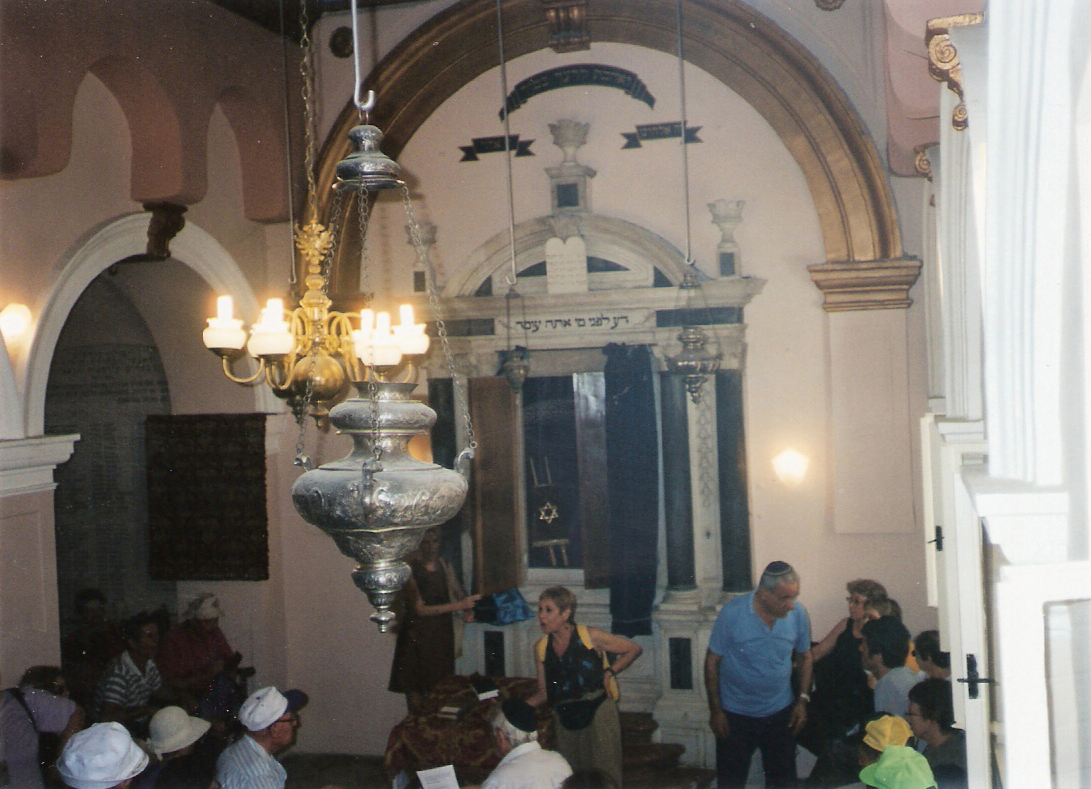
Split Synagogue is an Orthodox Jewish synagogue in Split, Croatia, and one of the oldest Sephardic synagogues still in use today. It was built in the early 16th century, with its consecration usually dated to around 1507. It sits inside Diocletian's Palace, in the former Jewish quarter, and is a rewarding stop for anyone curious about Dalmatia's layered, multicultural past.
Where is the Split Synagogue?
The synagogue stands in the historic centre, within the walls of the Roman emperor Diocletian's palace, a UNESCO World Heritage site. It is not a free-standing building: the prayer hall occupies the upper floor of two medieval houses squeezed into the old ghetto. One source describes it as built into the palace's western wall. The coordinates are roughly 43.509 N, 16.439 E, so after seeing the Peristyle and the Golden Gate you can reach it on foot in a few minutes.
How did a Jewish community end up in Split?
Jews are mentioned in the city from the Middle Ages, and in the 15th and 16th centuries new waves of Sephardic refugees arrived, fleeing the Inquisition in Spain and Portugal, often by way of Italy. The newcomers built homes, a community and their own house of prayer. Two groups are usually distinguished in Split: the Ponentini, with roots in the Iberian Peninsula, and the Levantines, tied to the eastern Mediterranean and the Ottoman world. The synagogue follows the Nusach Sefard rite.
What should you know about its history?
The synagogue has endured for five centuries, though not without losses. According to some sources, the archives and furnishings of the old synagogue were destroyed in 1942, and after the war most of the community emigrated to Israel. Today Croatia's Jewish community is small, at around one hundred people. The building has been the subject of heritage preservation efforts because its historical value reaches far beyond the local level.
What else is nearby?
Another piece of Split's Jewish story is the cemetery on Marjan Hill, founded in 1573. It holds about 700 tombstones in the Sephardic style. Visiting both places helps you grasp how deeply the community was woven into the fabric of the city.
Frequently asked questions
Is the Split Synagogue still active? Yes. It is a working Orthodox synagogue and one of the oldest Sephardic ones in use anywhere.
How old is it? It dates to the early 1500s, with consecration around 1507.
Is it a separate building? No. It occupies the upper floor of two medieval houses in the former Jewish quarter, inside Diocletian's Palace.
Which rite does it follow? Sephardic, Nusach Sefard.
Can visitors go in? Check opening hours and entry rules with the local Jewish community before you go, since this is a place of worship. Dress modestly and keep a quiet manner, as in any house of prayer.
The Split Synagogue is a small but telling relic of centuries of Sephardic Jewish life on the Adriatic coast. For travellers it complements the city's Roman and Venetian landmarks, showing that Split was a meeting point of many cultures and faiths from the Middle Ages to today. For many visitors it becomes the quietest and most memorable stop on a walk through the old town, especially if they want to see more than Roman walls and the seafront promenade.
Nearby places

Earn badges for the places you visit
Download NextOnTrip, discover new places and check off your trails.