Culture and art in France
A guide to 180 Culture and art in France — with descriptions, photos and traveler visits from the NextOnTrip community. Locations spread across 64 cities and towns. Most visited by the community: La Malmaison, Conservatoire national supérieur de musique et de danse de Lyon, Théâtre de la Potinière.
-
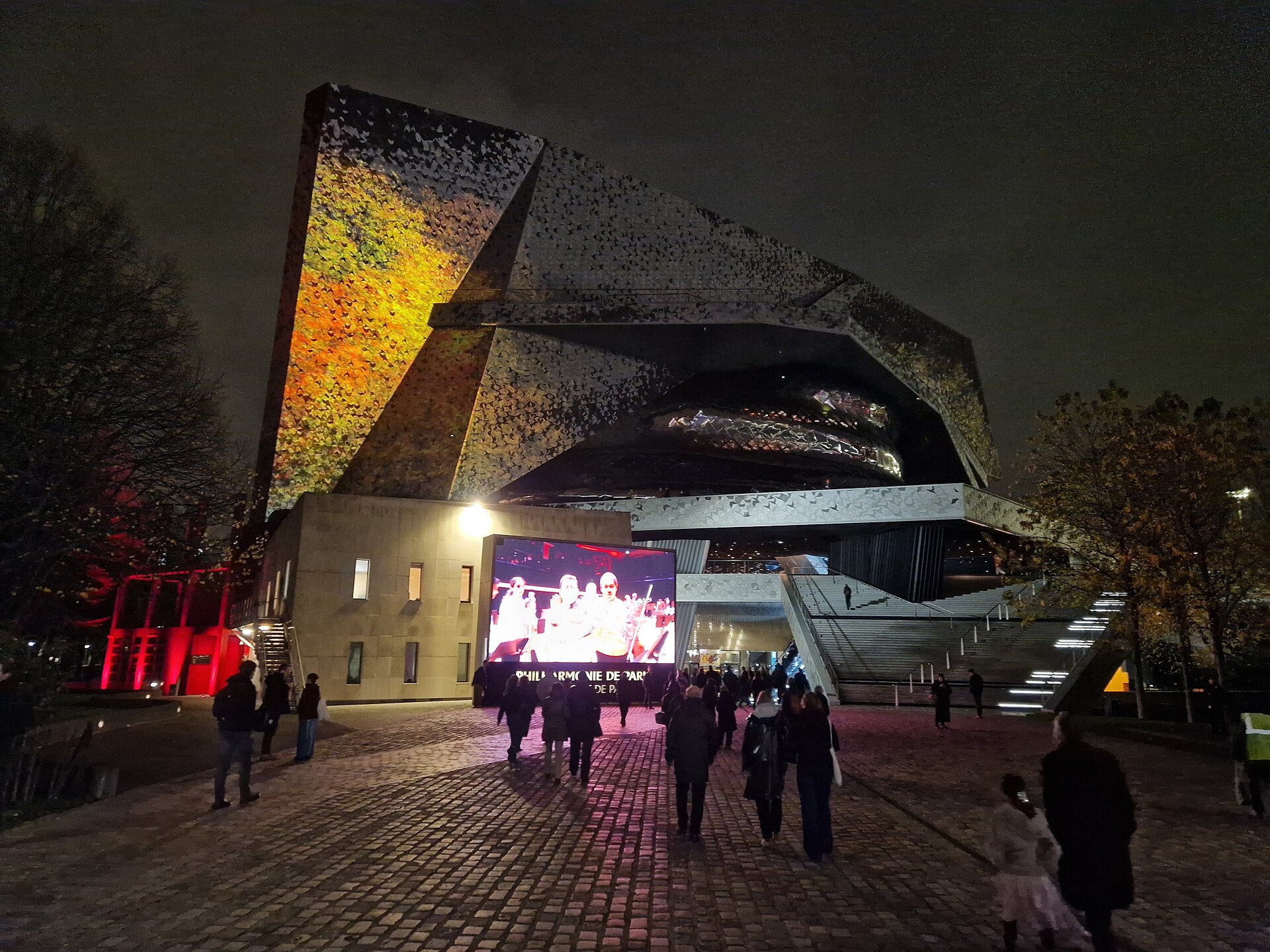
Philharmonie de Paris
Paryż
Philharmonie de Paris is one of Europe's leading concert hall complexes, set in the Parc de la Villette on the northeastern edge of Paris, in the 19th arrondissement. Designed by architect Jean Nouvel, the building opened in January 2015 after construction had been delayed for nearly two decades. It stands alongside the earlier Cité de la Musique, designed by Christian de Portzamparc and open since 1995 — together the two buildings form one of the largest music institutions on the continent. What will you see at Philharmonie de Paris? The centerpiece of the complex is a 2,400-seat symphonic concert hall, among the largest halls in Europe built specifically for classical music acoustics. The building's exterior, wrapped in a distinctive cladding evoking birds in flight, is a striking architectural landmark visible from a distance. Beyond the main auditorium, the site includes exhibition spaces and rehearsal rooms used both by resident ensembles and visiting orchestras. The programming here goes well beyond symphonic repertoire. Alongside classical concerts, the schedule regularly features jazz evenings and world music performances, making it a compelling stop even for visitors without a deep interest in the classical calendar. It's worth checking the current program before visiting, since the variety of events means no two evenings look alike. How do you get to Philharmonie de Paris? The complex sits at the edge of the city within Parc de la Villette, easily reached by metro — Porte de Pantin station is right at the park entrance, just a few minutes' walk from the building. This makes it a convenient trip whether you're staying in central Paris or living locally, with journey times typically running from ten to thirty minutes depending on your starting point. Parc de la Villette itself is one of the largest urban parks in Paris, so a visit to the Philharmonie pairs easily with a walk through the park grounds or a stop at nearby cultural institutions, including the Cité de la Musique and the science museums in the area. When is the best time to visit? The concert season runs nearly year-round, with the busiest schedule in autumn, winter, and spring. Summer programming tends to be lighter, though special events and festivals still take place. Check the current listings before planning a trip — tickets for popular symphonic concerts, especially those featuring well-known orchestras and soloists, tend to sell out well in advance. If you're mainly interested in the architecture, visiting during daylight hours is a good idea: the light brings out the detail of the facade, and the surrounding park invites a longer stroll afterward. Frequently asked questions What's the difference between Philharmonie de Paris and Cité de la Musique? Cité de la Musique is the older building, completed in 1995 and designed by Christian de Portzamparc, while Philharmonie de Paris is the newer symphonic hall by Jean Nouvel that opened in 2015. Together they operate as a single music complex within Parc de la Villette. How many seats does the main concert hall have? The main symphonic hall seats 2,400 people, making it one of the largest purpose-built concert halls in Europe. What kind of music can you hear here? While symphonic concerts are the main focus, the program regularly includes jazz and world music, offering a broad mix of events throughout the year. What's the easiest way to reach Philharmonie de Paris? The metro is the most convenient option — take it to Porte de Pantin station, just a short walk from the entrance to Parc de la Villette.
-
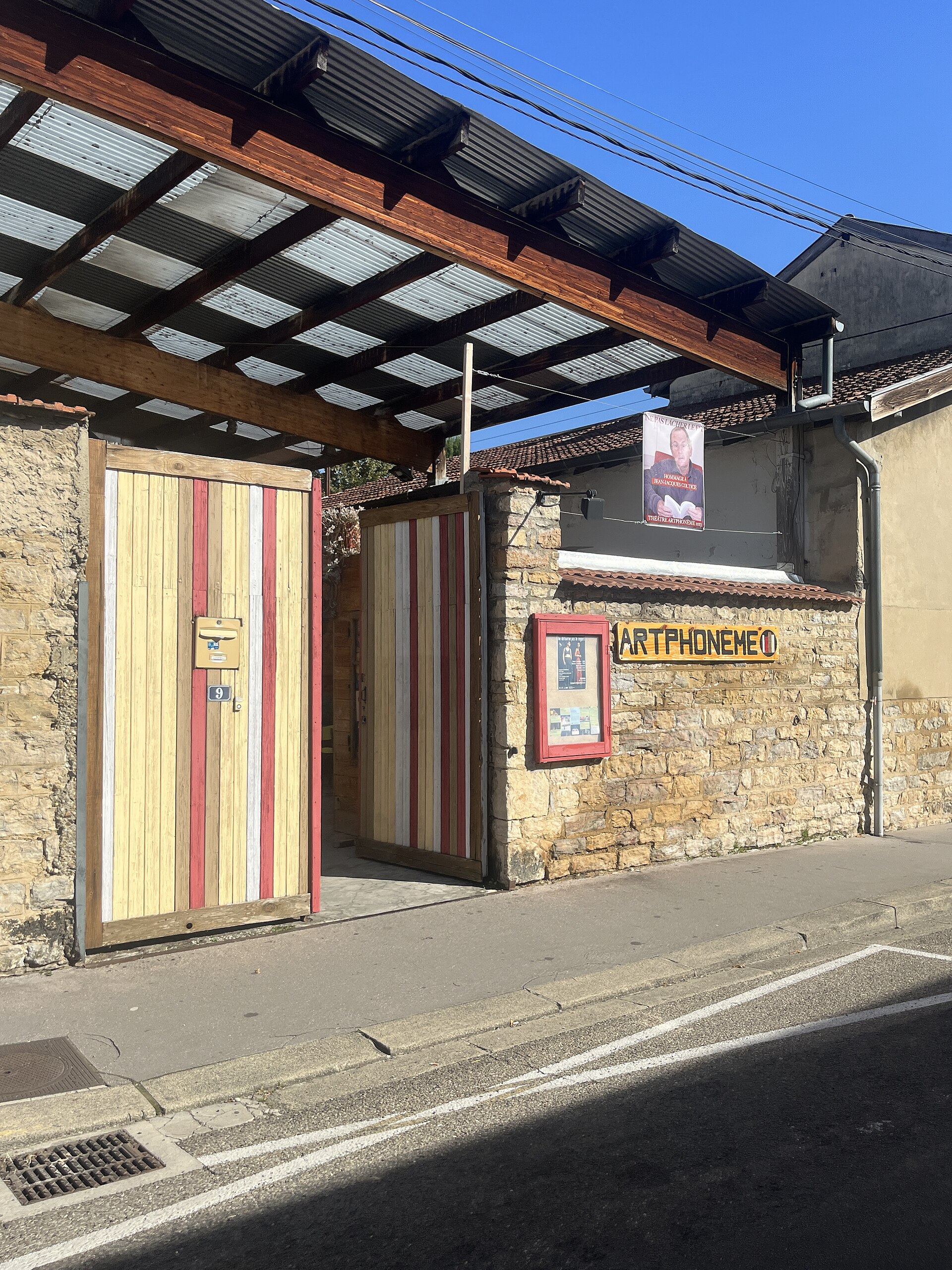
Artphonème
Théâtre Artphonème in Bourg-en-Bresse is a small, intimate theatre run by the resident company Compagnie Dumêmenon, known for original stage work, poetry evenings, and close contact between performers and audience. What is this place? Artphonème sits at 9 Rue Lazare Carnot in Bourg-en-Bresse, the prefecture of the Ain department. The auditorium holds just 50 seats, so every performance feels closer to a personal encounter with the cast than an anonymous night at a big venue. Despite its small footprint, the stage itself is generously sized, wide enough to host choreographers and dancers alongside actors. The venue is run by Compagnie Dumêmenon, a resident troupe that produces its own shows here while also lending the stage to visiting professional and amateur companies. The city of Bourg-en-Bresse has designated the theatre a local resource hub for the performing arts: it houses a substantial costume collection along with a stock of set pieces and props that touring companies can draw on for their productions. What can you see there? The backbone of the programme is Compagnie Dumêmenon's own work, blending theatre, spoken word and music — titles that have played here include "Imposteuse," "Les oiseaux chantent" and "du bleu sur mon doigt." The company favours devices drawn from surrealism and childlike imagination: collage, distancing from convention, and unexpected juxtapositions. The theatre also runs a strand called "Voix Mêlées" and doubles as a Maison de la Poésie — a House of Poetry. Each year, as part of the nationwide Printemps des Poètes festival, it hosts gatherings and evenings dedicated to poetry and specific poets. A small on-site library is open to visitors, and Artphonème welcomes artists through creative residencies, backing their technical and organisational work. When to go and how to get there? The address is 9 Rue Lazare Carnot, 01000 Bourg-en-Bresse, right in the town centre and an easy walk for anyone exploring the historic core. The theatre's office is open on Tuesdays from 11:00 am to 12:30 pm and 2:30 pm to 5:00 pm. On other days, the auditorium opens for scheduled performances, with doors unlocking 30 minutes before curtain. It's worth checking the current schedule before visiting, since the programme shifts seasonally with new Compagnie Dumêmenon premieres and residency guests. Many visitors first hear about Artphonème through word of mouth, and the theatre has built a reputation as a place people return to, trusting they'll get a warm welcome and shows that step outside familiar formulas. Frequently asked questions How many seats does the auditorium have? The house holds 50 seats, keeping every performance close and personal regardless of where you sit. Who runs the theatre? It's operated by the resident company Compagnie Dumêmenon, with backing from the city of Bourg-en-Bresse, which has designated the venue a local arts resource centre. Is there more going on than just theatre shows? Yes — the venue hosts a House of Poetry with events tied to the Printemps des Poètes festival, runs the "Voix Mêlées" programme, keeps a small library open to visitors, and hosts artists through creative residencies. How do you check opening hours and the schedule? The office is open Tuesdays (11:00 am–12:30 pm and 2:30 pm–5:00 pm), and on show nights the doors open 30 minutes before curtain — check the current programme before visiting, since it changes seasonally.
-
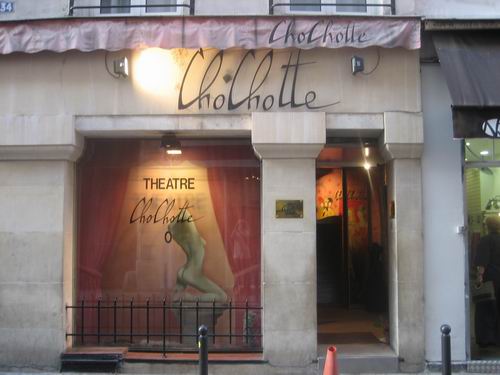
Théâtre ChoChotte
Paryż
Théâtre ChoChotte is a small Parisian theatre with an erotic programme, tucked away on rue Saint-André-des-Arts in the heart of the 6th arrondissement, right next to Saint-Germain-des-Prés and the Latin Quarter. Where does this theatre come from? Théâtre ChoChotte was opened in 1986 by Madame Caussade, an artist, entrepreneur and haute couture designer who had previously run her own fashion shop at the very same address, 34 rue Saint-André-des-Arts. Rather than lease the space out, she turned it into a stage and gave it a distinctly erotic identity from day one. Since then, the venue has never changed course — it has continued, without interruption, as one of Paris's erotic performance halls, part of a long-running strand of intimate adult stages that has coexisted with the city's better-known cabarets and revues for decades. How do you get there? The theatre sits at 34 rue Saint-André-des-Arts, one of the narrow, atmospheric streets of the 6th arrondissement, surrounded by cafés, bookshops and small galleries. It's classic Left Bank territory — quiet by day, lively after dark. The closest metro stations are Saint-Michel and Odéon, both just a few minutes' walk away, making the theatre easy to reach from almost anywhere in the city. The street itself is within walking distance of the Seine, Notre-Dame and Place Saint-Michel, so a visit pairs easily with a stroll through the rest of the Latin Quarter. What can you expect inside? This is a small, intimate room — the opposite of the large, tourist-oriented revues with hundreds of seats. That scale brings the audience close to the stage and gives the evening a more personal, club-like feel than the big Parisian cabaret houses offer. The programme belongs to the tradition of erotic stage performance that has existed in Paris for decades — entertainment aimed strictly at an adult audience, distinct from a conventional theatre or musical evening. The building and interior still carry traces of their history dating back to the mid-1980s, which adds a retro character that some visitors find part of the appeal. When is the best time to go? As an evening venue with adult programming, the natural time to visit is at night, much like other Parisian theatres and cabarets of this kind. It's worth keeping in mind that, given the nature of the programme, the venue is not intended for children or teenagers. Because the room is small, seating is limited, so anyone planning a visit on a weekend or during peak tourist season should allow extra time to get there and check the current programme in advance. Frequently Asked Questions What is Théâtre ChoChotte? It's a Parisian theatre with an erotic programme in the 6th arrondissement, operating since 1986 at 34 rue Saint-André-des-Arts. Who founded the theatre? Madame Caussade, an artist, entrepreneur and haute couture designer who had previously run her fashion shop at the same address. Is this venue for everyone? No — the programme is erotic in nature and intended strictly for an adult audience. What's the easiest way to get there? By metro, getting off at Saint-Michel or Odéon — both stations are a few minutes' walk from the theatre, right in the heart of the Latin Quarter.
-
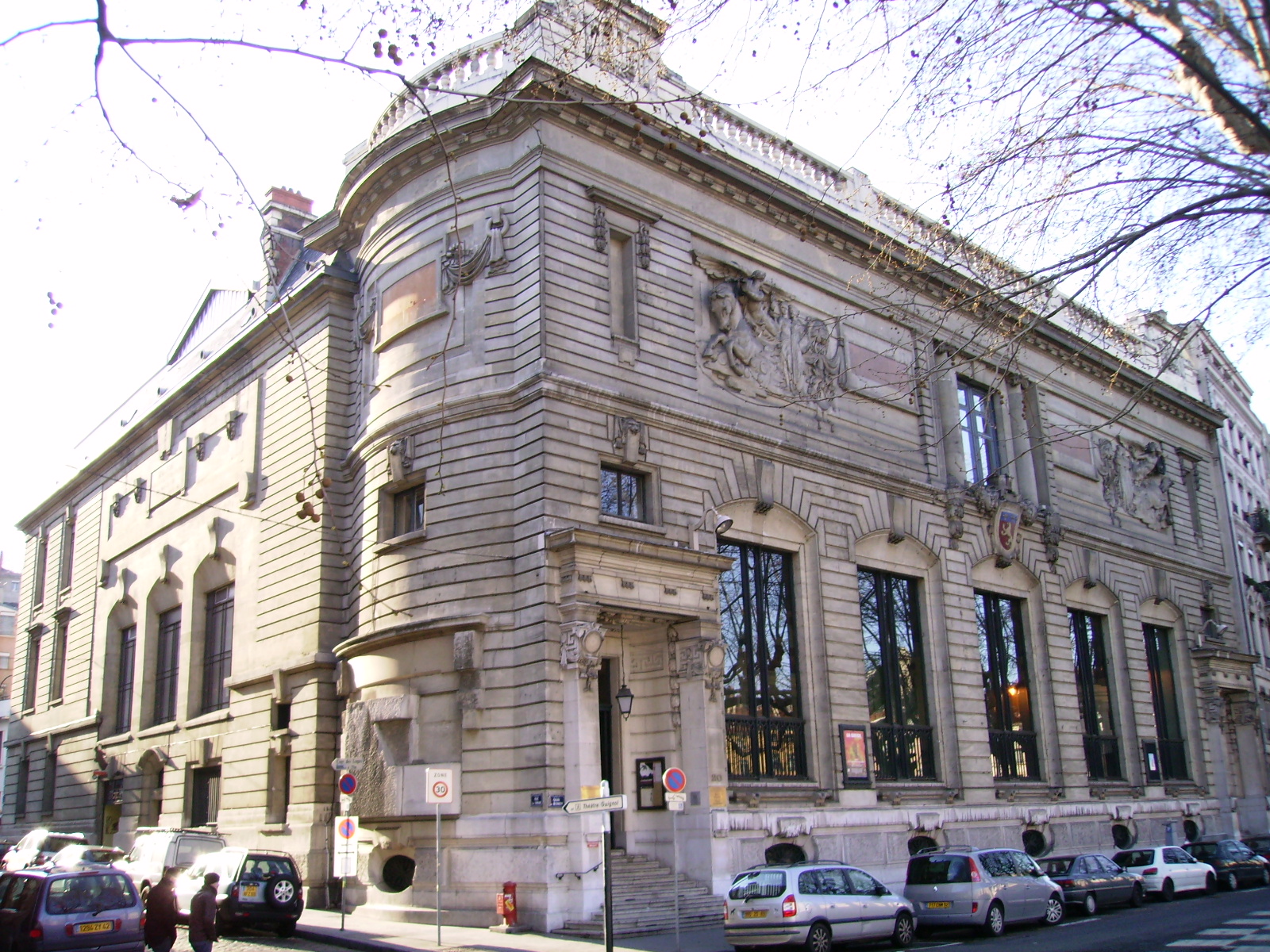
Salle Molière
Lyon
Salle Molière is a historic concert hall in Lyon, tucked inside the Palais Bondy on the quai de Bondy, on the right bank of the Saône in the Saint-Paul district (5th arrondissement). It's the kind of venue visitors stumble onto while wandering Old Lyon — and then come back for an evening concert. Where did this hall come from? The Palais Bondy was built between 1902 and 1904, designed by architect Eugène Huguet. The building was meant to finally give Lyon's Conservatoire a home of its own — until then it had no dedicated space — along with exhibition rooms. Salle Molière itself opened on 21 February 1912. In its original form it held nine hundred spectators, spread across several levels: the stalls, box seats, an amphitheater, and an upper gallery. The name pays tribute to the playwright Molière, who passed through Lyon several times with his theater troupe — in 1652, 1653, 1655, and 1658. It was in Lyon, in 1655, that he staged his first major comedy, "L'Étourdi ou les Contretemps." The city clearly felt that was reason enough to attach his name to its own performance hall. What survived the war? The hall's history hasn't been smooth. In 1944, the demolition of the nearby Pont de la Feuillée seriously damaged the Palais Bondy — the façade was riddled with debris, windows shattered, and the glass roof covering Salle Molière collapsed. The hall was rebuilt afterward, but smaller: capacity dropped from nine hundred to around seven hundred seats. Despite the damage, it kept its character and, more importantly for musicians and audiences alike, its excellent acoustics. Why is it worth a visit? Since 2003, Salle Molière has carried the label "Patrimoine du XXe siècle" (20th-Century Heritage), recognizing its architectural and historical value. It's still regarded as one of the most appreciated concert venues in Lyon, largely thanks to acoustics that make even a small chamber recital sound remarkably full. As a municipal hall, its program is varied — classical concerts, Conservatoire performances, and cultural events organized by the city. How do you get there? Salle Molière sits right in the heart of Old Lyon, so the easiest approach is on foot from the Notre-Dame de Fourvière basilica or Saint-Jean cathedral — the walk along the Saône is worthwhile in itself. The nearest metro stop is Vieux Lyon (line D), with tram stops also close to the quai de Bondy. It's worth pairing a visit with a stroll through Saint-Paul, one of the best-preserved Renaissance quarters in the city. When should you visit? The hall operates year-round, but the concert schedule is richest in autumn, winter, and spring, when the Conservatoire and municipal cultural institutions hold most of their events. Summer programming tends to be lighter, so it's worth checking the calendar before planning a trip around it. Frequently asked questions Is Salle Molière a concert hall or a theater? It's primarily a municipal concert and performance hall, run by the city of Lyon — used for concerts, recitals, and cultural events, though it carries theatrical roots through its namesake. How many seats does it have today? After post-war reconstruction, the hall seats around seven hundred, down from the original nine hundred in 1912. Why is the hall named after Molière? Because the playwright visited Lyon several times in the 17th century, and it was here, in 1655, that he first staged his comedy "L'Étourdi ou les Contretemps." Does the building have heritage protection? Yes — since 2003 it has held the official "Patrimoine du XXe siècle" designation, recognizing its architectural significance.
-
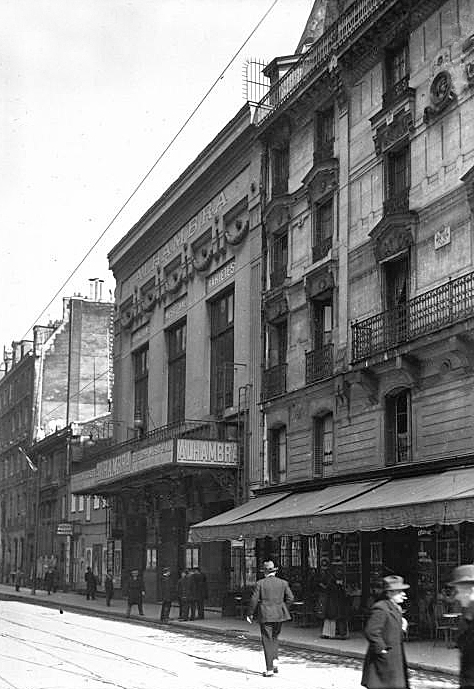
Alhambra
Paryż
Alhambra is a music hall on rue Yves-Toudic in Paris's 10th arrondissement, named after the legendary Parisian entertainment venue that operated in the city from 1866 to 1967. The current stage carries on the spirit of that original hall, once famous for hosting some of France's biggest performers. How to get there? Alhambra sits in the 10th arrondissement, near the Canal Saint-Martin, on rue Yves-Toudic. The neighborhood is well served by metro, with several stations just a short walk from the venue. It's an area that mixes old Parisian charm with trendy cafés and bistros, so a night at the music hall pairs naturally with a stroll along the canal beforehand or afterward. What will you see? The name Alhambra comes from the original hall that opened in 1866 on rue de Malte in the 11th arrondissement — first as a circus, then as a theater, and from 1904 onward as a music hall in the American style then sweeping Paris. It was on that original stage in 1907 that Maurice Chevalier, one of the 20th century's most celebrated French entertainers, made his debut. After a fire destroyed the hall in 1925, it was rebuilt on an even grander scale, with Art Nouveau decoration and gilded stucco work that led audiences to nickname it the "golden temple." The original Alhambra closed its doors for good in May 1967, sending off its final audience with an ice show adaptation of "Snow White and the Seven Dwarfs." The Alhambra known today was created in 2008, when a show producer converted a former hall belonging to a railway workers' association into a new concert venue, just a few hundred meters from the original site. It seats and stands between 600 and 800 spectators depending on the configuration, and since opening it has regularly hosted concerts, entertainment shows, and stand-up comedy. The room keeps an intimate feel, so even the back rows stay close to the stage. When to visit? Alhambra runs a year-round program, so the best time to visit depends mainly on what's on the bill — concerts, comedy shows, or special performances. Weeknights tend to be calmer, while Friday and Saturday shows draw the biggest crowds. Booking ahead is worthwhile, especially for popular acts, since the venue's seating is limited. Frequently asked questions Is today's Alhambra the same building where Maurice Chevalier made his debut? No. The original Alhambra on rue de Malte, where Chevalier debuted in 1907, closed in 1967. The current venue on rue Yves-Toudic opened in 2008 a few hundred meters away, taking its name from that legendary stage. How many people can the venue hold? Alhambra holds between 600 and 800 spectators, depending on whether the layout is seated, standing, or a mix of both for a given event. What kind of shows does Alhambra host? The venue programs concerts, entertainment shows, and stand-up comedy, continuing the music-hall tradition the original Alhambra was known for. Why was the original Alhambra nicknamed the "golden temple"? After being rebuilt following the 1925 fire, the hall was decorated in lavish Art Nouveau style with gilded stucco and stained glass, which dazzled audiences of the time.
-
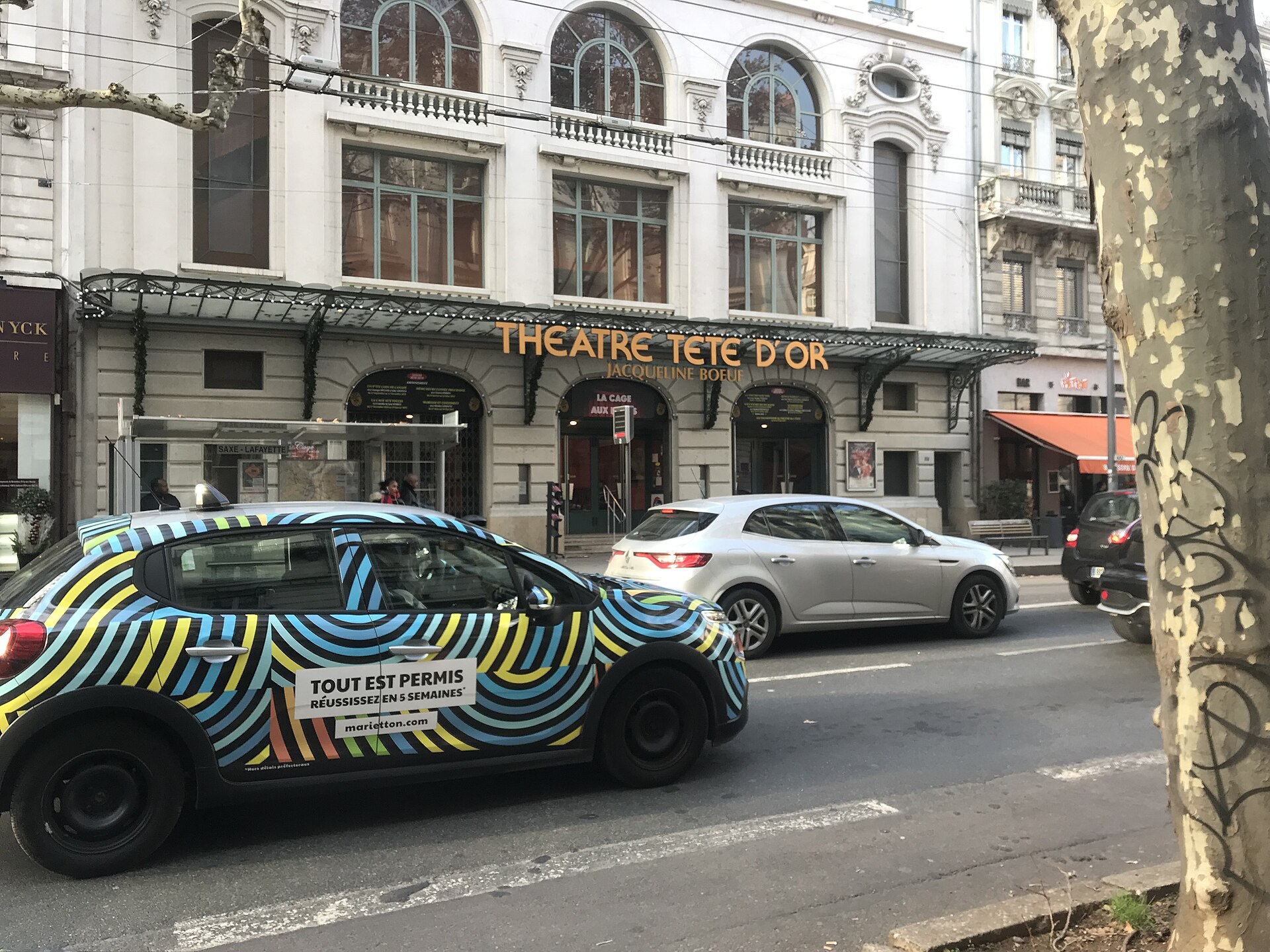
Théâtre Tête d'or
Lyon
Théâtre Tête d'Or is a private theatre venue in Lyon, located on avenue Maréchal-de-Saxe in the city's 3rd arrondissement, a short distance from the Tête d'Or park that gave it its name. The venue carries on Lyon's tradition of entertainment-focused stage productions, mixing comedy with shows aimed at younger audiences. What can you see at Théâtre Tête d'Or? The programming centres on comedies, light-hearted productions and family-oriented shows, often aimed at children and audiences looking for undemanding entertainment rather than heavy drama. The theatre has operated from its current location since 2001, occupying the former "La Cigale" hall, a building dating back to 1925. Despite its understated, functional facade, the venue has therefore been part of Lyon's urban fabric for nearly a century, and today's theatre continues that entertainment-hall tradition under a new name. Inside there is a single main auditorium, sized for intimate to mid-scale productions — comedies, one-man shows, holiday-season performances and seasonal children's programmes. Compared to Lyon's larger institutional stages, this is a more intimate setting, which keeps the audience close to the performers. How do you get to Théâtre Tête d'Or? The easiest way is by metro — Line A, Foch station, followed by a short walk to the theatre. Vélo'v bike-share docks are also available nearby, making the venue easy to reach by bicycle. The address is 60 avenue Maréchal-de-Saxe, 69003 Lyon, in a quiet residential part of the 3rd arrondissement close to the edge of Tête d'Or park (the park itself is a separate site, a further short walk away, despite sharing the name). When should you visit, and how do you book tickets? The box office is open Monday to Friday, 10am to 6pm, and Saturday, 2pm to 6pm; phone reservations are taken during the same hours. The programme changes seasonally, so it's worth checking the current schedule on the theatre's website before visiting — children's shows tend to cluster around school holidays and festive periods, while comedies and evening shows for adult audiences run throughout the season. Given the venue's intimate size, booking ahead is advisable, especially for popular comedy titles and holiday-season shows, which tend to sell out quickly. Frequently asked questions Is Théâtre Tête d'Or the same as the Guignol theatre in Tête d'Or park? No. These are two separate venues that happen to share part of their name. Théâtre Tête d'Or is a private theatre on avenue Maréchal-de-Saxe, while the Théâtre Guignol is physically located inside Tête d'Or park and has staged traditional puppet shows for children since 1948. It's worth keeping the two apart when planning a visit, since they have entirely different programmes and locations. What's the fastest way to reach the theatre by public transport? Take metro Line A to Foch station, then walk a few minutes. This is the quickest route from central Lyon. Does the theatre put on shows for children? Yes, the programme regularly includes family productions and shows for younger audiences, particularly during school holidays and festive periods. How do you book tickets? Tickets can be booked by phone during box office hours (Mon–Fri 10am–6pm, Sat 2pm–6pm) or through the theatre's official website, where the current programme is published.
-
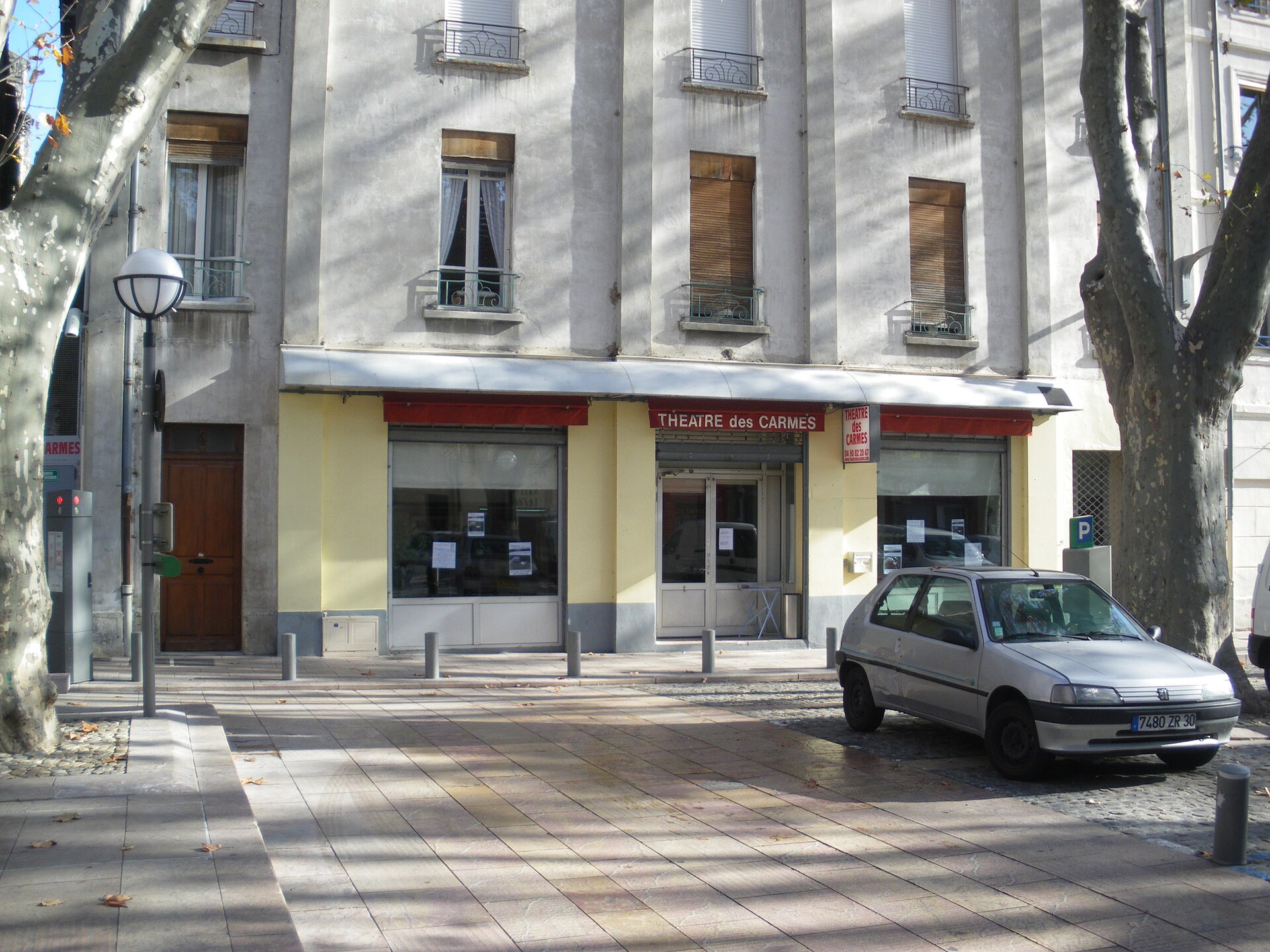
Théâtre des Carmes
Théâtre des Carmes André Benedetto is a small independent playhouse in the historic core of Avignon, at 6 place des Carmes, a ten-minute walk from the Palais des Papes. It looks unassuming from the outside, yet this stage played a direct role in creating the parallel festival movement that now fills Avignon's streets every summer. Where did this theatre come from? The company was founded in the winter of 1963 by writer and actor André Benedetto, his wife Jacqueline, and Bertrand Hurault. They set up in the former Saint-Benoît parish hall, attached to the Saint-Symphorien-les-Carmes church — a building never designed as a theatre, which gave the young company its rough, independent identity from day one. Their opening production, "Le Pilote d'Hiroshima," is regarded by theatre historians as marking the birth of Avignon's first permanent independent stage. How did this stage give rise to the Festival OFF? By the time anyone used the word "Off," the Nouvelle Compagnie d'Avignon had already been working here for three years. In 1966, on the sidelines of the official Avignon Festival, the company staged "Statues" — a performance now considered the founding act of the Festival OFF, even though nobody at the time set out to launch a rival festival. Committed to a politically engaged style of theatre that responded directly to current events, the company quickly became a reference point for artists looking for an alternative to the official program. What can you expect from the theatre today? The auditorium seats 187 people and is air-conditioned, and the programming mixes the venue's own productions with guest artists, acting workshops, talks and conferences. André Benedetto ran the theatre until his death in 2009. A year later, the board of the Nouvelle Compagnie d'Avignon appointed Andriève Chamoux and Sébastien Benedetto as co-directors, and the venue was officially renamed Théâtre des Carmes André Benedetto in his honour. It stays open almost year-round, closing only in August — a deliberate choice, since that is precisely when Avignon's festival crowds peak elsewhere in town. How to get there and when to visit? The theatre sits well within the old city walls, an easy walk from Avignon's main landmarks and from the Avignon Centre train station, so a car is rarely needed. Because the hall is small and popular shows can sell out quickly, it's worth checking the schedule and booking ahead, especially around the busier festival weeks in July. Since the theatre itself closes in August, the quieter months from autumn through spring are the best window for catching an intimate production without competing for tickets. Frequently asked questions Is Théâtre des Carmes part of the Festival OFF? No, it's an independent, year-round theatre — but it's exactly where the 1966 production that is credited with starting the Festival OFF was first staged. How many seats does the auditorium have? The hall holds 187 seats and is air-conditioned, which matters during Avignon's hot summers. Is the theatre open during the summer festival season? It closes for the whole of August; the rest of the year it runs its own productions alongside guest shows, workshops and public talks. Who runs the theatre now? Since 2010 it has been co-directed by Andriève Chamoux and Sébastien Benedetto, continuing the artistic path set by founder André Benedetto.
-
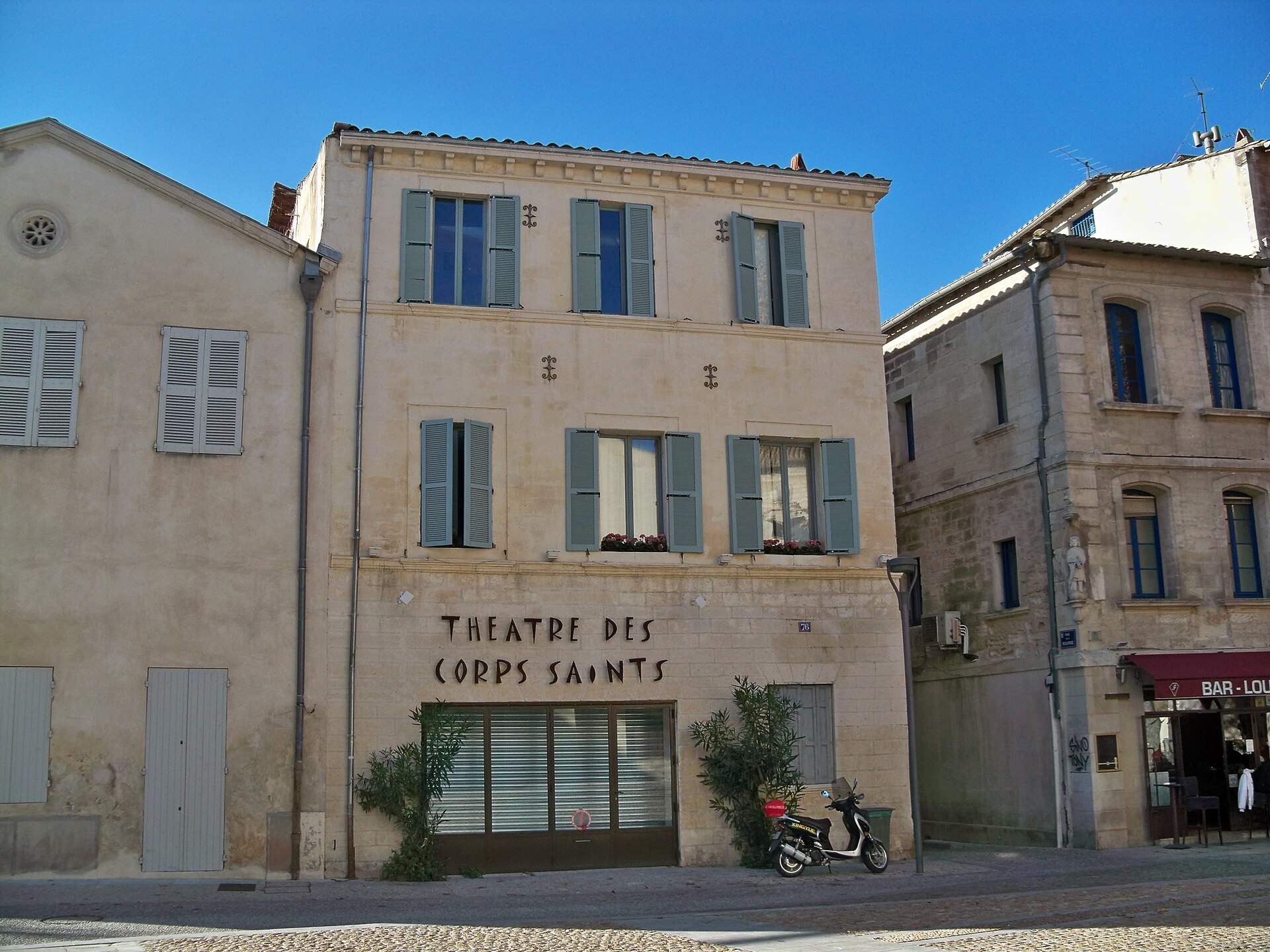
Théâtre des Corps Saints
Théâtre des Corps Saints sits in the historic heart of Avignon, on the small square of the same name, directly across from the cloister of the Célestins and just steps from the Porte Saint-Michel. How do you get there? The venue is located at 76 Place des Corps Saints, right inside Avignon's medieval old town. This is a walking-only part of the city — the easiest approach is on foot from the center, heading toward the Célestins cloister, whose walls form one side of the square. Why is the square called "Corps Saints"? The site's history stretches back to Roman times, when it served as a burial ground. Its story took a religious turn with Cardinal Pierre de Luxembourg, who asked to be buried in the paupers' cemetery here; Marie de Blois, Countess of Provence, had his grave sheltered under a small wooden chapel. The project grew far larger under King Charles VI, who from 1389 ordered a church built on the spot and entrusted it to the Célestins, meant to house the relics of his illustrious relative. At that point the square took the name "place du Corps-Saint," in the singular. The plural only appeared in 1674, when the relics of Saint Bénézet were moved to the Célestins church from the crumbling chapel on Avignon's famous bridge — from that point on the square has been known as "place des Corps-Saints." What will you find inside the theatre? Théâtre des Corps Saints has been running since 1999, building a reputation on a varied and carefully curated program. The venue has three separate auditoriums — seating 66, 120, and 155 — two of which, notable for their architecture, were added in 2015 and 2016. Its lineup spans classical and contemporary drama as well as lyric works. The house champions both emerging companies and established artists, favoring engaged writing and inventive stagings that stay accessible to a broad audience rather than a niche crowd. When is the best time to visit? The theatre runs year-round, but its busiest stretch falls in July, during the Avignon Festival's OFF program. During that period, the three auditoriums of Théâtre des Corps Saints together host as many as 23 shows a day, making it one of the most heavily used festival venues in the city. Outside festival season, it's worth checking the current listings, which change regularly across genres. Frequently Asked Questions Where exactly is Théâtre des Corps Saints located? At 76 Place des Corps Saints in Avignon, opposite the Célestins cloister and close to the Porte Saint-Michel, right in the historic city center. Where does the name "Corps Saints" come from? It comes from the holy relics kept in the Célestins church, built from 1389 onward — first for Cardinal Pierre de Luxembourg, then from 1674 also for Saint Bénézet, which is why the square's name shifted from singular to plural. How many auditoriums does the theatre have, and how large are they? Three: seating 66, 120, and 155 people, two of which were added in 2015 and 2016. When is the best time to catch a show? July is the peak period, during the Avignon OFF Festival, when the theatre stages up to 23 performances a day. Outside the festival, it runs a year-round, changing program.
-
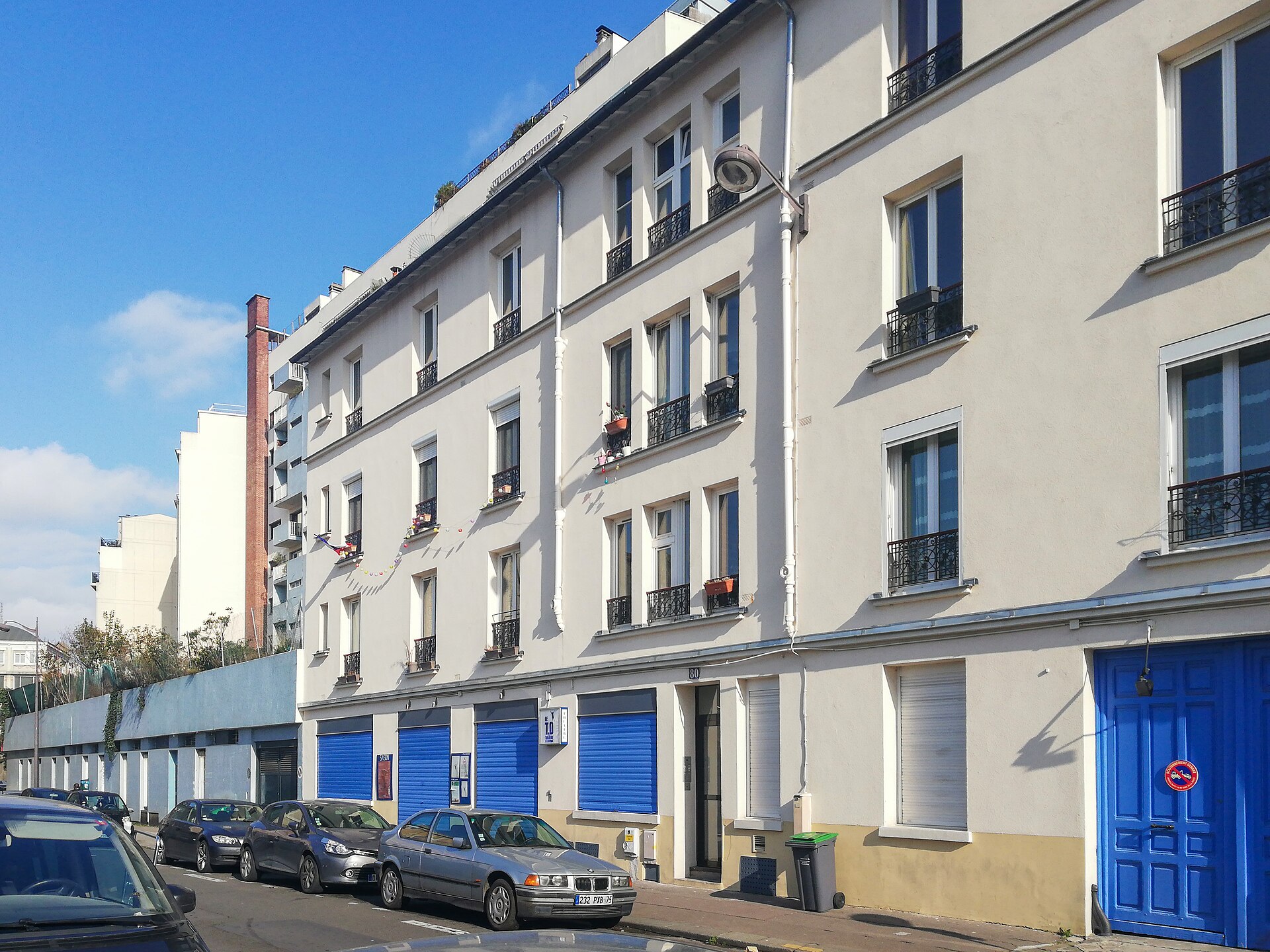
Théâtre de l'Opprimé
Paryż
Théâtre de l'Opprimé is a small independent theatre in Paris, tucked into a quiet stretch of the 12th arrondissement, a short walk from Théâtre 13 and Théâtre Dunois. Where does the name come from? The name refers to the "Theatre of the Oppressed," a method developed in the 1970s in Latin America by Brazilian director Augusto Boal. Boal wanted theatre to become a tool for marginalised communities — a space where they could tell their own stories and rehearse ways of pushing back against oppression. Boal himself founded this Paris venue, which opened its doors in 1996 and has carried his approach forward ever since. How do you get there? The theatre sits at 78-80 Rue du Charolais, in an easy-to-reach part of the 12th arrondissement not far from Gare de Lyon. It shares the neighbourhood with two other independent stages, Théâtre 13 and Théâtre Dunois, so a visit here pairs naturally with a wider tour of Paris's fringe theatre scene. What will you find inside? The venue is intimate: the main hall seats just 90 people in a frontal layout, keeping every seat close to the stage. Before the show, it's worth stopping in the reception hall, where a bar opens an hour before and after each performance — a natural spot for meeting other theatregoers and talking through what you've just seen, a feature typical of Paris's small independent stages. What's on the programme? The theatre's line-up favours contemporary writing and young, still-forming companies, making it both a workshop for new work and a stage for presenting it to the public. The programme changes with the season, so it's worth checking the current schedule on the theatre's website or a ticketing platform before planning a visit. When should you visit? 2026 marks a milestone: the theatre is celebrating 30 years since its 1996 opening. At the same time, its future is far from settled — in 2025 it lost its entire annual operating grant of €38,000, funding it had received without interruption since opening from the regional culture authority DRAC Île-de-France. For visitors, that's one more reason to back an independent stage by booking a ticket to one of its current productions — every seat sold now genuinely matters to the venue's survival. Frequently asked questions Who founded Théâtre de l'Opprimé? It was founded by Brazilian director Augusto Boal, creator of the "Theatre of the Oppressed" method developed in Latin America in the 1970s. How many seats does the theatre have? The main hall is small, seating 90 people in a frontal arrangement. Where exactly is the theatre located? At 78-80 Rue du Charolais, in the 12th arrondissement of Paris, close to Théâtre 13, Théâtre Dunois, and Gare de Lyon. Is it worth checking the programme before visiting? Yes — the line-up changes seasonally and focuses on contemporary writing and young companies, so the current offering can vary quite a bit, and it's worth booking tickets ahead of time.
-
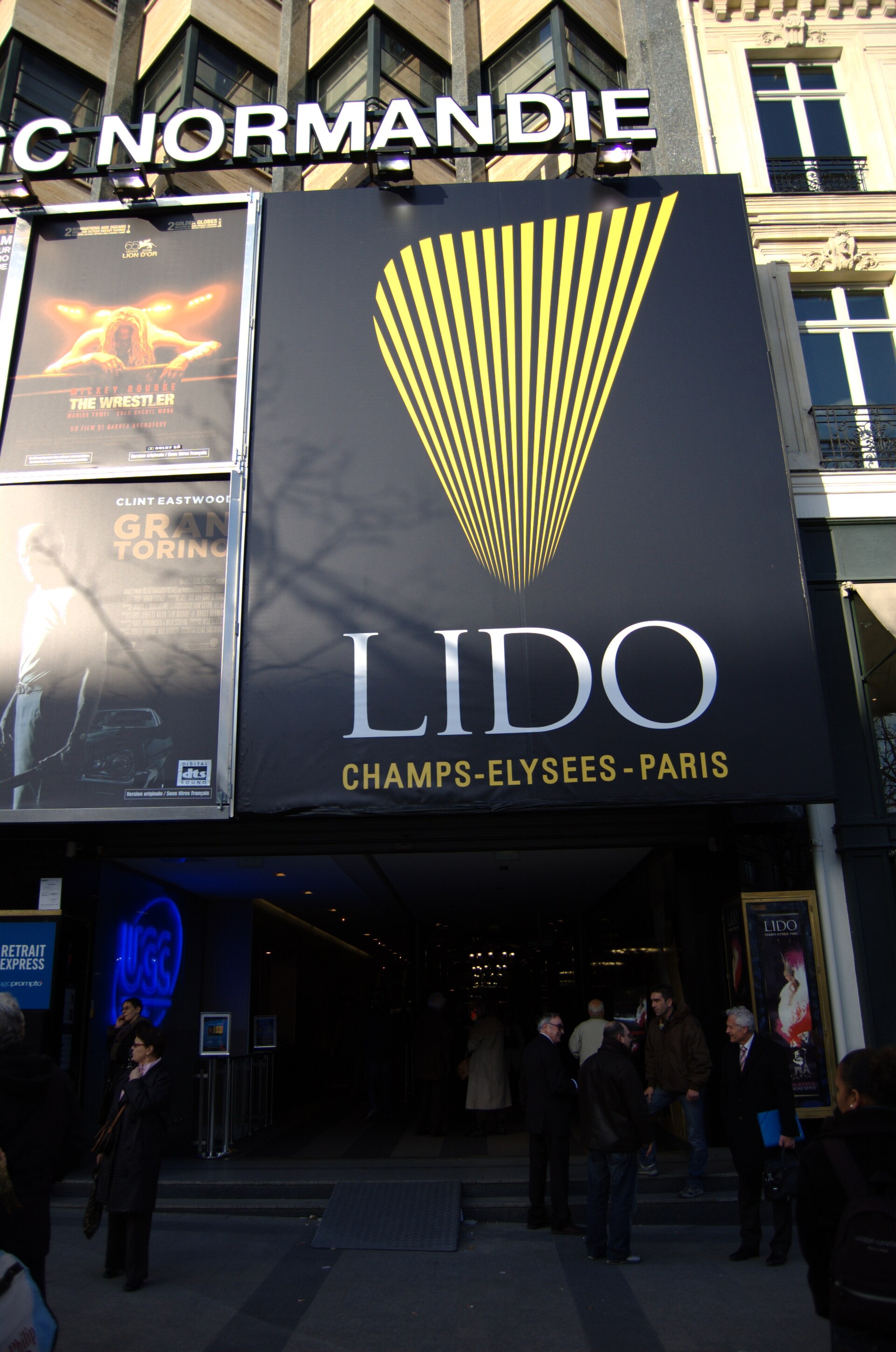
Le Lido
Paryż
Le Lido is a legendary Paris cabaret and music-hall venue set on the world-famous Champs-Élysées, right in the heart of the French capital. For nearly eight decades the stage has combined dance, live singing and large-scale revue spectacle, drawing both Parisians and visitors after a classic night of French cabaret entertainment. What can you see at Le Lido? Expect a big-stage revue: dozens of dancers, elaborate costumes, live orchestration, and a show built around a dinner-and-spectacle format. The venue's programming grew out of a tradition of exotic cabaret and burlesque numbers that, over the decades, brought some of the biggest names in entertainment to its stage. Performers there have included Edith Piaf, Josephine Baker, Marlene Dietrich, Maurice Chevalier, Johnny Hallyday, Dalida and Elton John. That scale sets Le Lido apart from the smaller cabarets of Montmartre; this is a production built for one of Paris's grandest avenues. A brief history on the Champs-Élysées The cabaret first opened in 1946 at 78 Avenue des Champs-Élysées, then relocated in 1977 to its current address on the same avenue, where it has operated ever since. For decades it stood as a flagship of Parisian nightlife, pairing revue entertainment with star power from film and stage. A major turning point came in 2021, when the French hospitality group Accor acquired the venue. The following year, in 2022, it was renamed "Lido2 Paris," opening a new chapter while keeping its historic location and its tradition of large-scale spectacle. How do you get there? The building sits directly on Avenue des Champs-Élysées, so reaching it is straightforward from almost anywhere in Paris. The easiest option is metro line 1 to George V or Franklin D. Roosevelt station, both a short walk from the entrance. The surrounding area is one of the city's most iconic stretches, so it's worth pairing a visit with a stroll down the avenue, some shopping, or a view toward the Arc de Triomphe. When should you go? Le Lido runs as an evening venue, with shows typically scheduled around dinner time and into the late evening, making it a natural way to close out a day of sightseeing. The Champs-Élysées stays busy year-round, but it's worth booking an evening show ahead of time, especially during peak tourist season and the holiday period, when the avenue draws large crowds. Frequently asked questions What is Le Lido? It's a Paris cabaret and music-hall venue on the Champs-Élysées, known for large-scale revues combining dance, singing and elaborate staging. How long has it been open? The venue opened in 1946 and moved to its current address on the same avenue in 1977. Is it still the same cabaret as before? After Accor acquired the venue in 2021, it was renamed "Lido2 Paris" in 2022, keeping the same location and its tradition of spectacle. What's the easiest way to get there? Take metro line 1 to George V or Franklin D. Roosevelt station - both are a short walk from the entrance on the Champs-Élysées.
-
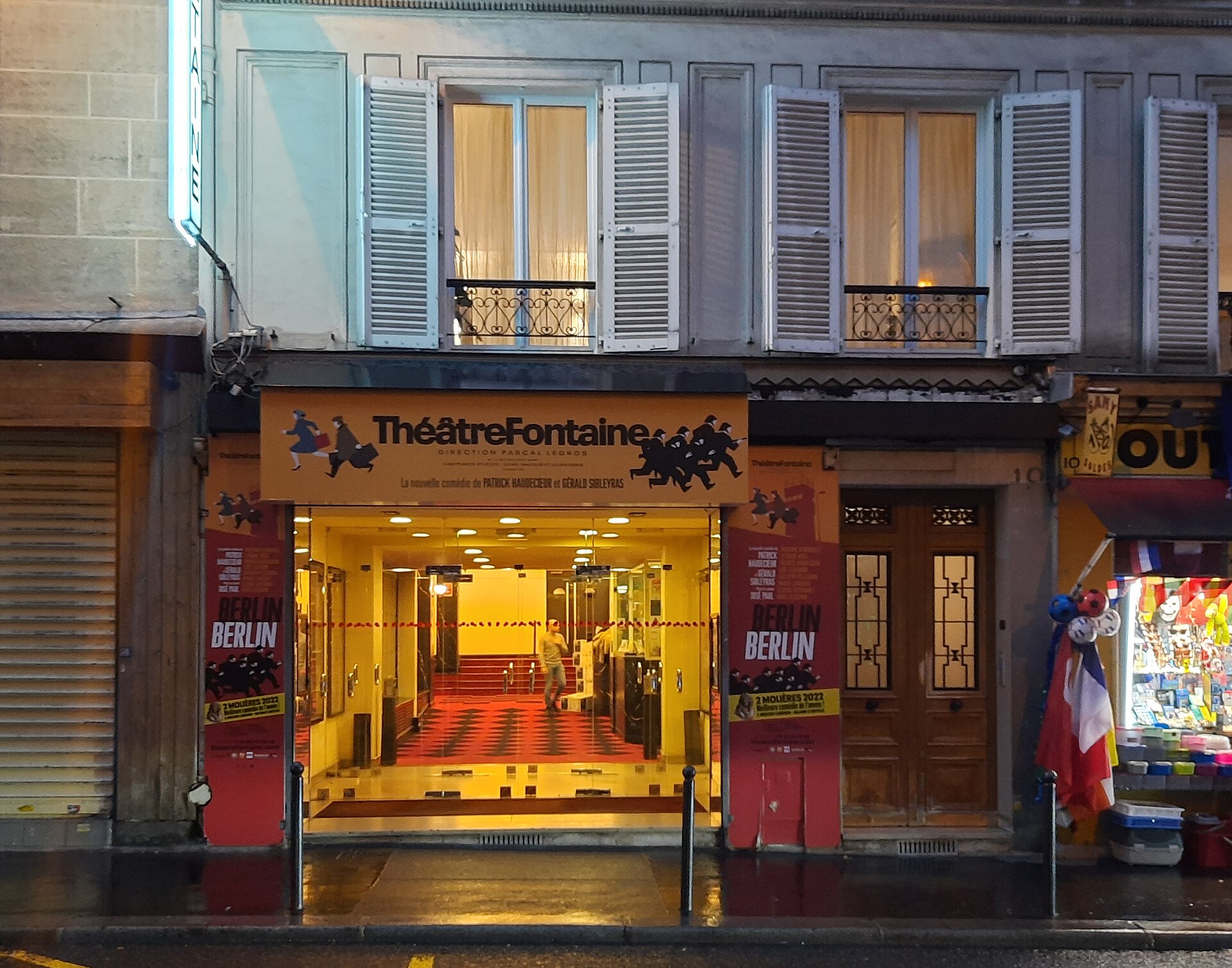
Théâtre Fontaine
Paryż
Théâtre Fontaine is an intimate playhouse in Paris, tucked away on rue Pierre-Fontaine in the 9th arrondissement, just steps from Pigalle. It's a venue where a colorful pre-war past meets a legendary postwar cabaret story, and where the auditorium still carries the look of the 1950s. Where is it and how do you get there? The theatre sits right in the heart of the 9th arrondissement, an area long associated with theatres and cabarets, only a short walk from Place Pigalle and the Moulin Rouge. The easiest way in is by metro to Blanche or Pigalle station, both just a few minutes' walk from the entrance. The neighborhood comes alive at night, so it's worth arriving a little early to settle in and take in the auditorium before the curtain goes up. What's the story behind this building? Before it became a theatre, the site had a surprisingly varied past — at one point it held a cemetery, and later a workshop manufacturing plumbing fittings. It wasn't until the 1930s that the address turned into an entertainment venue: Léon Volterra, the impresario who at the time also ran the Théâtre de Paris, Théâtre Marigny, the Lido, and the Casino de Paris, opened a cabaret here first known as El Garron, which quickly became famous under the name Boîte à Matelots. The theatre's real story begins in 1951, when Jean Richard and André Puglia took over the site of a former cabaret called Le Chantilly, abandoned after the war following shady black-market dealings during the Occupation. The pair built a new 400-seat auditorium, inaugurated with a production starring Raymond Souplex, Louis de Funès, Roger Pierre, and Jean-Marc Thibault. The show was such a hit that the venue was soon expanded, raising capacity to 630 seats. What will you see inside? The interior still radiates 1950s style. Visitors are greeted at the entrance by a distinctive black-and-red checkerboard floor, while the auditorium is wrapped in rich red upholstery typical of classic Parisian playhouses. Overhead, a decorative ceiling shaped like a starry vault crowns the room — a detail that has been setting the mood for audiences for decades before the show even starts. When is the best time to visit? The theatre runs a year-round program that shifts with the seasons, ranging from boulevard comedies to one-person shows and musical productions. Since the auditorium holds a little over 600 seats, it's worth booking tickets for popular shows ahead of time, especially for weekend evenings, when Pigalle is buzzing and several nearby stages are running performances at once. Frequently asked questions How big is the Théâtre Fontaine auditorium? After its postwar expansion, the theatre seats 630 people — an intimate but not tiny house by the standards of Paris's boulevard theatres. What stood on this site before the theatre? Before the venue existed, the plot was home first to a cemetery and later to a plumbing-fittings workshop; it only became an entertainment spot in the 1930s. Who created the theatre in its current form? In 1951, Jean Richard and André Puglia took over the abandoned premises of the former Le Chantilly cabaret and turned them into the theatre's current auditorium. How do you get to Théâtre Fontaine? The closest metro stations are Blanche and Pigalle, both just a few minutes' walk from the entrance through the heart of Paris's theatre and cabaret district.
-
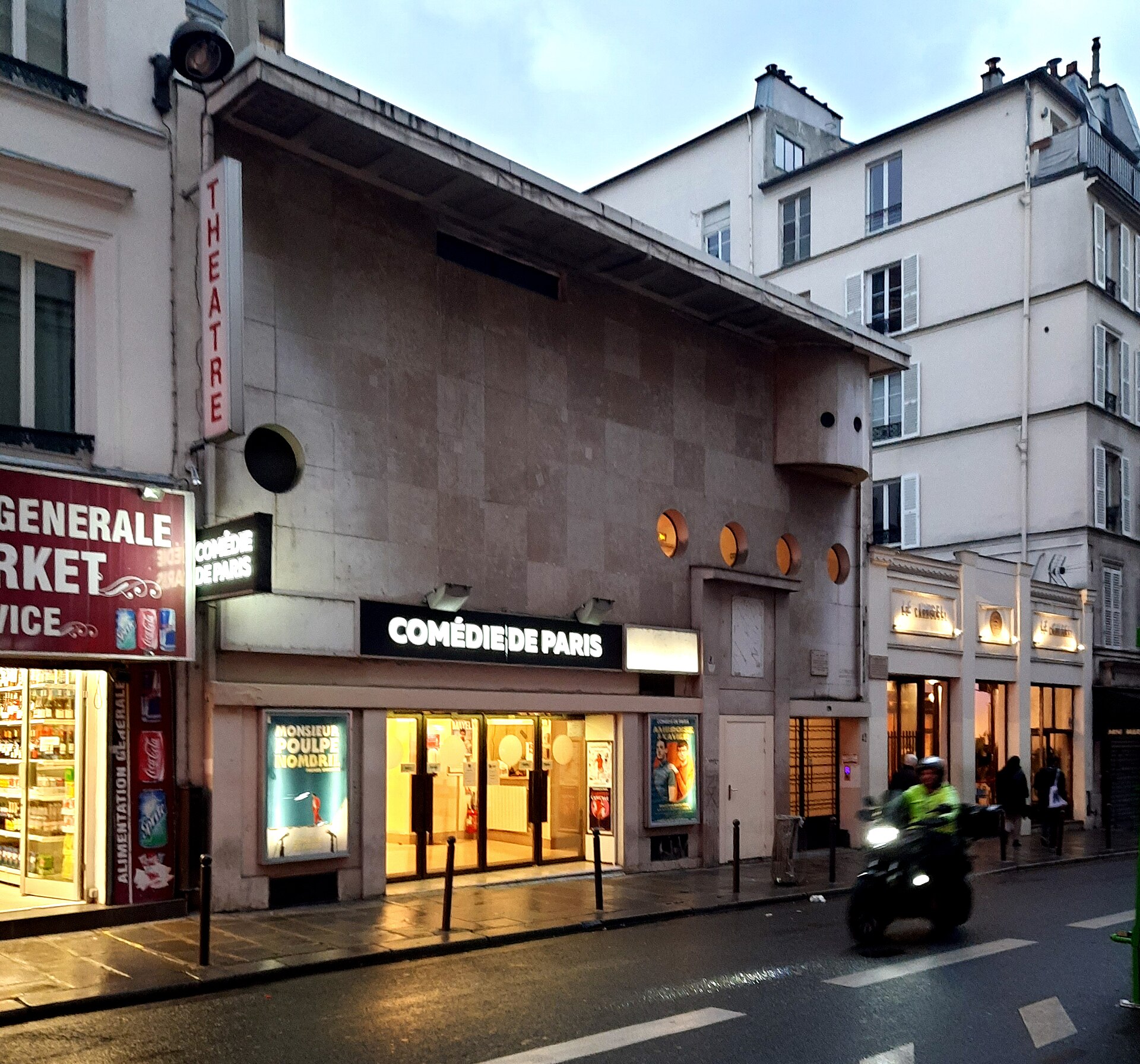
Comédie de Paris
Paris
Comédie de Paris is a small comedy theatre in Paris, tucked at the foot of Montmartre in the city's 9th arrondissement. Where is it and how do you get there? The venue sits at 42 rue Pierre-Fontaine, a short walk from the nightlife of Place Pigalle. The closest metro stops are Blanche (line 2), Pigalle (lines 2 and 12), and Place de Clichy (lines 2 and 13) — all within about ten minutes on foot. Because the theatre sits between Pigalle and the Montmartre hill, an evening show pairs easily with a stroll up toward Sacré-Cœur before or after the performance. What will you see inside? The building was designed by architect Georges-Henri Pingusson in the "paquebot" (ocean-liner) style that was fashionable in interwar France — sweeping curves and porthole-like details that echo the interior of a transatlantic ship. The main hall seats 182 people, making it one of the more intimate stages in Paris: even from the back rows you can read the performers' expressions. The programme leans toward stand-up, one-person comedy shows, and humour acts — the format the venue has built its reputation on for decades. What's the story behind the building? The theatre opened in December 1929 under the name "Menus-Plaisirs." Under director Marcel Tallien, its stage hosted singer Damia, actor Julien Carette, and a young Jean Sablon. It was later renamed "Théâtre de l'Humour" and, until the Second World War, hosted Paris's chansonniers — performers of satirical cabaret song. During the war, Jacques Valois turned the space into a comedy theatre. In 1967 it became the "Nouveau Théâtre-Libre," then the "Studio-Théâtre" a year later, before closing. When it reopened in 1974, it briefly ran as an erotic theatre called "Love-Théâtre." Only in the 1980s did the venue settle into the identity it holds today, taking the name Comédie de Paris and becoming one of the capital's reference addresses for comedy. Comedian Jean-Pierre Bigard ran the theatre from 2008 to 2022, when a new team — Adélie Gintrand, Arthur Jugnot, Morgan Spillemaecker, and Romain Thunin — took over. When should you go? Shows run year-round, mostly in the evening, with a lineup that rotates regularly as different comedians and solo performers take the stage. Because the room is small, tickets for well-known names sell out fast — booking ahead is worth it, especially for weekend dates and around the December holiday season, when Paris's comedy venues fill up quickly. Frequently Asked Questions Where exactly is Comédie de Paris? At 42 rue Pierre-Fontaine in the 9th arrondissement, right at the foot of Montmartre. How many people can the hall hold? The main auditorium seats 182, keeping the audience close to the stage. Why is it called "Comédie de Paris"? The building has changed names and purpose several times since 1929 — starting as the Menus-Plaisirs cabaret, passing through a chansonnier theatre and a brief erotic-theatre period, before settling into its comedy identity in the 1980s. Which metro station is closest? Blanche (line 2) or Pigalle (lines 2 and 12) — both about a five-to-ten-minute walk from the theatre.
-
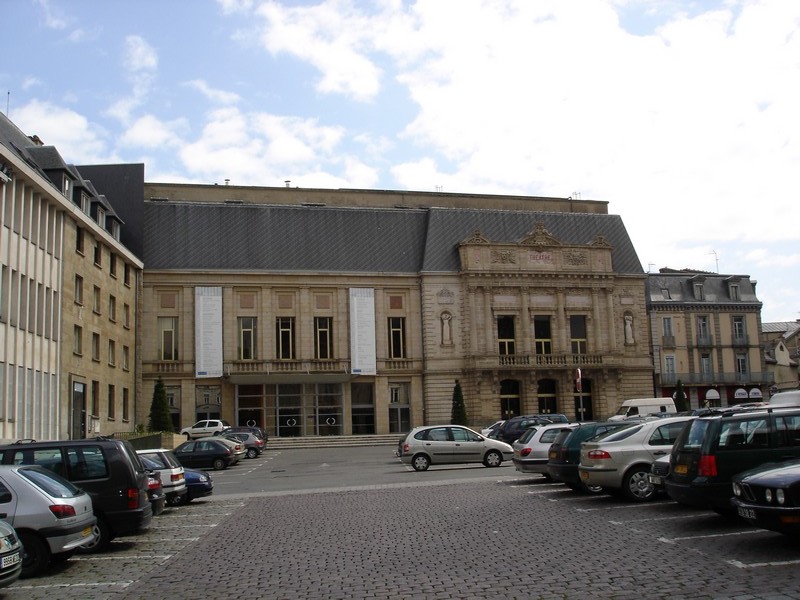
Théâtre de Saint-Brieuc
Saint-Brieuc
Théâtre de Saint-Brieuc is the historic municipal theatre standing in the center of Saint-Brieuc, the capital of the Côtes-d'Armor department in Brittany. This small, intimate Italian-style hall is one of the few surviving examples of this kind of theatre architecture in the region, and it has been officially protected as a French historic monument for several decades. Where did this theatre come from? The first theatre on this site was built between 1809 and 1811, designed by the Parisian architect Guillot. It served the town for most of the 19th century until a fire destroyed it in 1875. Reconstruction began a few years later, in 1879, this time overseen by Alexandre Angier, the town's own architect. The new building was formally inaugurated in 1884, and it is that same structure that still stands in Saint-Brieuc today. What will you see, inside and out? The front facade follows a neoclassical layout: a ground floor, an upper floor and an attic level arranged in a clear, symmetrical composition, with the entrance doors and foyer windows grouped together at the center of the front. It's a modest but elegant front, typical of French municipal theatres built in the second half of the 19th century. The real reason to step inside, though, is the auditorium itself. The hall is elliptical in plan — the classic "Italian-style" layout — and seats around three hundred people, making it intimate compared with the grand opera houses of the same era. The ceiling is painted with a sky scene featuring four allegorical figures: Music, Dance, Comedy and Tragedy. The decoration of the foyer and the hall was carried out by Carpezat and Lavastre, the artists responsible for the interior finishes. The whole ensemble was clearly inspired by Parisian projects of the period, including the Opéra Garnier, though naturally on a much smaller scale. The Saint-Brieuc theatre is considered one of the few surviving small Italian-style theatres in Brittany with such a rich interior decorative programme — that rarity is precisely what draws the attention of architecture enthusiasts, not just theatre-goers. Since 1996 the building has been listed on France's supplementary inventory of historic monuments (inventaire supplémentaire des monuments historiques), formally recognizing its historical and architectural value. How to get there, and when to visit? The theatre stands in central Saint-Brieuc, in an easily walkable part of town, close to the department capital's other heritage sites — a visit can easily be combined with a stroll to Saint-Étienne Cathedral or the old town. Saint-Brieuc has its own train station with direct connections to Paris, Rennes and Brest, making it a convenient base for exploring this part of Brittany. The best time to visit depends on what you're after: the exterior and facade can be admired year-round, but to see the auditorium from the inside, it's worth checking the local cultural programme and catching a performance or an event open to the public — that's the surest way to see the painted ceiling and the decorated hall in person. Frequently asked questions Is today's theatre building the same one built in 1811? No. The original 1809–1811 theatre burned down in 1875. The building standing today was constructed between 1879 and 1884 to a design by architect Alexandre Angier. How many people does the auditorium hold? The elliptical, Italian-style hall seats around three hundred spectators. What's the most distinctive feature of the theatre's interior? The painted ceiling with allegorical figures of Music, Dance, Comedy and Tragedy, along with the foyer decoration by Carpezat and Lavastre. Is the theatre a protected historic monument? Yes, it has been listed on France's supplementary inventory of historic monuments since 1996.
-
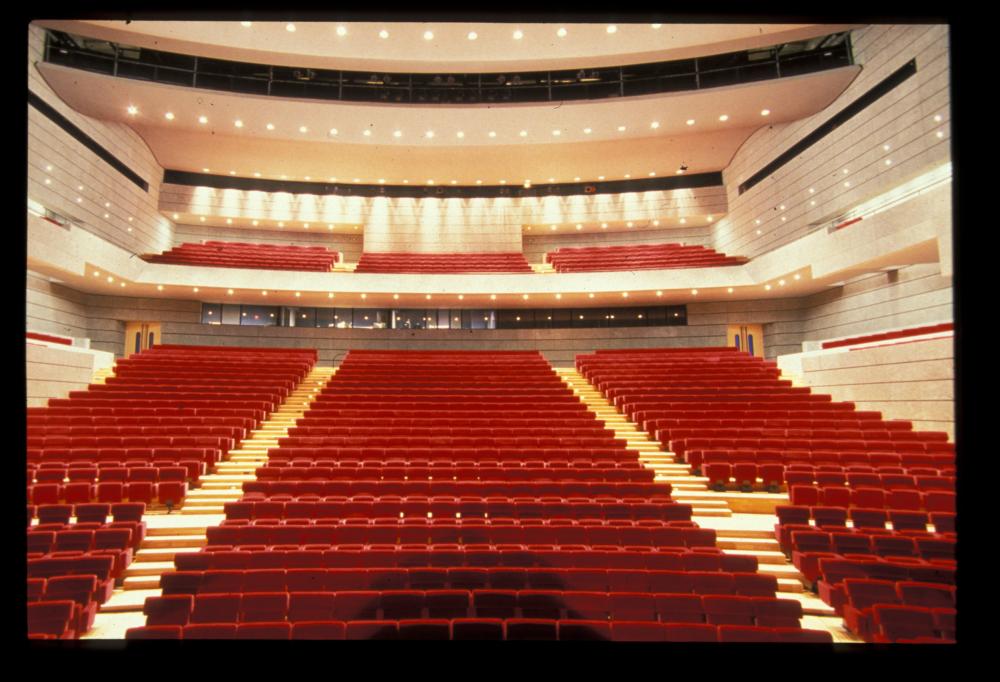
La Filature
Miluza
La Filature is Mulhouse's scène nationale — one of Alsace's leading cultural venues, built in 1993 on the site of a former wool-combing mill. The building follows a design by architect Claude Vasconi and stands where the Laederich & Cie factory once operated, founded in 1883 on the banks of the Nouveau Bassin. The name itself, "Filature," meaning spinning mill, is a direct nod to that industrial past. What makes the building stand out? The venue's most striking feature is its curved shell of glass and steel, a bold silhouette that helped earn La Filature the "Architecture contemporaine remarquable" label, awarded alongside eight other sites across the Mulhouse Alsace Agglomération region. Four institutions share the same roof: the scène nationale with its exhibition gallery, the Mulhouse Symphony Orchestra (Orchestre national de Mulhouse), the Mulhouse media library dedicated to the performing arts, and the headquarters of the Météo Festival. Together they turn La Filature into a genuine cultural hub rather than a single-purpose theatre. What can you see and do there? Each season brings more than 50 productions spanning theatre, dance, music, circus arts, and shows for young audiences. Recurring highlights include Les Nuits de l'étrange, the Quinzaine de la danse, and the Vagamondes festival. The Opéra national du Rhin performs here regularly as well. Visual arts have been part of La Filature's identity from the start, with a particular focus on photography alongside installation, video, and multimedia work. The gallery hosts temporary exhibitions by established artists, and admission to them is free. How do you get there? La Filature sits in Mulhouse, in the Alsace region, within easy reach of the city centre and the train station. Mulhouse is well connected by rail to Strasbourg, Basel, and Belfort, making it a convenient stop whether you're arriving from elsewhere in France, from Switzerland, or from Germany. When is the best time to visit? The cultural season runs from autumn through spring, packed with performances and concerts. It's worth checking the current programme before planning a trip, since festivals like Les Vagamondes and the Quinzaine de la danse happen on fixed dates and tend to draw larger crowds. The exhibition gallery rotates its shows periodically, so it helps to know what's currently on display. Frequently asked questions What is La Filature? It's Mulhouse's scène nationale, combining theatre, dance, music, circus, and visual arts under one roof. The building opened in 1993 on the site of a former wool-spinning mill. Who designed the building? Architect Claude Vasconi designed the distinctive curved glass-and-steel shell that later earned the venue its contemporary architecture recognition. What institutions are housed there? The scène nationale and its gallery, the Mulhouse Symphony Orchestra, a performing-arts media library, and the headquarters of the Météo Festival. Is admission to the exhibitions free? Yes — temporary exhibitions in La Filature's gallery are free to visit.
-
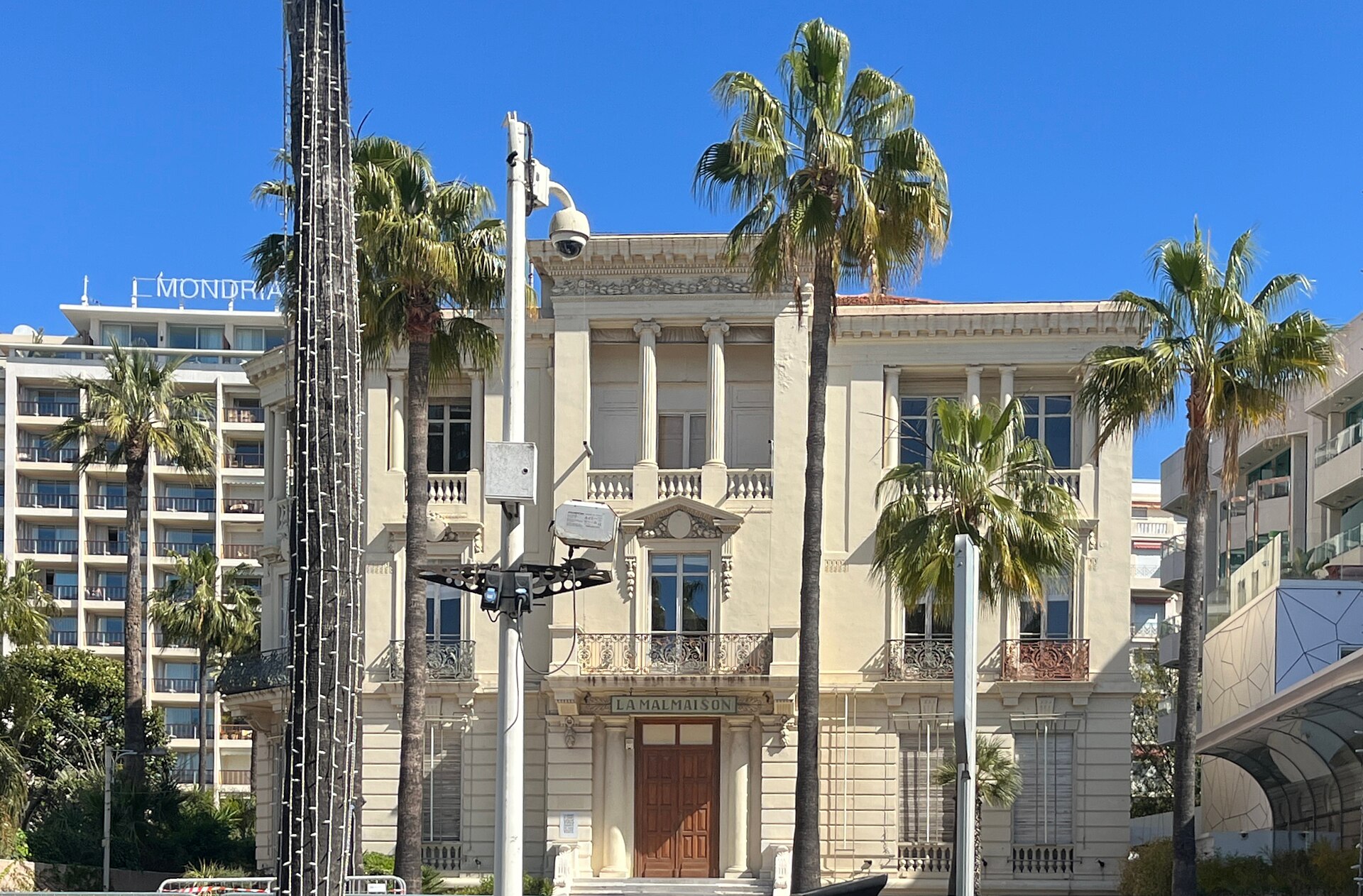
La Malmaison
Cannes
La Malmaison is a Belle Époque villa on the famous Croisette in Cannes, now the city's contemporary art gallery right on the Mediterranean seafront. What was originally built on this spot? A modest villa with a tearoom opening onto the seafront promenade first appeared here in 1868. By 1901, the owners at the time, the Dubosc family, had replaced it with a far grander four-storey residence, complete with a reception room, a boudoir, a billiard room, a reading room, and eighteen guest bedrooms. Within a few years the building housed an exclusive golf club founded by Grand Duke Michael of Russia, and by the 1930s the Villa Dubosc had taken on the name it still carries: La Malmaison. Why does this building matter to film history? British businessman Sir John Edward Crawford bought the property in 1935. Eleven years later, on 20 September 1946, its rooms hosted the opening of the very first Cannes Film Festival. That single evening cemented the building's place in the city's cultural memory long before it ever became a public institution. How did the villa turn into an art centre? The city of Cannes took over the building in 1969, first using it for its culture and communications departments. A year later, the ground floor facing the Croisette opened as an exhibition space, giving birth to the Centre d'Art La Malmaison. Since 2018 the venue has been devoted entirely to contemporary art, and after a two-year renovation it reopened in January 2025 as a considerably larger international art centre — exhibition space nearly tripled, growing from roughly 207 to 600 square metres. What can visitors see there today? The centre stages three major temporary exhibitions each year, typically built around artists closely tied to the French Riviera, from Matisse and Picasso to Miró and César. Because the programme relies heavily on loans from museums and private collections, the displays rotate regularly and rarely repeat. The building itself keeps its Belle Époque character intact — tall windows, a symmetrical facade, and the same view that impressed guests a century ago: the Lérins Islands and the Estérel massif in the distance. Where exactly is La Malmaison located? The building sits directly on the Croisette promenade, in the heart of Cannes, surrounded by palm trees, hotels, and the seafront that gave the city its postcard image. It's an easy walk from most central hotels, and the Festival Palace is only a few minutes away on foot, so a visit slots naturally into a stroll along the bay. Frequently Asked Questions Is La Malmaison the same as Napoleon's château near Paris? No. That is an entirely different site — the Château de Malmaison near Rueil-Malmaison, once home to Napoleon and Joséphine. The Cannes La Malmaison is a Belle Époque villa on the Croisette, now a contemporary art venue. Do I need a separate ticket from other Cannes museums? Yes, La Malmaison is an independent municipal institution with its own entry fee, not bundled with other city museums. How long does a visit typically take? Even after the expansion, the space is compact enough that most visitors spend between 45 minutes and an hour and a half inside, depending on the current exhibition. Is it worth visiting outside festival season? Yes — the exhibition programme runs year-round and isn't tied to the Film Festival dates, so it's often a calmer, less crowded visit outside May.
-

Halle aux Grains de Toulouse
Halle aux Grains is a hexagonal concert hall in the heart of Toulouse, home to the Orchestre national du Capitole. The building was erected in 1861 to designs by the city architect André Denat as a covered grain market — boats delivered wheat to the nearby Saint-Sauveur port, and the hall handled the grain trade from 1864 onward. Today it stands as one of the most distinctive concert venues in the Occitanie region, blending nineteenth-century industrial architecture with modern acoustics. How do you get there? Halle aux Grains sits right in central Toulouse, within walking distance of Place Wilson and the banks of the Garonne. The easiest way in is by metro (line A, Capitole or Jean Jaurès stations) or tram — from the city centre it's only a few minutes on foot. Visitors arriving by car will find underground public car parks nearby, though public transport is recommended given the restricted traffic zones in the centre. What will you see? The interior surprises with its shape — the hexagonal floor plan seats the audience all around the stage, creating a remarkably intimate atmosphere despite a capacity of around 2,200 seats. After the grain trade ended in 1952, the building spent two decades as an events hall, hosting rock concerts, circus performances, boxing galas and variety shows. The turning point came in 1974, when conductor Michel Plasson, who led the Orchestre du Capitole from 1968 to 2003, discovered the exceptional acoustic qualities hidden inside the former grain market. He performed the complete Beethoven symphonies and concertos there to such acclaim that the hall became the permanent home of Toulouse's symphony orchestra. In 1988 and 2000 the city carried out major renovations, upgrading the staging, acoustics and accessibility for visitors with reduced mobility, while preserving the character of the original nineteenth-century structure. When should you visit? The Orchestre national du Capitole's concert season runs from September to June, with a full programme of symphonic works, solo recitals and chamber concerts — the best time to experience the hall at its busiest and most vibrant. Summer brings occasional festival events and guest performances, though the schedule is thinner. It's worth checking the current calendar before arriving, since tickets for concerts featuring well-known soloists or premiere programmes tend to sell out ahead of time. Who is this place for? Halle aux Grains appeals both to classical music lovers seeking a top-tier symphonic concert and to visitors interested in nineteenth-century industrial architecture rarely preserved this well at the centre of a major French city. The building itself, with its distinctive hexagonal plan and dome, is worth seeing even without a concert ticket — it's a genuine landmark in Toulouse's urban fabric, right next to the city's grand Place Wilson. Frequently asked questions What was Halle aux Grains originally used for? It was a covered grain market, built in 1861 by architect André Denat to handle grain shipped by barge to the Saint-Sauveur port. Since when has it been a concert hall? It served as an events venue from 1952, and from 1974 — thanks to conductor Michel Plasson — it became the permanent home of the Orchestre national du Capitole. How many people does the hall hold? Around 2,200 seated spectators, arranged all around the stage thanks to the building's distinctive hexagonal shape. Has the building been renovated? Yes, major renovations in 1988 and 2000 improved the acoustics, staging and accessibility while preserving the original architecture.
-
Rennes Opera house
Rennes
Opéra de Rennes stands right on the main square of Rennes, opposite the city hall, and remains one of the city's most recognizable 19th-century landmarks. Designed by the young municipal architect Charles Millardet, it opened on 29 February 1836 as the first large-scale architectural project of the century in Rennes and the city's first public building dedicated entirely to the arts. What does the building look like? The most distinctive feature of the opera house is its rounded, rotunda-shaped form, deliberately designed to echo the curve of the neighboring town hall, which had been built a century earlier. Sculpted muses by François Lanno crown the facade, watching over the square below. Inside, a painted ceiling added in 1913 by the artist Lemordant depicts a Breton farandole, the region's traditional folk dance. The building's unusual layout once stirred debate: the main seating level, or parterre, sits on the first floor and is reached by a flight of 44 steps — a detail that made local headlines when the theatre was new. What happened in its history? Originally known simply as the town theatre, the building suffered a devastating fire on the night of 20-21 February 1856. City authorities chose to rebuild it faithfully to Millardet's original plans, which is why its 19th-century character survives intact today. The venue's artistic identity shifted in 1993, when new director Daniel Bizeray steered the programming firmly toward music. It was at that point the building took on its current name, Opéra de Rennes. How do you get there? The opera house sits inside a restricted traffic zone (ZTL) in the historic heart of Rennes, so arriving by car is difficult or simply not possible. Public transport, or a short walk from the surrounding old town, is by far the easiest way in — the building stands directly beside the city hall and within easy reach of Rennes' other central landmarks. When should you visit and how do you get tickets? The box office is open Tuesday to Friday from 1pm to 7pm, and Saturday from 1pm to 6pm. On Mondays, Sundays and public holidays, it opens one hour before the performance begins. It's worth checking the current season programme before visiting, since the Opéra runs a full annual calendar mixing opera productions, concerts and dance performances. What should you look out for during a visit? Beyond whatever is on stage, it's worth taking time to notice the architectural details of the hall itself — the ornate ceiling with its farandole motif, the sculpted muses on the facade, and the auditorium's distinctive curved shape. The building is a key stop on any walk through central Rennes, and during the annual Journées du Patrimoine (Heritage Days) it typically opens for guided backstage tours. Frequently asked questions Can you drive to the Opéra de Rennes? It's not recommended. The building lies within a restricted traffic zone in the city centre, so public transport or walking is the better option. When was the Opéra de Rennes built? The building, designed by Charles Millardet, opened on 29 February 1836 and was rebuilt to the same plans after a fire in 1856. Where does the name "Opéra de Rennes" come from? For most of its history the venue operated as the city's theatre. It only took the name Opéra de Rennes in 1993, when a new director gave the programme a musical focus. Is there anything special to see inside? Yes — look out for the 1913 painted ceiling depicting a Breton farandole dance, and the sculpted muses decorating the facade.
-
Palace of the Alsace-Lorraine Diet
Strasburg
The Palace of the Alsace-Lorraine Diet is an imposing building on Place de la République in Strasbourg, now home to the Théâtre National de Strasbourg (TNS), one of France's most prominent public theatres. What will you see? The building occupies a place of honour on the square, facing the former imperial palace (Palais du Rhin), and together with the surrounding structures forms one of the most striking architectural ensembles of the Neustadt district. It was built between 1888 and 1892 to designs by architects August Hartel and Skjold Neckelmann, in a neo-Renaissance style marked by a monumental facade, symmetrical layout, and decoration befitting the institution it was meant to house. The building originally served as the seat of the Alsace-Lorraine regional assembly — first as the Landesausschuss (Territorial Committee), and after the constitutional reform of 1911, as the fully-fledged Landtag. Between 1871 and 1918, while the region belonged to the German Empire, this is where the local legislative representatives held their sessions. After 1918, when Alsace returned to France, the building's purpose changed: it became home to a conservatory, and the former assembly hall began hosting concerts and theatrical performances. The Second World War left deep scars — the 1944 bombings caused serious damage, forcing a thorough reconstruction carried out between 1952 and 1955. That rebuilding created, among other things, a new concert hall and working premises for the Centre Dramatique de l'Est, a theatre company active in Strasbourg at the time. A turning point in the building's history came in 1972, when the institution was placed directly under the French Ministry of Culture. This made it the first national theatre established outside Paris — a status the TNS still holds today. The building now houses not only a stage with a rich repertoire of drama productions, but also a prestigious drama school (École du TNS), training successive generations of French actors and directors. How to get there? The building stands right in the centre of Strasbourg, on Place de la République, within walking distance of the cathedral and the Grande Île. It is one of the essential stops on any walk through the Neustadt, the German-built district dating from after 1871, today listed alongside the medieval city centre on the UNESCO World Heritage list. When to visit? The square's architecture and the palace facade can be admired year-round, and evening lighting adds extra drama to the building's monumental character. To see the interior and attend a performance, it's worth checking the TNS programme in advance — the theatre season typically runs from autumn to spring, with a summer break. Frequently asked questions What was this building originally used for? It served as the seat of the Alsace-Lorraine regional assembly — first the Landesausschuss, and from 1911 the Landtag — during the period when the region belonged to the German Empire. When was the building constructed? It was built between 1888 and 1892, designed by architects August Hartel and Skjold Neckelmann. Why was the building rebuilt? The 1944 bombings caused serious damage, which led to a thorough reconstruction between 1952 and 1955, including the creation of a new concert hall. What does the building house today? The Théâtre National de Strasbourg — the first national theatre established outside Paris (a status held since 1972) — along with its prestigious drama school, the École du TNS.
-
Opéra Bastille
Paryż
Opéra Bastille is a modern opera house in Paris, one of the two homes of the Paris National Opera. It stands on Place de la Bastille in the city's 12th arrondissement, a square steeped in revolutionary history, and has served as the company's main stage since 1989. What is this place? The building was commissioned under President François Mitterrand as part of the Grands Travaux, a series of large public building projects intended to modernize Paris. The idea was ambitious: a new, technically capable opera house that would eventually take over from the aging Palais Garnier, whose 19th-century stage could no longer keep up with the demands of large-scale contemporary productions. That full handover never happened — instead, the two venues now operate side by side as the twin homes of the Paris National Opera. Opéra Bastille's design deliberately breaks with the ornate, historic character of the square around it. Its glass-and-stone facade, all sharp geometry and clean lines, split opinion among Parisians and critics when it opened, but over the decades it has become a recognizable landmark of the city's eastern edge. What will you see inside? The main auditorium seats close to 2,500 people and was built for large, technically demanding opera productions. Today it hosts most of the Paris National Opera's opera performances, alongside a number of ballet shows and symphony concerts. The Palais Garnier, by contrast, keeps a mixed program of opera and ballet in its smaller, more traditional setting. The building itself — sweeping glass facades, a modern foyer, and extensive backstage technology — is part of the experience, whether you're attending a performance or simply viewing it from outside. How to get there? Opéra Bastille sits directly on Place de la Bastille, one of the busiest transport hubs in eastern Paris. Its central location makes it an easy stop to combine with a walk through the nearby Marais district or a stroll along the Seine. When to visit? Timing largely depends on whether you plan to attend a performance or just see the building and square. The opera season typically runs from autumn through summer, with a reduced program during the summer break. The square and facade themselves are accessible year-round, and the building is especially striking after dark when its modern exterior is lit up. Frequently asked questions Did Opéra Bastille replace the Palais Garnier? Not entirely. That was the original plan under President Mitterrand, but today the two buildings operate in parallel as the two stages of the Paris National Opera, each hosting a different share of the repertoire. When did Opéra Bastille open? It opened in 1989, as part of President François Mitterrand's Grands Travaux building program. What can you see there besides a performance? The architecture itself is worth a look — a modern glass-and-stone facade that stands in sharp contrast to the historic buildings surrounding Place de la Bastille. Does Opéra Bastille only host opera? No — alongside opera, which makes up most of its program, the venue also stages ballet performances and symphony concerts.
-
Opéra Nouvel
Lyon
Opéra Nouvel (Opéra de Lyon) is one of the most distinctive cultural landmarks in Lyon — a 19th-century opera house crowned with a striking glass dome designed by architect Jean Nouvel. The contrast between the classical stone facade and the sleek modern roof structure makes it a favorite photo stop for visitors crossing Place de la Comédie, right next to Lyon's town hall. What will you see at Opéra Nouvel? The building kept its original 1831 facade, while the entire interior and roof were completely rebuilt between 1985 and 1993 under Jean Nouvel's direction. Above the classical colonnade rises a half-cylindrical black glass-and-metal dome — one of the most recognizable silhouettes on Lyon's skyline, visible from several vantage points across the city center. Nouvel worked alongside the scenography studio dUCKS scéno and acoustician Peutz to turn the historic shell into a fully modern, flexible performance venue. Inside, the building houses the Opéra National de Lyon, an opera and ballet company with a strong international reputation. The program covers both classical and contemporary opera productions, ballet performances, and symphonic concerts. Serge Dorny has served as general director since 2003, a period that saw the company's profile grow significantly on the European stage. How do you get to Opéra de Lyon? The opera house sits right in the heart of Lyon on Place de la Comédie, next to the Hôtel de Ville (city hall) and the Musée des Beaux-Arts. The location is well served by public transport: the closest metro stop is Hôtel de Ville – Louis Pradel on line A, and several bus and tram lines stop nearby as well. On foot, it's a short walk of about ten to fifteen minutes from Place Bellecour or the Presqu'île district. When should you visit and how do you experience it? The exterior can be admired year-round, and the glass dome looks especially striking after dark when it's lit up against the stone facade. To see the interior and catch a performance, check the season program and book tickets in advance — the opera season generally runs from autumn through spring, with a summer break. On select dates, the venue also offers backstage tours that let visitors explore Nouvel's architecture without attending a full show. For architecture enthusiasts, this building is a must-see in Lyon: the meeting point of a classical colonnade and an industrial-modern roof makes it one of the most photographed sights in the city. Frequently asked questions Is Opéra Nouvel the same building as the original 19th-century opera house? Yes — the original 1831 facade was preserved, while the interior and roof were completely redesigned by Jean Nouvel between 1985 and 1993. How do I reach the opera house by public transport? The easiest way is by metro line A to the Hôtel de Ville – Louis Pradel station, located just steps from the entrance. Can you visit the opera house without buying a ticket to a performance? The venue occasionally organizes backstage tours of the building — check the Opéra National de Lyon website for current dates. What kind of repertoire does the Opéra National de Lyon perform? The company stages both classical and contemporary opera works, complemented by ballet performances and symphonic concerts.
-
Théâtre Saint-Louis
Cholet
Théâtre Saint-Louis is the main performing arts venue of Cholet, a town in the Maine-et-Loire department, in the Pays de la Loire region of western France. Standing at the heart of the historic town centre, it has served as the cultural hub of Cholet for decades, even though its walls once housed a very different institution. How do you get there? The theatre sits within the Espace Saint-Louis complex, which also includes an auditorium and Cholet's music conservatoire. Thanks to its central location, the easiest way to reach it is on foot or by bike from the old town, and public bus stops serving the centre are close by. Drivers will find parking within a short walk of the entrance. Cholet lies in the Mauges area of western France, within reasonable reach of the larger towns of Pays de la Loire, making it a convenient stop on a regional itinerary. What is the story behind the building? The site's history goes back to the early 15th century, when the lord of Cholet granted land for a community of mendicant friars to settle. A century later, Franciscan nuns known as the Cordelières established themselves next door, and the religious community there flourished uninterrupted until the French Revolution brought its religious life to an end. The turning point came at the close of the 18th century: between 1797 and 1803, the former Cordelières convent was converted into the new home of the town hospital. The building carried on in that role for close to two centuries — it was only in 1977 that the hospital moved to new premises, finally closing the medical chapter of the site's history. It was after that move that the old walls began their transformation into a venue for the performing arts. What will you see inside? At the heart of Théâtre Saint-Louis is an 850-seat auditorium, fully equipped with a control room, stage and dressing rooms for performers. Visitors and audiences also have a ticket office and a reception hall at their disposal, used for gathering before performances. In 2010, a second phase of renovation work began, giving Espace Saint-Louis its present-day shape — a complex that combines the conservatoire's teaching activities with a full programme of live performances. As a result, the same site serves young musicians learning their instruments as well as audiences coming for concerts, plays and dance shows. The architecture of the complex is worth a closer look in its own right: the contrast between the old convent-and-hospital fabric and the modern stage and auditorium elements gives the place a distinctive character that is part of its appeal. When is the best time to visit? Théâtre Saint-Louis runs on an artistic season that typically opens in autumn and continues through spring, packed with plays, concerts and conservatoire events. That stretch of the year is the best time to plan a visit built around a specific performance. Over summer, the programme tends to be quieter, but the town of Cholet and its historic centre are still worth a stroll outside the theatre season. Frequently asked questions What was the Théâtre Saint-Louis building before it became a theatre? It began as the seat of a religious community founded in the 15th century, and from the turn of the 18th and 19th centuries until 1977 it served as Cholet's town hospital. How many seats does the theatre hall have? The main auditorium at Théâtre Saint-Louis seats 850 people and comes with full technical facilities, including a stage, control room and dressing rooms. What else is part of the Espace Saint-Louis complex? Alongside the theatre hall, the complex also houses an auditorium and Cholet's music conservatoire, combining educational activities with a programme of concerts and performances. When is the best time to plan a visit? Most events take place during the artistic season, from autumn through spring, when the theatre and conservatoire programme is at its fullest.
-
Théâtre du Tiroir
Laval
Théâtre du Tiroir is a small, independent theatre in Laval, France — a stage built less on scale than on closeness to its audience and a willingness to take repertoire risks. Housed in a former chapel at 8 rue Jean Macé, it has been part of Laval's cultural life for more than three decades. How did this theatre come about? The company's story starts in October 1990, when director Jean Luc Bansard took over the disused bakery-oven room of the abandoned Corbineau barracks in central Laval. It was there that the troupe staged its first production, "Arcadio", playing to sold-out houses. That founding act — turning a leftover industrial space into a stage — set the tone for a company whose unofficial motto is "Résister c'est exister" ("to resist is to exist"). Since May 1995 the company has had a permanent home at the so-called Petit Théâtre, 8 rue Jean Macé, a building that previously served as a chapel. Converting a sacred space into a performance venue gave the place a distinctive character: intimate, acoustically warm, and unlike anything you'd find in a standard multiplex-style auditorium. What can you expect to see? Théâtre du Tiroir's programming isn't limited to classic drama. Each year the venue puts on six to eight productions spanning theatre proper, dance, concerts, and shows aimed at whole families. That range means the venue draws both theatre regulars and visitors simply looking for an unusual evening out in Laval. The small scale of the Petit Théâtre — a former chapel — favours close contact between performers and audience, something hard to find in large, several-hundred-seat halls. Here the distance between stage and front row is a matter of metres, which matters if you're drawn to intimate, author-driven theatre rather than big commercial productions. Getting there and when to visit The theatre sits right in central Laval, at 8 rue Jean Macé, so reaching it on foot or by local transport from anywhere in town is straightforward. Laval itself has good rail links to Paris and Rennes, making a day trip built around a single show entirely workable. Because Théâtre du Tiroir runs on a seasonal programme rather than a permanent exhibit, plan your visit around a specific production rather than hoping to walk in on a show. Check the current schedule before travelling — the season generally runs from autumn through spring, with a summer break. Frequently asked questions What is Théâtre du Tiroir? A professional theatre company based in Laval since 1990, with a permanent home since 1995 in a former chapel at 8 rue Jean Macé. What kind of shows does it put on? Six to eight productions a year, covering drama, dance, concerts, and family shows. Where does the company's history begin? In 1990, when Jean Luc Bansard staged "Arcadio" in the disused bakery-oven room of Laval's former Corbineau barracks. Should I book tickets in advance? Given the venue's small capacity, it's worth checking the programme and booking ahead, especially for popular titles.
-
Théâtre d'Orléans
Orléans
Théâtre d'Orléans is the main performing-arts venue of Orléans, the city on the Loire in the Centre-Val de Loire region. The complex brings together three auditoriums, several modular spaces and areas for the audience to gather, and is home to three resident institutions: the Scène nationale d'Orléans, the Centre Dramatique National Orléans/Centre-Val de Loire, and CADO (Centre national de création Orléans-Loiret). Where is the theatre located? The building sits on Boulevard Pierre Segelle, right in the city centre, between the ring of municipal boulevards and the bank of the Loire. That position makes it easy to combine a show with a riverside walk or a stroll through the old town, both just a few minutes away on foot. What is the history behind it? Until 1963, the city's theatre company performed inside the former Saint-Michel church, which had been converted for stage use under plans by architect Benoît Lebrun; the building had served that purpose since 1792. After it closed, the city spent over a decade building a replacement: the new venue, named Carré Saint-Vincent and paired with a cultural centre, opened to the public on 18 February 1975, following an official inauguration the day before led by Michel Guy, then Secretary of State for Culture under Jacques Chirac's government. At the outset it held two auditoriums, Antoine-Vitez and Touchard. A third hall, named after the actor Barrault, was added in 1994, at which point the whole complex took on the name it carries today, Théâtre d'Orléans, marking its status as a venue unusual in France for both the range of its spaces and the mix of disciplines on its stages. What can you see inside? Three auditoriums of different sizes make up the venue: the intimate Vitez hall (around 210 seats), the mid-sized Barrault hall (604 seats), and the largest, Touchard (906 seats). Alongside them are three modular spaces that can be reconfigured to suit a given production, plus four areas set aside for the audience to meet before and after performances. Programming is shared among the three resident institutions, so the bill covers dramatic theatre, contemporary dance, modern circus and music, often in forms that blend several disciplines within a single evening. Right by the main entrance, the Café du Théâtre serves as a bar and restaurant open not only to ticket holders but to anyone passing along the Loire who wants to sit down. When is the best time to visit? The artistic season runs from autumn to spring, with the busiest run of productions between October and May, when the three halls alternate between different titles. During that window the bill changes fairly quickly, so it is worth checking the current programme before travelling and booking ahead for the shows in highest demand. In summer the resident companies typically pause their programming, though the building and its café remain a fixture for people walking the boulevards. Frequently asked questions How many halls does Théâtre d'Orléans have? Three: Vitez (about 210 seats), Barrault (604 seats) and Touchard (906 seats), plus three modular spaces and four gathering areas. Where exactly is the theatre located? On Boulevard Pierre Segelle in central Orléans, between the city's boulevards and the Loire. Which institutions are based there? The Scène nationale d'Orléans, the Centre Dramatique National Orléans/Centre-Val de Loire, and CADO — the Centre national de création Orléans-Loiret. Where does the current name come from? The building opened in 1975 as Carré Saint-Vincent; it took the name Théâtre d'Orléans after the third auditorium, Barrault, was added in 1994.
-
Théâtre Yolande Moreau
Vernon
Théâtre Yolande Moreau is the main performance venue of Vernon, a town on the Seine in the Eure department of Normandy. The theatre operates within the Espace Philippe-Auguste, a cultural complex that also houses a media library and a music-and-dance conservatory. Together they form the beating heart of the town's cultural life, with drama, concerts, dance and circus all sharing one well-equipped venue right in the town centre. Where is the theatre located? The building stands at 12 avenue Victor Hugo, in the very centre of Vernon, an easy walk from the train station and the old town. Its central location makes it simple to combine an evening show with a stroll through Vernon's historic streets and dinner at a nearby restaurant beforehand. What will you find inside? The auditorium seats 475 people, including three spaces reserved for visitors with reduced mobility. Its 200 m² stage was designed to keep performers and audience close together, favouring an intimate feel over the scale of a cavernous concert hall. Technical facilities include a 5-by-7-metre projection screen used for multimedia shows, and performers have four dressing rooms with showers at their disposal. Where does the theatre's name come from? The stage takes its name from Yolande Moreau, a Belgian actress and film director considered the most famous person associated with Vernon, where she had lived for years. Residents chose the name themselves in a public vote held the year before the renaming ceremony. That ceremony took place on 7 October at 11:30 am, with Yolande Moreau in attendance. Although she had never previously performed on this particular stage, she was the very first artist to do so under its new name, taking to the boards that same evening right after the official unveiling. What kind of programme can you expect? Theatre productions form the backbone of the schedule, but the bill extends well beyond drama: dance, circus arts, music, chanson, stand-up comedy and shows for young children all feature regularly. That range means the venue appeals equally to theatre purists, families looking for children's entertainment, and fans of live music. When is the best time to visit? The cultural season at Espace Philippe-Auguste generally runs from autumn through spring, with the busiest lineup during the school year, when most premieres and show cycles take place. Since the programme changes from one season to the next, it's worth checking the current schedule and ticket availability shortly before your visit. Frequently asked questions How many people can the theatre seat? The auditorium holds 475 seats, three of which are reserved for visitors with reduced mobility. Why is the theatre named after Yolande Moreau? It honours the Belgian actress and director long associated with Vernon. Residents chose her name in a public vote, and she attended the renaming ceremony, going on to perform on the stage herself that same evening. What kind of events does the theatre host? Mainly theatre productions, alongside dance, circus, concerts, chanson, stand-up comedy and shows for young audiences. Is there anything else in the building besides the theatre hall? Yes — the theatre is part of the larger Espace Philippe-Auguste complex, which also includes a media library and a music-and-dance conservatory.
Earn badges for the places you visit
Download NextOnTrip, discover new places and check off your trails.