About this place
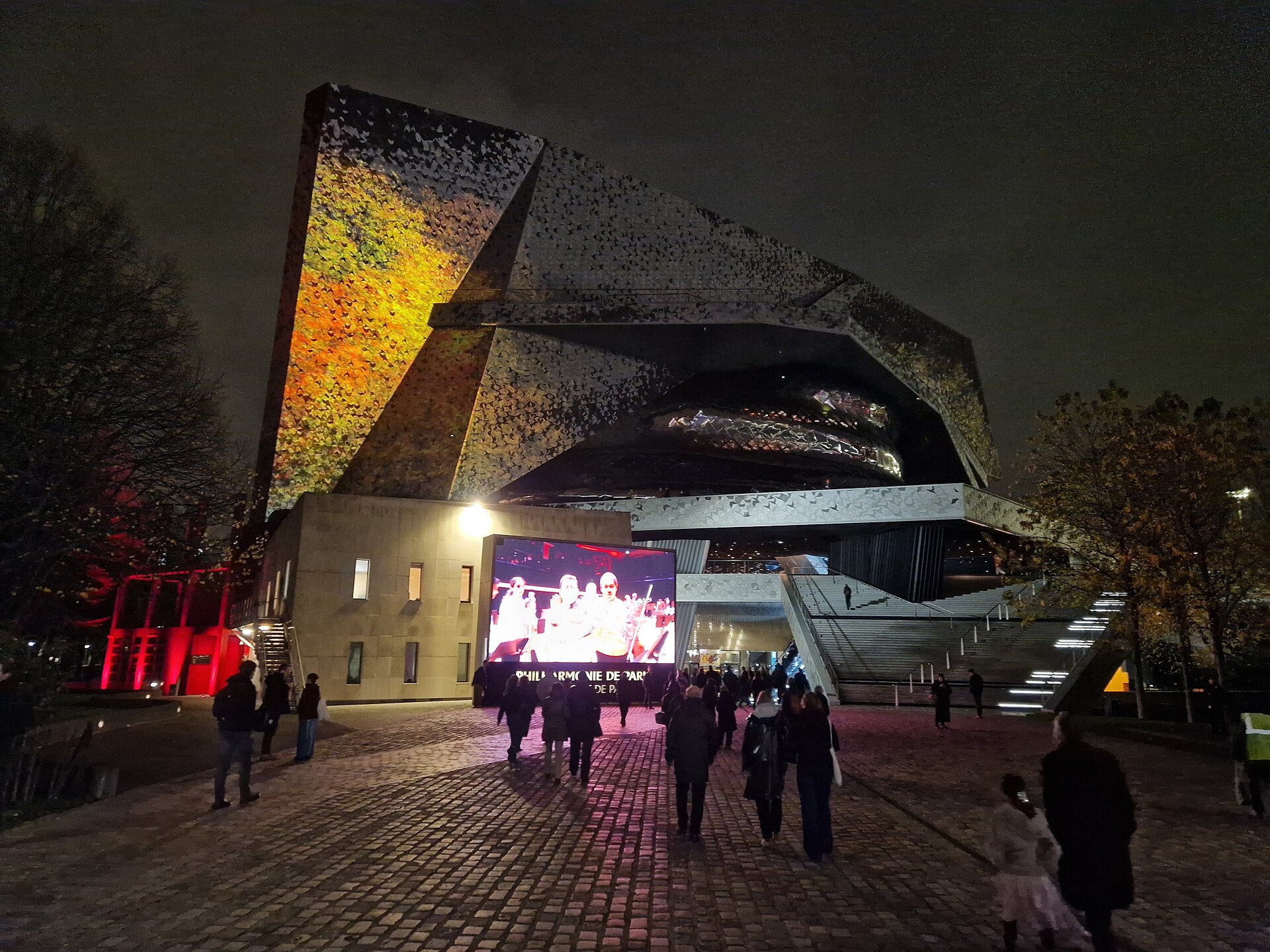
Philharmonie de Paris is one of Europe's leading concert hall complexes, set in the Parc de la Villette on the northeastern edge of Paris, in the 19th arrondissement. Designed by architect Jean Nouvel, the building opened in January 2015 after construction had been delayed for nearly two decades. It stands alongside the earlier Cité de la Musique, designed by Christian de Portzamparc and open since 1995 — together the two buildings form one of the largest music institutions on the continent.
What will you see at Philharmonie de Paris?
The centerpiece of the complex is a 2,400-seat symphonic concert hall, among the largest halls in Europe built specifically for classical music acoustics. The building's exterior, wrapped in a distinctive cladding evoking birds in flight, is a striking architectural landmark visible from a distance. Beyond the main auditorium, the site includes exhibition spaces and rehearsal rooms used both by resident ensembles and visiting orchestras.
The programming here goes well beyond symphonic repertoire. Alongside classical concerts, the schedule regularly features jazz evenings and world music performances, making it a compelling stop even for visitors without a deep interest in the classical calendar. It's worth checking the current program before visiting, since the variety of events means no two evenings look alike.
How do you get to Philharmonie de Paris?
The complex sits at the edge of the city within Parc de la Villette, easily reached by metro — Porte de Pantin station is right at the park entrance, just a few minutes' walk from the building. This makes it a convenient trip whether you're staying in central Paris or living locally, with journey times typically running from ten to thirty minutes depending on your starting point.
Parc de la Villette itself is one of the largest urban parks in Paris, so a visit to the Philharmonie pairs easily with a walk through the park grounds or a stop at nearby cultural institutions, including the Cité de la Musique and the science museums in the area.
When is the best time to visit?
The concert season runs nearly year-round, with the busiest schedule in autumn, winter, and spring. Summer programming tends to be lighter, though special events and festivals still take place. Check the current listings before planning a trip — tickets for popular symphonic concerts, especially those featuring well-known orchestras and soloists, tend to sell out well in advance.
If you're mainly interested in the architecture, visiting during daylight hours is a good idea: the light brings out the detail of the facade, and the surrounding park invites a longer stroll afterward.
Frequently asked questions
What's the difference between Philharmonie de Paris and Cité de la Musique? Cité de la Musique is the older building, completed in 1995 and designed by Christian de Portzamparc, while Philharmonie de Paris is the newer symphonic hall by Jean Nouvel that opened in 2015. Together they operate as a single music complex within Parc de la Villette.
How many seats does the main concert hall have? The main symphonic hall seats 2,400 people, making it one of the largest purpose-built concert halls in Europe.
What kind of music can you hear here? While symphonic concerts are the main focus, the program regularly includes jazz and world music, offering a broad mix of events throughout the year.
What's the easiest way to reach Philharmonie de Paris? The metro is the most convenient option — take it to Porte de Pantin station, just a short walk from the entrance to Parc de la Villette.
Nearby places

Earn badges for the places you visit
Download NextOnTrip, discover new places and check off your trails.