About this place
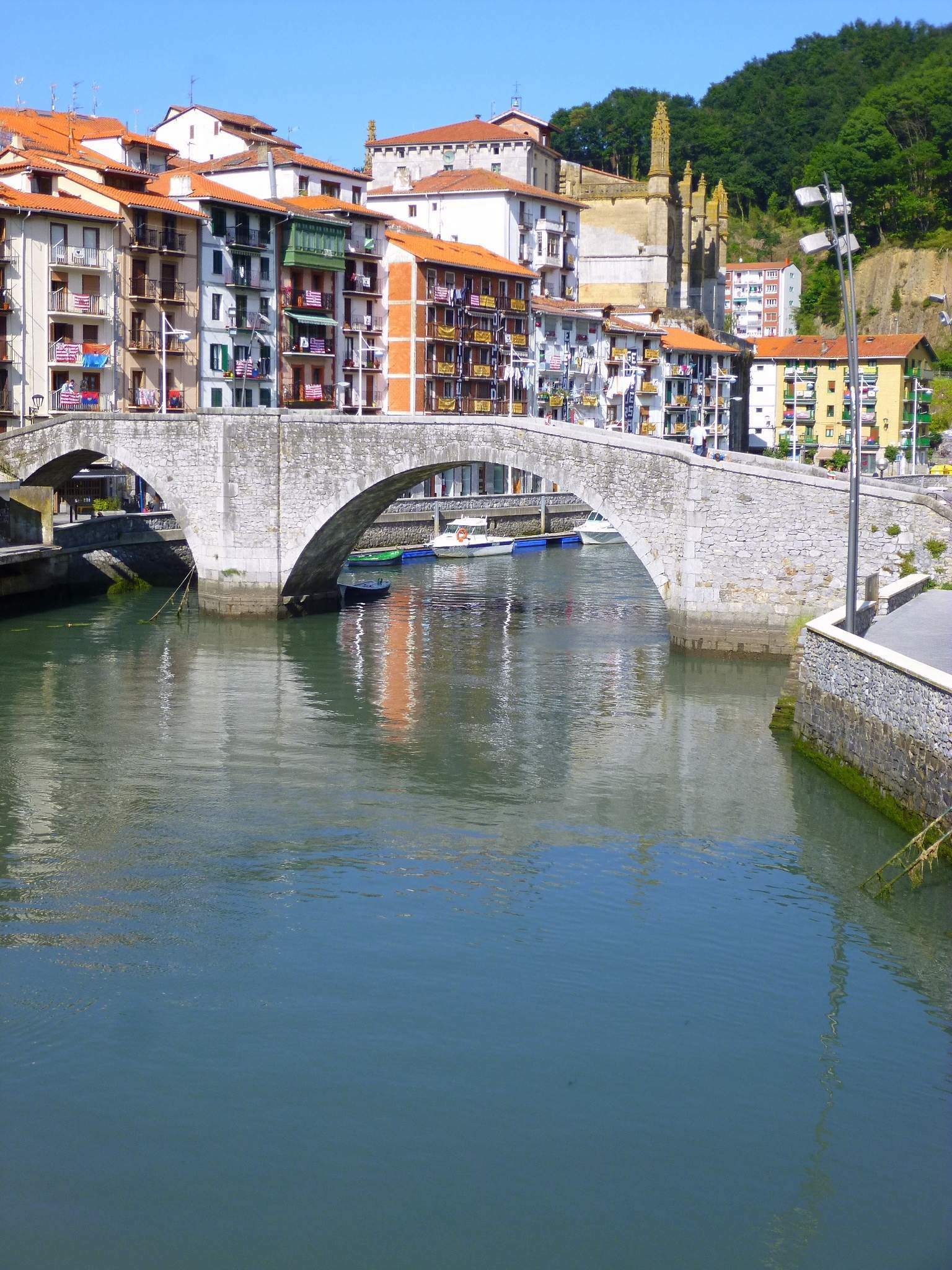
Zubi Zaharra is the old stone bridge in Ondarroa, one of the most distinctive landmarks in this fishing town on the Biscay coast of the Basque Country. The name means simply "old bridge" in Basque, and the crossing links the two banks of the Artibai river right where it meets the Cantabrian Sea, in the heart of the old town.
Where does the bridge come from?
A crossing has stood on this spot since at least the 14th century. In 1330 a wooden drawbridge occupied the site, a common solution in port towns of the period, since it could be raised to let boats pass upriver. The stone bridge visitors see today dates from much later, 1795, and it's this masonry structure that has survived to the present, though in a heavily altered state.
The bridge has had a rough history. In 1936, during the Spanish Civil War, it suffered serious damage, and in 1953 a major flood came close to destroying it entirely. Because of these events, today's Zubi Zaharra looks quite different from the original 18th-century structure — repeated repairs and rebuilding over the decades mean the bridge's original form is hard to make out now.
What else is around the bridge?
Zubi Zaharra sits in the oldest part of Ondarroa, in the area where the town first grew up around its fishing port. Right next to the bridge stands the building of the former Cofradía de Pescadores, the Fishermen's Brotherhood, an institution closely tied to Ondarroa's identity as one of Biscay's important fishing ports. That proximity says a lot about how the bridge and the town's port life have been intertwined for centuries.
Walking through Ondarroa's old quarter, with Zubi Zaharra and the mouth of the Artibai in view, is a natural starting point for exploring the rest of the town — its colorful fishermen's houses, the working harbor front, and the narrow streets of the old town climbing up the hillside.
Why visit?
Ondarroa is one of those Basque towns that still runs on fishing rather than tourism, and the Zubi Zaharra bridge is part of that genuine, working-port atmosphere. It's a stop for travelers looking for something beyond San Sebastián and Bilbao — a piece of history built into the daily life of a small fishing town, where an old bridge still spans the same two riverbanks its wooden predecessor connected nearly seven centuries ago.
Frequently Asked Questions
What does Zubi Zaharra mean? It's Basque for "old bridge," a name that refers directly to the age and function of this crossing over the Artibai river.
When was the current bridge built? The stone bridge standing today was built in 1795, replacing an earlier wooden drawbridge that had stood on the site since 1330.
Has the bridge survived in its original form? Not entirely — it was seriously damaged during the Spanish Civil War in 1936 and nearly destroyed by flooding in 1953, so its current structure differs from the original late-18th-century build.
What's near Zubi Zaharra? The building of the former Fishermen's Brotherhood (Cofradía de Pescadores) stands right beside the bridge, and the surrounding area is Ondarroa's oldest quarter, close to where the Artibai river meets the sea.
Nearby places

Earn badges for the places you visit
Download NextOnTrip, discover new places and check off your trails.