About this place
Valeč Château is a Baroque château-and-park complex in western Bohemia, in the Karlovy Vary district, roughly 30 km east of the city of Karlovy Vary, on the edge of the Doupov Mountains. What sets it apart among Czech chateaux is a rare pairing: a well-preserved landscape park, reshaped from Baroque into English style, and one of the country's most important collections of sculpture by Matthias Bernard Braun.
Where is it, and how did it take its current shape?
A Gothic manor once stood on the site, and its remains are still hidden within the park today. At the end of the 16th century, the Štampach family rebuilt the Gothic structure into a Renaissance residence. The château gained its proper Baroque form around the turn of the 17th and 18th centuries, when it was extended with a terrace, a garden pavilion, an open-air Greek-style theatre (a "theatron"), and water cascades.
What can visitors see in the park?
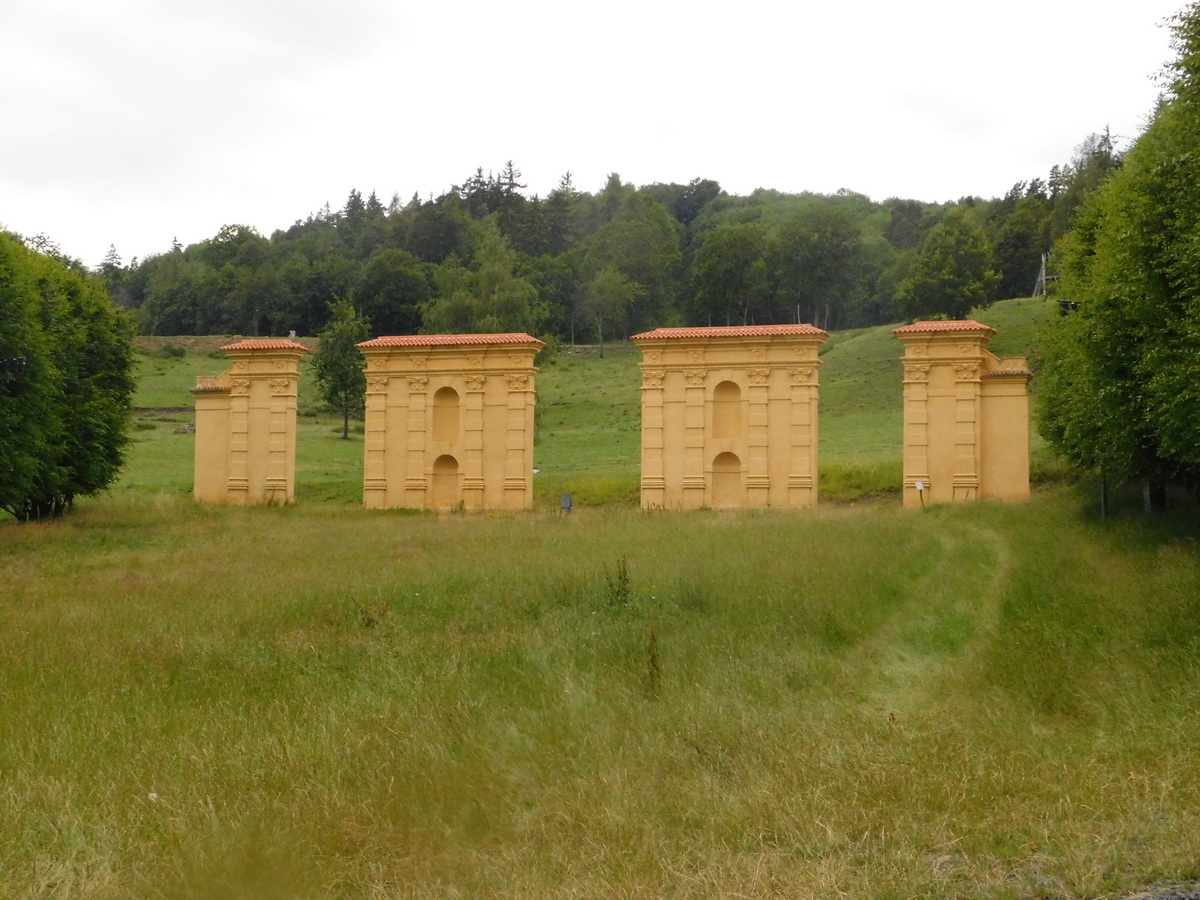
The park was originally laid out in the French-Italian style after 1700 and enlarged during the 1730s. At the end of the 18th and start of the 19th century, the Korb von Weidenheim family transformed it into an extensive English-style landscape park in the Romantic spirit, adding follies such as an obelisk, a summer house, and the aforementioned open-air theatre. Dozens of Baroque statues once lined its terraces and avenues.
Who was Matthias Bernard Braun, and why do his sculptures matter here?
The sandstone statues that decorated Valeč's terrace and gardens came from the workshop of Matthias Bernard Braun and his nephew Anton. They depict allegories of human virtues, of art and science, and figures from Greek mythology. The collection is considered the second most valuable body of Braun's work in the country, after the one at Kuks in East Bohemia.
What happened to the château in 1976?
After World War II, the château served as a children's home. In 1976 a major fire tore through the building, destroying the roofs and gutting most of the interiors down to their foundations; demolition was even considered afterward. The original Braun statues had already been moved for safekeeping to the lapidarium of Kladruby Monastery, where they remained for decades, far from the ruined château.
What does the château look like today?
The National Heritage Institute (Národní památkový ústav) took over the site and has carried out a gradual restoration since the 1990s, giving the château a new roof, facades, and windows. In 2020, a new lapidarium opened in the former castle smithy, bringing the 28 original Braun statues back to Valeč on year-round display. The château is now state-owned and open to the public via guided tours.
Frequently asked questions
Where exactly is Valeč Château located? In the town of Valeč, in the Karlovy Vary district of western Bohemia, on the edge of the Doupov Mountains.
Is this the same Valeč as other places with that name in the Czech Republic? No — several villages in Czechia are named Valeč. This château stands in Valeč in the Karlovy Vary district, about 30 km from the city of Karlovy Vary.
What makes Valeč Château unique among Czech chateaux? Mainly its collection of Matthias Bernard Braun sculptures, the second largest in the country, and its history of near-total destruction and painstaking rebuilding after the 1976 fire.
Can the château and park be visited today? Yes. The site is managed by the National Heritage Institute and open to visitors, with the lapidarium housing the original Braun statues accessible year-round.
Nearby places

Earn badges for the places you visit
Download NextOnTrip, discover new places and check off your trails.