About this place
Zahořanský stratotyp is a small but scientifically significant natural monument in Králův Dvůr, in the Beroun district, tucked right behind the local primary school. This elongated, pine-covered hillock covers just 1.52 hectares, yet its importance has nothing to do with size — it lies in a rock exposure of the Zahořany layers from the Czech Ordovician, one of the pivotal periods in the region's geological history.
Why is this site protected?
The area was granted legal protection on 31 October 1977 because of its outstanding geological and paleontological value. The rock layers exposed here date back to the Lower Ordovician, roughly 500 million years ago, and contain a characteristic fossil fauna. That combination — well-preserved parent rock together with numerous fossils — makes Zahořanský stratotyp one of the more important paleontological sites in the Beroun region, an area geologists know well for its rich exposures of Paleozoic sedimentary rock.
What does "stratotype" actually mean?
The site's name is no accident. In geology, a stratotype is a reference exposure of a given stratigraphic unit — a benchmark section used for comparison when classifying similar rock layers found elsewhere. The Zahořany layers, named after the nearby village of Zahořany, form one of the formally recognized units within the Ordovician sequence of the Barrandian Basin, one of the best-studied geological areas in Central Europe. That gives Zahořanský stratotyp significance well beyond its local footprint: it serves as a point of reference for geologists studying this entire period.
What is there to see on site?
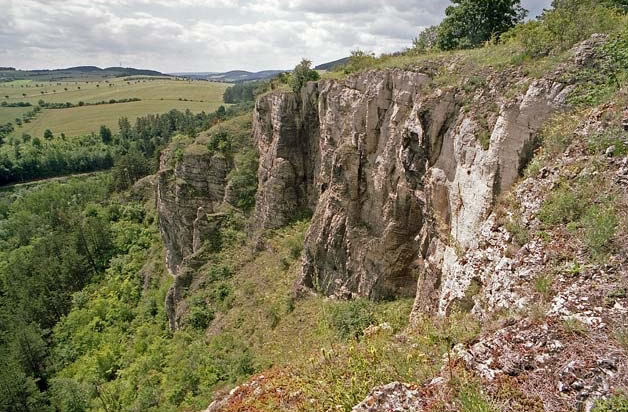
The protected area covers a modest hillock at an elevation of roughly 240 to 260 meters above sea level, straddling the cadastral boundary between Králův Dvůr and Počaply. The surface is covered by pine forest, and several spots reveal rock outcrops where the layered structure of sediments laid down hundreds of millions of years ago is visible. It is within these layers that scientists have recovered fossils of organisms that once lived in the shallow seas of the Ordovician — a period when life on Earth was still confined almost entirely to aquatic environments.
Who is this site for?
Zahořanský stratotyp appeals mainly to visitors with an interest in geology and paleontology rather than to casual sightseers — it is not a scenic lookout or a conventional tourist attraction. Its location right at the edge of town makes it easy to combine with a visit to Králův Dvůr and the wider Beroun area, home to several other notable geological sites within the Barrandian region. As a protected natural monument, the site is covered by law, and visitors should not collect or damage any rocks or fossils.
Frequently asked questions
What is Zahořanský stratotyp? It is a natural monument protecting a rock exposure of the Zahořany layers from the Czech Ordovician, along with the fossil fauna preserved within them.
How old are the rocks found here? The layers date from the Lower Ordovician, approximately 500 million years ago.
Since when has the area been protected? Legal protection was established on 31 October 1977.
How large is the protected area? It covers 1.52 hectares.
Where exactly is it located? Directly behind the primary school building in Králův Dvůr, on the cadastral boundary between Králův Dvůr and Počaply, in the Beroun district.
Nearby places

Earn badges for the places you visit
Download NextOnTrip, discover new places and check off your trails.