About this place
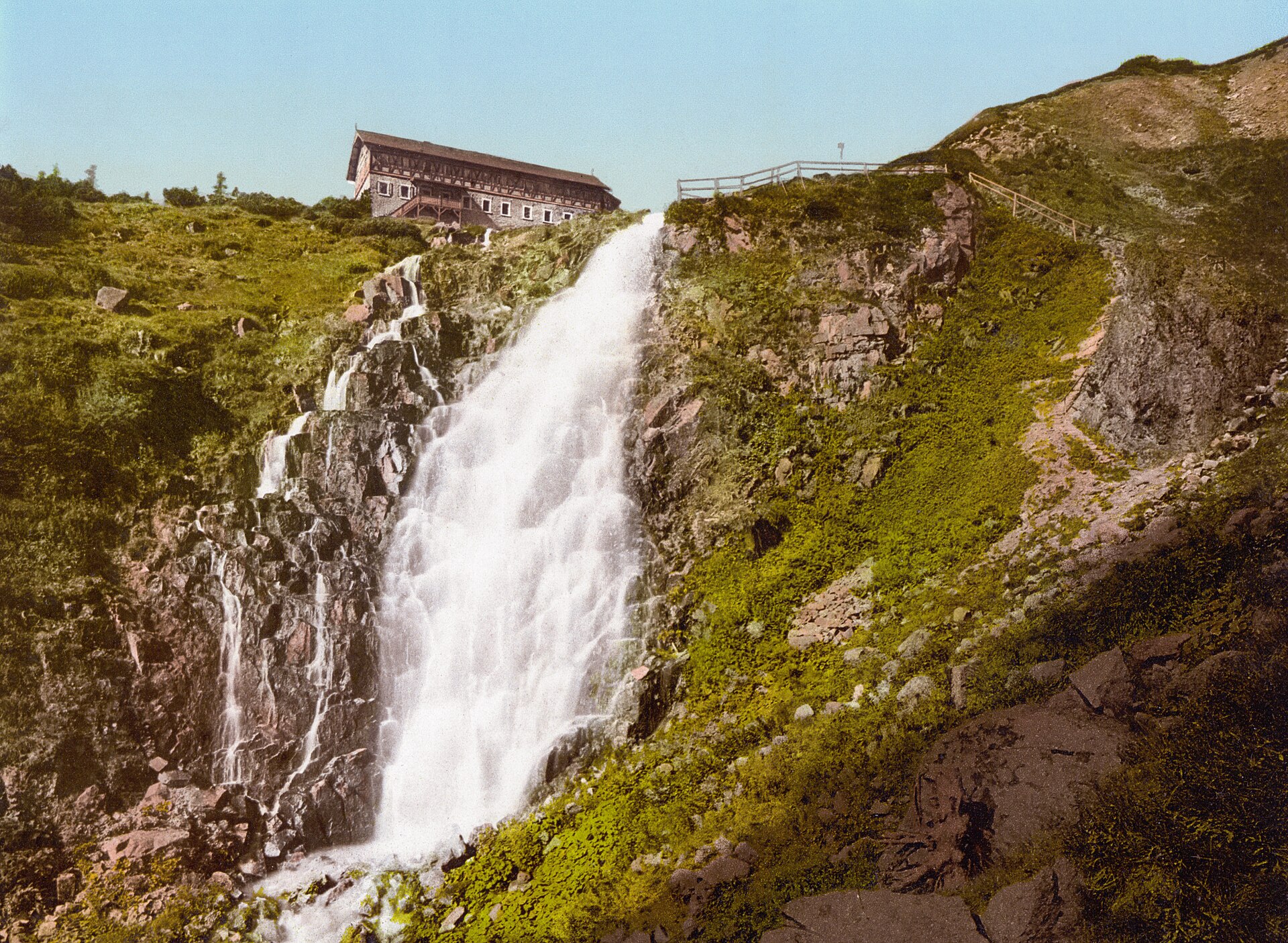
Mumlava Waterfall (Czech: Mumlavský vodopád) cascades down the Mumlava stream in the Harrachov basin, on the Czech side of the Krkonoše Mountains, within the Krkonoše National Park. It sits roughly 2 km from the center of Harrachov and ranks among the most visited natural attractions in this part of the range.
Where exactly is it?
The waterfall lies along the middle course of the Mumlava, at the point where the stream leaves the higher, gentler part of the valley and starts dropping more steeply toward Harrachov. Water tumbles over a series of granite steps, the tallest of which is around 10 meters high. In terms of water volume, Mumlavský vodopád is considered one of the most powerful waterfalls in the Czech Republic — alongside the Labský and Pančavský waterfalls, it's regularly listed among the country's most-visited. The name of the waterfall (and the stream itself) is thought to come from the German verb "murmeln" — to murmur — a fitting description of the sound the falling water makes.
How do you get there?
Reaching the waterfall doesn't require any hiking experience. A blue-marked trail starts at the Harrachov bus station and runs mostly along a paved road, passing the Šindelka forest education trail along the way. The path is suitable for bikes, strollers, and wheelchairs, and cars are not allowed on it, which makes for a calm, easy walk. Covering the distance from the town center to the waterfall typically takes about half an hour one way.
What will you see there?
The main draw is the water cascading over granite steps, together with a set of striking erosion cauldrons — potholes carved into the rock by swirling water and the gravel it carries. Locally these are known as the "Devil's Eyes" (Čertova oka) or "Giant Pots" (Obří hrnce), and they rank among the largest formations of this kind in the country, found both above the main step and at its base. The best views are from the marked viewpoints along the trail, where you can take in the whole cascade without climbing down to the riverbed itself.
When is the best time to visit?
The waterfall looks different depending on the season. It's at its most powerful in spring, when snow is melting in the higher parts of the Krkonoše — the flow is noticeably stronger than in summer. In winter, given cold enough temperatures, the cascade partially or fully freezes into a dramatic icefall, drawing both hikers and ice climbers. Summer and autumn bring a calmer flow, but the trail is easier to walk and less slippery.
Frequently asked questions
How tall is Mumlava Waterfall? The tallest of the granite steps the water flows over is about 10 meters high, with additional, smaller steps above and below it forming the rest of the cascade.
Is the walk to the waterfall difficult? No — a comfortable, mostly paved, car-free path leads there, suitable for bikes, strollers, and wheelchairs.
What are the "Devil's Eyes"? They're the local name for the erosion cauldrons — hollows carved into the granite by swirling water and the gravel it carries, found both above and below the waterfall's main step.
Does the waterfall freeze in winter? Yes, in cold weather Mumlavský vodopád turns into an icefall, making it one of Harrachov's better-known winter attractions.
Nearby places

Earn badges for the places you visit
Download NextOnTrip, discover new places and check off your trails.