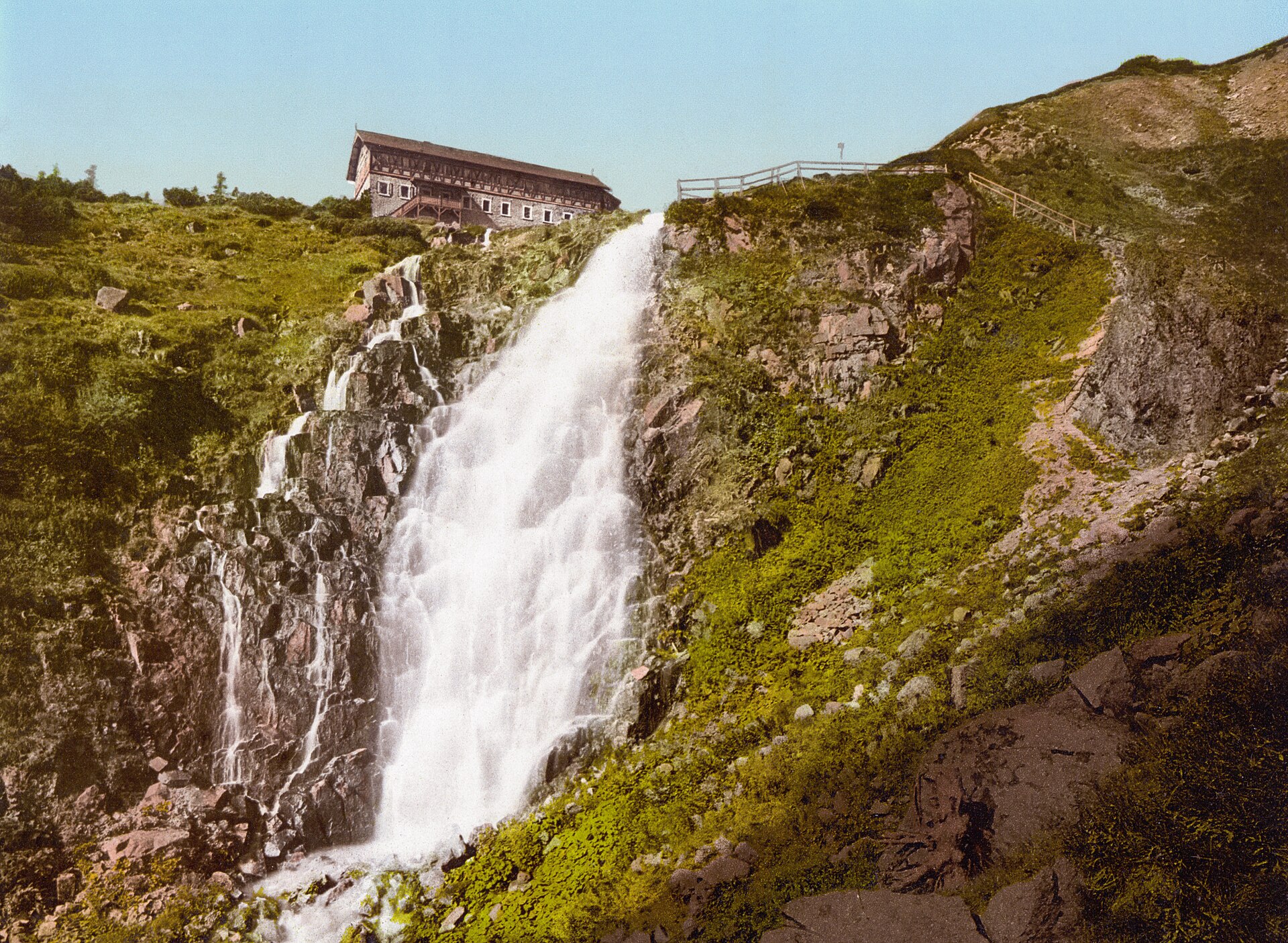
About this place
Elbe Waterfall (Czech: Labský vodopád) is one of the largest and best-known waterfalls in the Czech Republic, tucked away in the western part of the Krkonoše (Giant Mountains) in the Western Sudetes, close to Špindlerův Mlýn. This is the spot where the young Elbe river tumbles down a rocky step before beginning its long journey as one of Central Europe's major rivers, eventually flowing through Germany to the North Sea.
How was the waterfall formed?
The waterfall exists because of headward (backward) erosion of the Elbe. Over thousands of years, the river cut into the bedrock, gradually pushing the point of a sudden drop in the riverbed further and further upstream. The result is a distinctive rocky step over which the water now cascades — one of the most recognizable natural landmarks on the Czech side of the Krkonoše range.
Where exactly is it located?
The waterfall lies in the western part of the Krkonoše mountains, in the area around Špindlerův Mlýn — a well-known mountain resort and ski town on the Czech side of the range. This is where the Elbe, familiar to most Europeans as a broad lowland river further downstream, actually begins its course, in the high mountains.
How do you get there?
Špindlerův Mlýn is the natural starting point for a visit, with hiking trails leading into the Krkonoše National Park toward the waterfall. Because the terrain is genuinely mountainous, plan the trip as a hike rather than a quick stop: sturdy trekking shoes are recommended, and it's worth checking current trail conditions and weather before setting out, especially outside the summer season.
What will you see there?
The main draw is the cascading flow of the young Elbe river spilling over its rocky step, framed by the spruce forests and rugged upland scenery typical of the Krkonoše. Beyond the view itself, the site offers a tangible piece of geological history — the waterfall is a visible record of how a river can reshape a landscape over thousands of years.
When is the best time to visit?
Mountain waterfalls tend to look most dramatic in spring, when melting snow swells the rivers, and after longer periods of rain. Summer and early autumn offer the easiest hiking conditions and generally the best visibility in the mountains. In winter, expect tougher trail conditions and prepare accordingly for a mountain hike.
Frequently asked questions
Is this the same Elbe that gives the river its name downstream? Yes — the waterfall sits on the upper course of the Elbe (Labe), one of Central Europe's major rivers, right where it originates in the Krkonoše mountains.
Is it the largest waterfall in the Czech Republic? It's one of the largest and most famous Czech waterfalls, though not the only notable one in the Krkonoše region.
How did the waterfall form? Through headward erosion: over thousands of years, the river has pushed the point of a sharp drop in its bed further upstream, creating today's rocky step.
How far is it from Špindlerův Mlýn? The waterfall lies in the western part of the Krkonoše mountains, in the area served by Špindlerův Mlýn, the main gateway town for visitors exploring this part of the range on the Czech side.
Nearby places

Earn badges for the places you visit
Download NextOnTrip, discover new places and check off your trails.