About this place
Ventalaperra is a karst cave complex in the Molinar neighbourhood, within the municipality of Karrantza Harana / Valle de Carranza in the western Basque Country. It ranks among the oldest prehistoric sanctuaries in the Basque Country, known for its Paleolithic rock engravings.
How to get there?
Karrantza Harana / Valle de Carranza is the largest municipality in the province of Biscay, located in the Las Encartaciones region near the border with Cantabria. The municipality itself is spread across roughly fifty small hamlets scattered through the valley, and Ventalaperra lies in one of them, Molinar. The easiest way in is by car — about an hour's drive from Bilbao, or a similar distance from Santander in Cantabria. Since the valley is spread out and public transport doesn't reach the caves directly, it's worth planning the route and checking local road access in advance.
What will you see?
Ventalaperra isn't a single cave but a complex of four connected karst cavities: the Gunpowder Cave (Ventalaperra I), the Engravings Cave (Ventalaperra II), the Middle Cave (Ventalaperra III) and the Corner Cave (Ventalaperra IV). The engravings were discovered in 1904 in the Molinar neighbourhood, and the site was studied in the early twentieth century by Jose Miguel de Barandiarán, one of the most important researchers of Basque prehistory, who carried out excavations here in 1931.
The rock walls still bear engraved figures of bison and bears, carved during the Paleolithic era. These images make Ventalaperra one of the oldest known sites of prehistoric human shelter and ritual activity in the Basque Country. It's worth knowing before you go that access to the cave interiors is strictly limited to authorised researchers, due to the fragility of the engravings and the need to protect them. Visitors can still learn about the site through information panels and materials provided by local heritage institutions, and the surrounding landscape — the green hills and limestone formations of the Carranza valley — is freely open for walking.
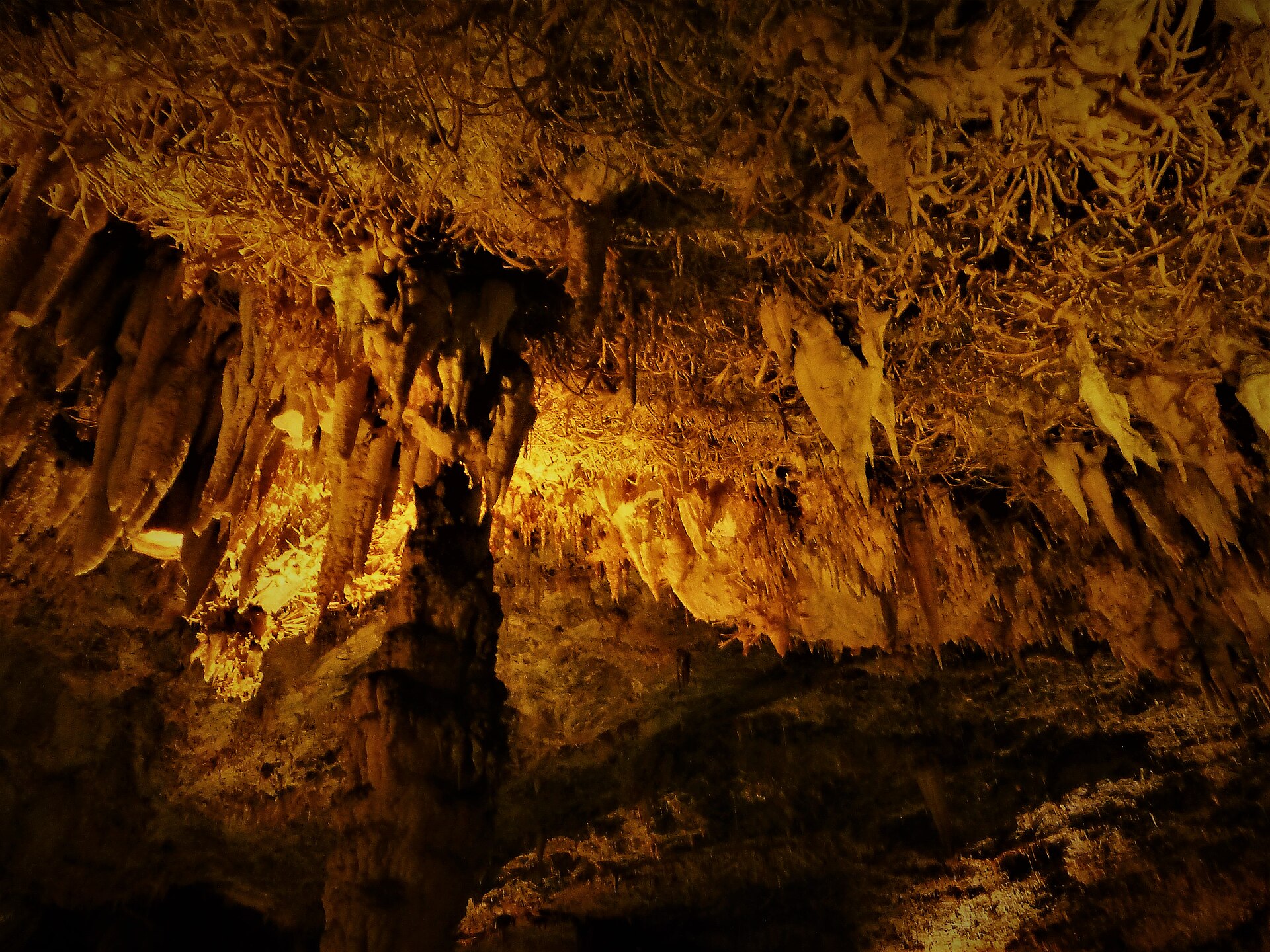
It's worth pairing a visit with other attractions in the valley: Karrantza is also home to the well-known Pozalagua Cave, famous for its eccentric stalactites, while the Haizko megalithic trail leads to dolmens such as Fuentellano and the La Cabaña necropolis.
When to visit?
Spring and summer are the best times to explore the Carranza valley, when green pastures and mild weather make for pleasant walking. Autumn brings fewer visitors, making it a good choice for those seeking a quieter pace. Winter tends to be cooler and wetter, typical of northern Iberia.
Frequently asked questions
Can you go inside the Ventalaperra cave? No — access to the interior is reserved for authorised researchers only, in order to protect the prehistoric engravings.
What do the engravings at Ventalaperra depict? Rock-carved figures of bison and bears dating from the Paleolithic period.
Who studied the cave? The engravings were discovered in 1904, and excavations were carried out in 1931 by Jose Miguel de Barandiarán.
What else is worth seeing nearby? Pozalagua Cave with its eccentric stalactites, and the Haizko megalithic trail with dolmens including Fuentellano.
Nearby places

Earn badges for the places you visit
Download NextOnTrip, discover new places and check off your trails.