About this place
Pozalagua Cave sits in the Ranero district, within the municipality of Karrantza Harana / Valle de Carranza, in the Las Encartaciones area of the Basque Country (Biscay). Carved into the limestone massif of Peñas de Ranero, inside the Armañón nature park, it hides one of Europe's most unusual karst formations.
How to get there?
The cave lies roughly 50 km from Bilbao, in the western part of the Carranza valley near the border with Cantabria. Access is by car along local roads climbing above the village of Ranero, with the cave mouth sitting at about 500 metres above sea level and offering views over the valley below. A car park and visitor reception point are available on site, and the entrance includes a platform for wheelchair access.
What will you see?
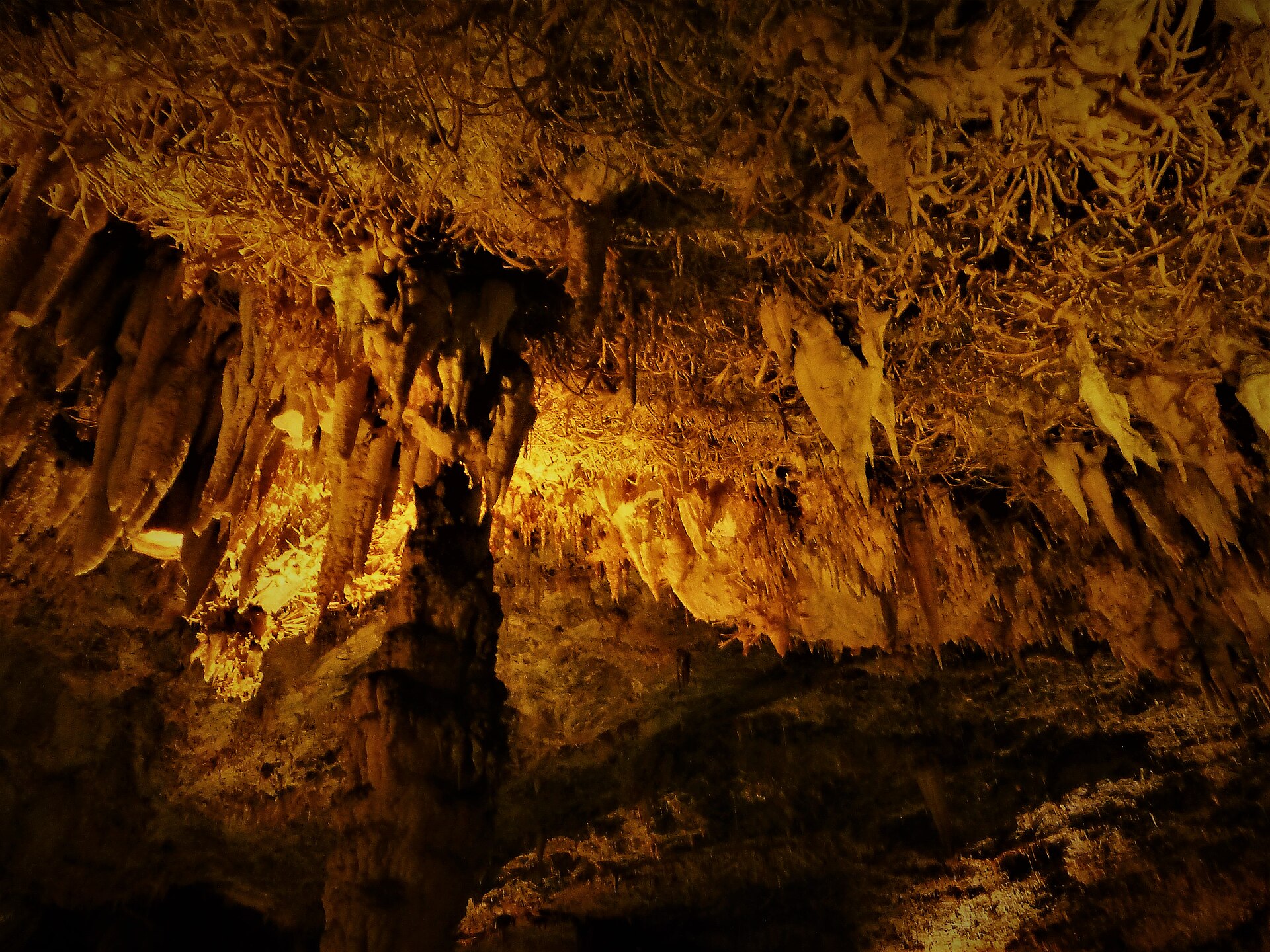
Pozalagua owes its fame not to ordinary stalactites but to helictites — mineral formations that defy gravity, twisting, branching and interlacing in every direction instead of hanging straight down. The cave measures around 125 metres in length, 70 metres in width and 20 metres in height, and was found by chance in 1957 during work at a nearby quarry.
The visitor route covers about 400 metres, winding past columns and sinter terraces and across the bed of a former underground lake before reaching the main chamber known as the Versailles hall, where the cave's helictites reach their greatest density. Researchers consider this concentration among the largest recorded anywhere, making Pozalagua stand out even among the karst caves of the wider region. Guided visits last about an hour.
The cave opened to the public in 1991, and in 2013 the Repsol Guide named it Best Corner of the Year. Right in front of the entrance, the site of the old quarry has been turned into an open-air auditorium seating around 2,000 people, prized for its acoustics and home each year to the Pozalagua music festival.
When to visit?
The cave's interior keeps a steady temperature year-round, so a visit makes sense in any season, though it's worth checking opening hours and guided-tour availability in advance since spots on the route can be limited. Summer and long weekends draw the largest crowds, so visitors after a quieter experience might prefer weekdays outside peak season. It's also worth timing the visit to take in the view over the Carranza valley from near the entrance on a clear day.
Frequently asked questions
How is Pozalagua different from typical stalactite caves? Instead of classic stalactites hanging straight down, the cave is dominated by helictites — formations that grow in any direction, twisting and interlacing into shapes resembling tangled tree roots.
How long is the tour and how far is the route? The guided route covers about 400 metres, and the full visit takes roughly an hour.
Is the cave accessible to visitors with reduced mobility? Yes, the entrance includes a platform designed for wheelchair access.
What else is there near the cave entrance? The former quarry in front of the cave has been converted into an open-air auditorium for about 2,000 people, known for its acoustics and used for the annual Pozalagua festival.
Nearby places

Earn badges for the places you visit
Download NextOnTrip, discover new places and check off your trails.