About this place
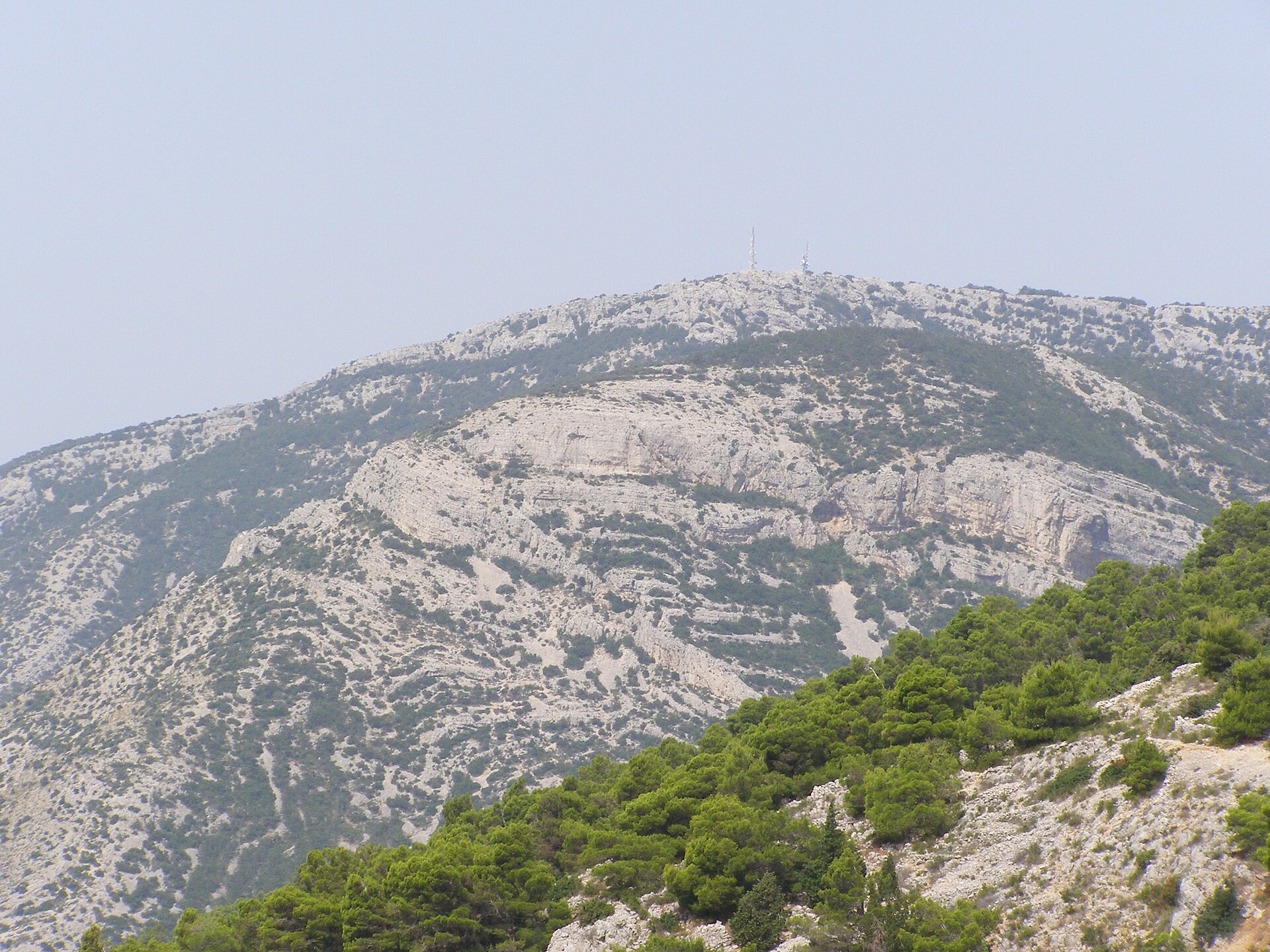
Vela Straža is the highest peak on the island of Šolta, rising above the village of Gornje Selo in central Dalmatia. At barely 240 metres, it hardly counts as a mountain, yet its position right in the middle of the Split Channel gives it one of the widest panoramas on the island — reachable without any real hiking effort.
Where exactly is Vela Straža?
The hill sits above Gornje Selo, one of Šolta's inland villages, close to the Gospa od Stomorje monastery. From a distance it's easy to spot thanks to the white stone cross planted on its summit, visible from the sea and from neighbouring islands. Confusingly, Šolta has a second, lower hill with the same name above Donje Selo and Srednje Selo, but the one above Gornje Selo — about 237 metres — is the one recognised as the island's official high point.
How do you get to the top?
The easiest starting point is the cemetery in Gornje Selo, which you can reach by car. From there a short, gentle path leads to the summit — the walk takes only 5 to 10 minutes and doesn't require any hiking experience, though sturdy shoes help on the rocky ground. The route is also popular with cyclists, who use the hill as a checkpoint on longer rides around the island.
What's the view like from the top?
The view is the main reason to come up here. From Vela Straža you get a near-complete panorama of the Split Channel: to the north, Split itself with the Kozjak and Mosor ranges and the Omiš Dinara beyond; to the east, Mount Biokovo, followed by the islands of Brač and Hvar. Looking south you can make out the Pakleni Islands, Vis and Svetac, while to the west the view stretches along the entire length of Šolta. On a clear day it's one of the best vantage points over central Dalmatia — especially at sunset, when the low light sharpens the outline of every island on the horizon.
A prehistoric hillfort on the summit
Vela Straža is more than a viewpoint — it's also an archaeological site. The summit still holds a plateau enclosed by dry-stone defensive walls, with a natural rock outcrop reinforcing the fortifications on the northern side. In prehistoric times the settlement served a strategic role: from here it was possible to keep watch over — and signal to — other fortified settlements across the island, as well as monitor ship movement through the Split Channel, an important sea route even then.
When's the best time to visit?
Spring and early autumn bring milder temperatures and generally the clearest visibility. In summer, aim for early morning or just before sunset — the rocky path offers little shade and heats up quickly at midday. Because the climb is so short and undemanding, Vela Straža works well as a quick stop while exploring Gornje Selo or touring the rest of Šolta.
Frequently asked questions
How high is Vela Straža? The peak above Gornje Selo stands at roughly 237 metres, making it the highest point on the island of Šolta.
How long does the climb take? Starting from the cemetery in Gornje Selo, the walk to the summit usually takes 5 to 10 minutes on a gentle, non-technical path.
What can you see from the top? A panorama of the Split Channel, including Split with the Kozjak and Mosor ranges, plus the islands of Brač, Hvar, Vis and the Pakleni Islands.
Are there any historical remains at the summit? Yes — the remains of a prehistoric hillfort survive there, including defensive walls built using the dry-stone technique.
Nearby places

Earn badges for the places you visit
Download NextOnTrip, discover new places and check off your trails.