About this place
Ham Fortress stands on the edge of the town of Ham in the Somme department of Picardy — a medieval stronghold that spent centuries shifting roles, from feudal riverside castle to one of France's most notorious state prisons, before ending up as a field of ruins after the First World War.
Where did the fortress come from?
The first castle on the site was raised around 1052 by the early counts of Vermandois, taking advantage of a defensible position on the Somme river at the border with Île-de-France. Odon IV rebuilt it in the 13th century, and Jean II de Luxembourg-Ligny carried out a further overhaul later on. The fortress reached its most imposing form in 1441, when Louis de Luxembourg-Saint-Pol, Count of Saint-Pol and constable under Louis XI, commissioned a massive keep known as the "grosse tour" or "constable's tower." It measured 33 metres in diameter, 33 metres in height, and had walls 11 metres thick — one of the heaviest defensive structures built in medieval France.
The stronghold withstood repeated sieges, including an assault by Philip II of Spain in 1557. Under Henry IV, Ham was absorbed into the royal domain, and in the late 17th century its defences were reworked by Vauban, Louis XIV's celebrated military engineer.
What is left to see today?
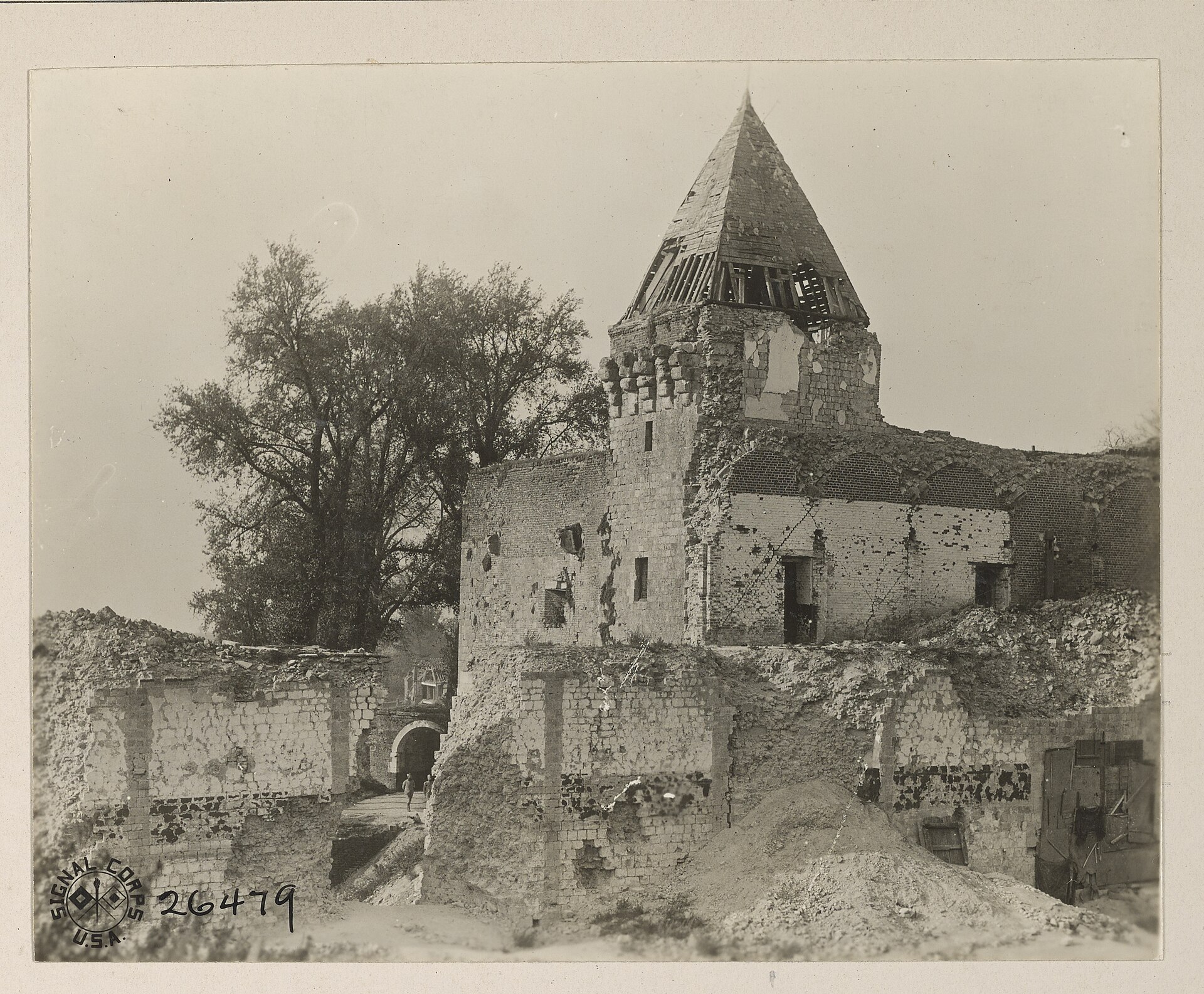
After German troops dynamited the fortress on 19 March 1917 during their withdrawal from the region, the once-monumental complex was reduced to evocative ruins. Visitors today can still make out sections of the defensive walls and remnants of the famous constable's tower, enough to sense the original scale of the structure. The town of Ham maintains the site and keeps it accessible, and the ruins are sometimes opened for free during regional heritage events organised by the Somme department. Since 1965 the remains have held official historic-monument protection under French law.
Who were the prisoners held here?
Between the 18th and 19th centuries, Ham served as a state prison reserved for politically significant detainees. In April 1795, during the Thermidorian crackdown, around a dozen Montagnards, including the militant Chasles, were held there. Later inmates included the revolutionary orator Mirabeau and the Marquis de Sade. But the fortress is best remembered for the escape of Louis-Napoléon Bonaparte, the future Napoleon III, who slipped out of his cell disguised as a construction worker — an episode still cited as one of the most audacious prison breaks of 19th-century France.
How do you get to Ham?
Ham sits in the Somme department, in the Hauts-de-France region, under an hour's drive from both Amiens and Saint-Quentin. The town has its own railway station with regional connections, making it a convenient stop for travellers exploring northern France by train. The fortress ruins lie within easy walking distance of the town centre, so a visit pairs naturally with a look around Ham itself.
When is the best time to visit?
Spring and summer are the most comfortable seasons, with longer daylight hours making it easier to walk the grounds around the ruins. It is worth checking the Somme department's event calendar in advance, since certain heritage days include free entry and on-site guided information.
Frequently asked questions
Is there more than ruins left of Ham Fortress? Yes — sections of the defensive walls and remnants of the 15th-century constable's tower still stand, though the structure was heavily destroyed in 1917.
Why is Ham Fortress famous for prison escapes? Its best-known episode is the escape of Louis-Napoléon Bonaparte, who left his cell disguised as a labourer, an event that remains central to the site's history.
Who destroyed the fortress? Retreating German forces dynamited it on 19 March 1917, during the First World War.
Is entry to the ruins free? Access varies by date — it is worth checking Ham's current schedule, as select heritage days offer free themed visits.
Nearby places

Earn badges for the places you visit
Download NextOnTrip, discover new places and check off your trails.