About this place
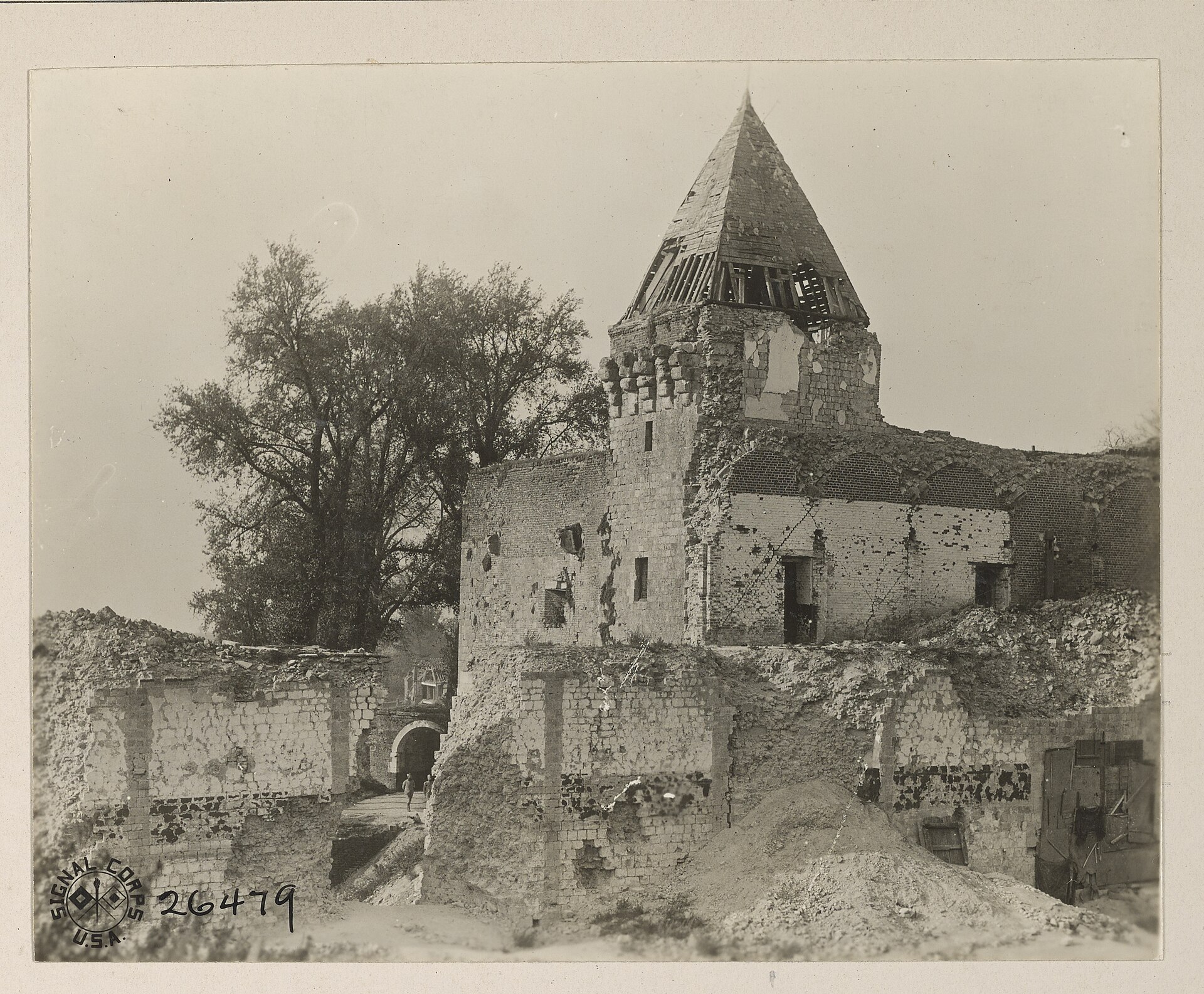
Château d'Happlaincourt is a set of medieval fortress ruins in Villers-Carbonnel, a small village in the Somme department of northern France. What remains of the castle stands on the bank of the Canal du Nord, on the site of a fortified residence first built by the Happlaincourt family in the 13th century.
How old is this castle, and who built it?
The manor is first documented in the 13th century, when it was laid out as a rectangular fortified compound ringed by water-filled ditches — a defensive design well suited to the flat Somme countryside, where moats stood in for the hills and cliffs used elsewhere in France. Ownership passed over the centuries from the Happlaincourt family to the house of Étampes, and later to the Jallu family.
Why does this ruin matter beyond local history?
The château's story reaches well past Villers-Carbonnel. In 1415 the lord of Happlaincourt was killed at the Battle of Agincourt, and in the decades that followed his estate became a contested prize between factions loyal to the French crown and to Burgundy — a period of civil conflict that weakened France in the later stages of the Hundred Years' War. More than 150 years later, in June 1576, local nobles gathered at the château at the urging of Jacques d'Humières to draft a manifesto calling on regional princes and clergy to restore Catholic worship and obedience to the king, a document tied to the wider religious wars unsettling France at the time.
What is left standing today?
As late as the 19th century the north-east and north-west wings still stood, joined by a central gatehouse. That gatehouse, though it has lost its upper section and shows visible damage, remains the most recognisable piece of the site today. Most of the surrounding walls and corner towers were destroyed during the First World War, when the front line cut directly through this stretch of the Somme. Visitors can now see wall fragments, the bases of former towers, and the gatehouse itself, framed by the remains of the old moat.
When is the best time to visit, and how do you get there?
Villers-Carbonnel sits in a quiet, rural corner of the Somme, close to the route running alongside the Canal du Nord — a region known above all for its First World War memorials and battlefields. Seeing the ruins themselves doesn't take long, so they pair well with a stop at nearby WWI heritage sites. Spring and summer are the easiest seasons to visit, with longer daylight hours and easier footing around the site. This is not a restored, ticketed attraction — it's an authentic, partly overgrown ruin, so come prepared for uneven ground.
Why is it a protected historic monument?
Despite the losses of the 20th century, the remains of Château d'Happlaincourt were listed as a monument historique by decree on 24 April 1926. The listing recognises both the surviving evidence of the region's defensive architecture and the château's role in episodes of national significance, from medieval feudal disputes to the religious politics of the 16th century.
Frequently asked questions
Can visitors go inside the ruins? The surviving gatehouse and wall sections can be viewed from the outside, but this is a genuine ruin rather than a fully equipped tourist site, so caution is needed when walking around it.
Is the château connected to the First World War? Yes — most of the original 13th-century structure was destroyed during fighting in this part of the Somme during the First World War.
What part of the original building survives best? The central gatehouse is the best-preserved element, even without its upper section, along with wall fragments and tower bases around the former courtyard.
What makes this château stand out among other Somme ruins? Its layered political history does — from the death of its lord at Agincourt in 1415 to the religious manifesto drafted within its walls in 1576.
Nearby places

Earn badges for the places you visit
Download NextOnTrip, discover new places and check off your trails.