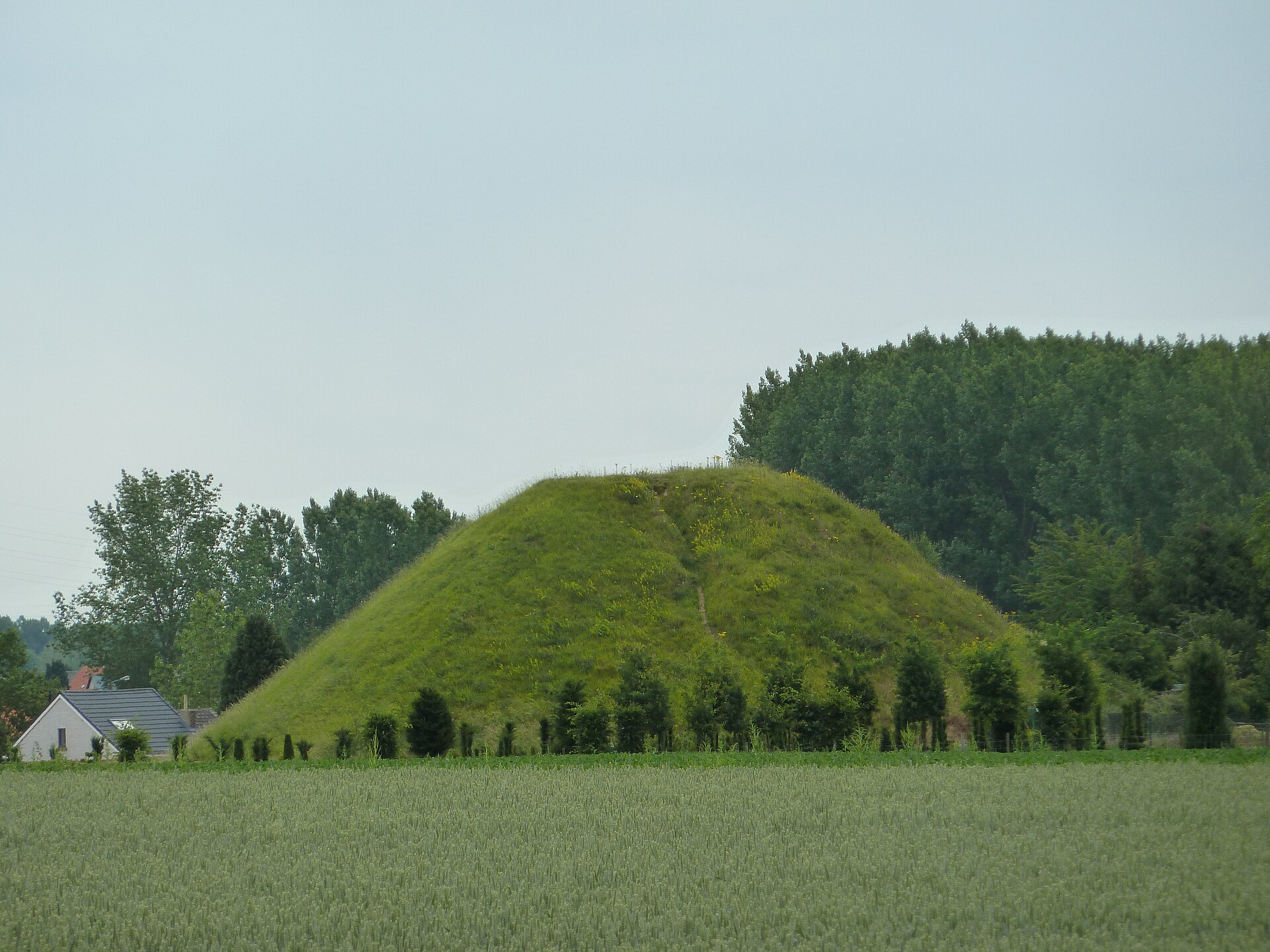
About this place
The Tumulus of Koninksem is a modest but historically meaningful trace of the Gallo-Roman past around Tongeren, tucked away at the corner of Paardsweidestraat and Koninksemstraat in the Belgian village of Koninksem. It is a burial mound — an artificially raised heap of earth that once covered the remains of a deceased person along with accompanying grave goods. Though unassuming in appearance today, its origins reach back to the era when this part of present-day Belgium lay within the Roman Empire.
Why is it named after this particular street?
The mound's name comes directly from Paardsweidestraat, the street where it stands. This distinction matters because the wider Koninksem area preserves more than one Roman-era burial mound, so local researchers and heritage authorities attach the street name to the site to avoid confusion between the different tumuli in the vicinity.
How old is the mound, and how do we know?
Archaeologists date the tumulus to the period between the 1st and 3rd centuries AD, when the Tongeren region — then known as Atuatuca Tungrorum — served as an important administrative and commercial hub of the Roman Empire. Burial mounds of this kind were a characteristic funerary form for wealthier provincial inhabitants, typically built along major roads so they would remain visible to travelers passing through the countryside.
What is its connection to the nearby Roman road?
The site sits close to the so-called Romeinse Kassei, an ancient Roman road now known as the N69, which once linked Tongeren to the settlement of Oerle. This proximity is no coincidence: Roman custom generally prohibited burials within town boundaries, so the dead were laid to rest along the roads leading out of settlements instead. Standing near such a well-traveled route meant the tumulus functioned as a visible marker in the landscape, signaling the status of the person buried beneath it.
What happened during the 19th-century excavation?
In 1849, an excavation was carried out inside the mound. The results proved disappointing for researchers: the tumulus had already been plundered at some earlier point. This meant that the original grave goods — which could have offered valuable insight into the identity of the deceased and the funerary customs of the period — had largely been lost long before modern archaeological investigation took place. Even so, the surviving structure and its position in the landscape remain a valuable piece of historical evidence.
What protection does the site have today?
In recognition of its archaeological value, the authorities placed the tumulus under legal heritage protection in 1979, listing it among protected monuments. Thanks to this status, the mound has survived as part of the cultural landscape of Koninksem and the broader Tongeren region, despite nearly two thousand years having passed since it was first raised.
Is it worth a visit?
The Tumulus of Koninksem appeals primarily to visitors with an interest in archaeology and the Roman presence in what is now Belgium. It is not a conventional tourist attraction — there is no visitor infrastructure or elaborate display — but rather an authentic fragment of landscape that helps visitors picture the surroundings of Roman Tongeren at the height of its influence. For travelers exploring the Limburg region and tracing the remnants of ancient roads such as the nearby Romeinse Kassei, it makes a worthwhile stop that rounds out the picture of the era.
Frequently asked questions
What is a tumulus? It is an artificial earthen mound raised over a grave, a typical burial form from the Roman period in this region.
Where exactly is it located? At the corner of Paardsweidestraat and Koninksemstraat in Koninksem, part of the municipality of Tongeren.
Were any finds preserved inside? No — the 1849 excavation revealed that the mound had already been looted before modern research took place.
Nearby places

Earn badges for the places you visit
Download NextOnTrip, discover new places and check off your trails.