About this place
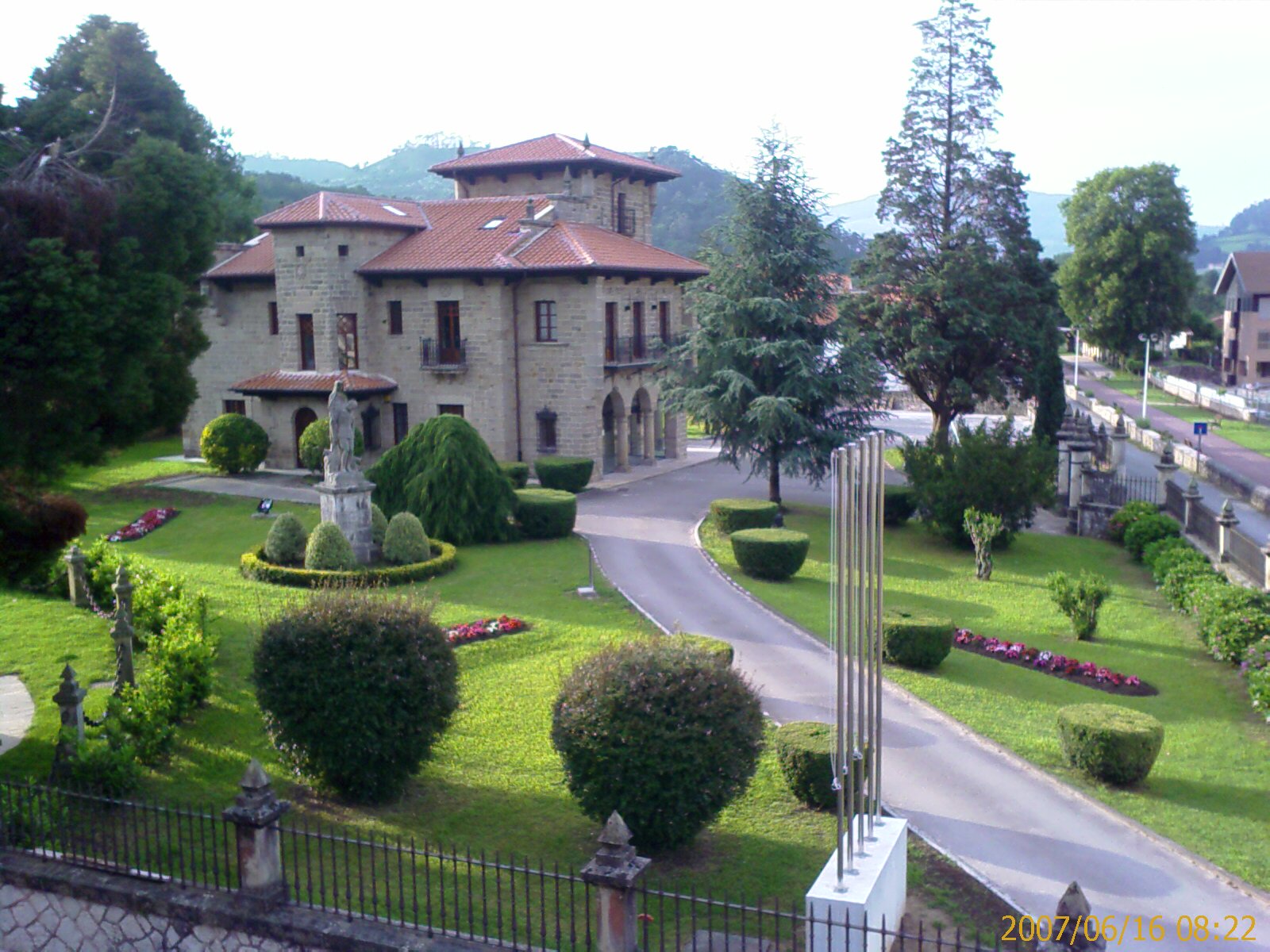
Casona de Fuentes-Pila — today's town hall of Puente Viesgo — is the stone seat of local government standing right in the centre of this small Cantabrian town. The building doubles as a piece of regionalist architecture and an administrative office, making it a natural stop while walking around a town best known for its thermal springs and caves.
What is the history behind the building?
The design dates to 1928 and was drawn up by Javier González de Riancho (1881–1953), an architect closely tied to the spread of Cantabrian regionalism. The building draws on the old "casonas montañesas" — the stone manor houses typical of the 17th and 18th centuries in the mountains of Cantabria — borrowing their forms freely rather than reproducing any single period or model. That approach, common in early 20th-century regionalist design, aimed to recreate the spirit of old mountain architecture within a new, functional civic building.
What will you see standing in front of the town hall?
The façade is built in stone, following the montañés tradition of solid, heavy masonry meant to withstand the damp climate of northern Spain. Well-kept gardens surround the building, extending the public space around the town hall and giving visitors a pleasant spot to take photographs. The building is listed as a Cultural Heritage Site under the Monument category, confirming its architectural and historical standing among the region's civic buildings.
What is it used for today?
Casona de Fuentes-Pila still functions as the seat of Puente Viesgo's local government — housing the mayor's office and municipal administration. That living use keeps the building from feeling like a museum piece; it remains part of the town's everyday rhythm, which adds to its appeal for visitors.
How do you get to the town hall in Puente Viesgo?
Puente Viesgo sits in the Pas river valley in Cantabria, an easy 25–30 minute drive from Santander. The town hall stands right in the town centre, so the simplest approach is to drive in, park nearby, and continue on foot — the centre of Puente Viesgo is compact and comfortable to explore on foot. The building's coordinates are 43.2989466, -3.9641496, handy for GPS navigation.
What else is there to see nearby?
Puente Viesgo is well known for its spa (Balneario de Puente Viesgo) and its caves, including the famous Cueva de El Castillo with its prehistoric rock art — one of the region's UNESCO-listed attractions. A visit to the town hall pairs naturally with a short walk through the centre and a trip to the nearby thermal baths or caves, rounding out a full day exploring the Pas valley.
When is the best time to visit?
Spring and early autumn are the most comfortable seasons for strolling through the centre and admiring the town hall's architecture, when Cantabria's weather is mild and the surrounding gardens look their greenest. Summer brings more visitors drawn by the spa and the caves, so it's worth allowing time to see the town centre outside the busiest midday hours.
Frequently asked questions
Can you go inside the Puente Viesgo town hall? The building is an active municipal office, so the interior is mainly accessible for administrative business — most visitors admire it from the outside, taking in the architecture and gardens.
Who designed the town hall building? The 1928 design is the work of Javier González de Riancho, an architect associated with the Cantabrian regionalist movement.
Is the building protected as a heritage site? Yes, it is listed as a Cultural Heritage Site under the Monument category, reflecting its historical and architectural value.
What else is worth seeing in Puente Viesgo? Besides the town hall, the town's spa and the Cueva de El Castillo, with its prehistoric rock art, are both a short distance from the centre.
Nearby places

Earn badges for the places you visit
Download NextOnTrip, discover new places and check off your trails.