About this place
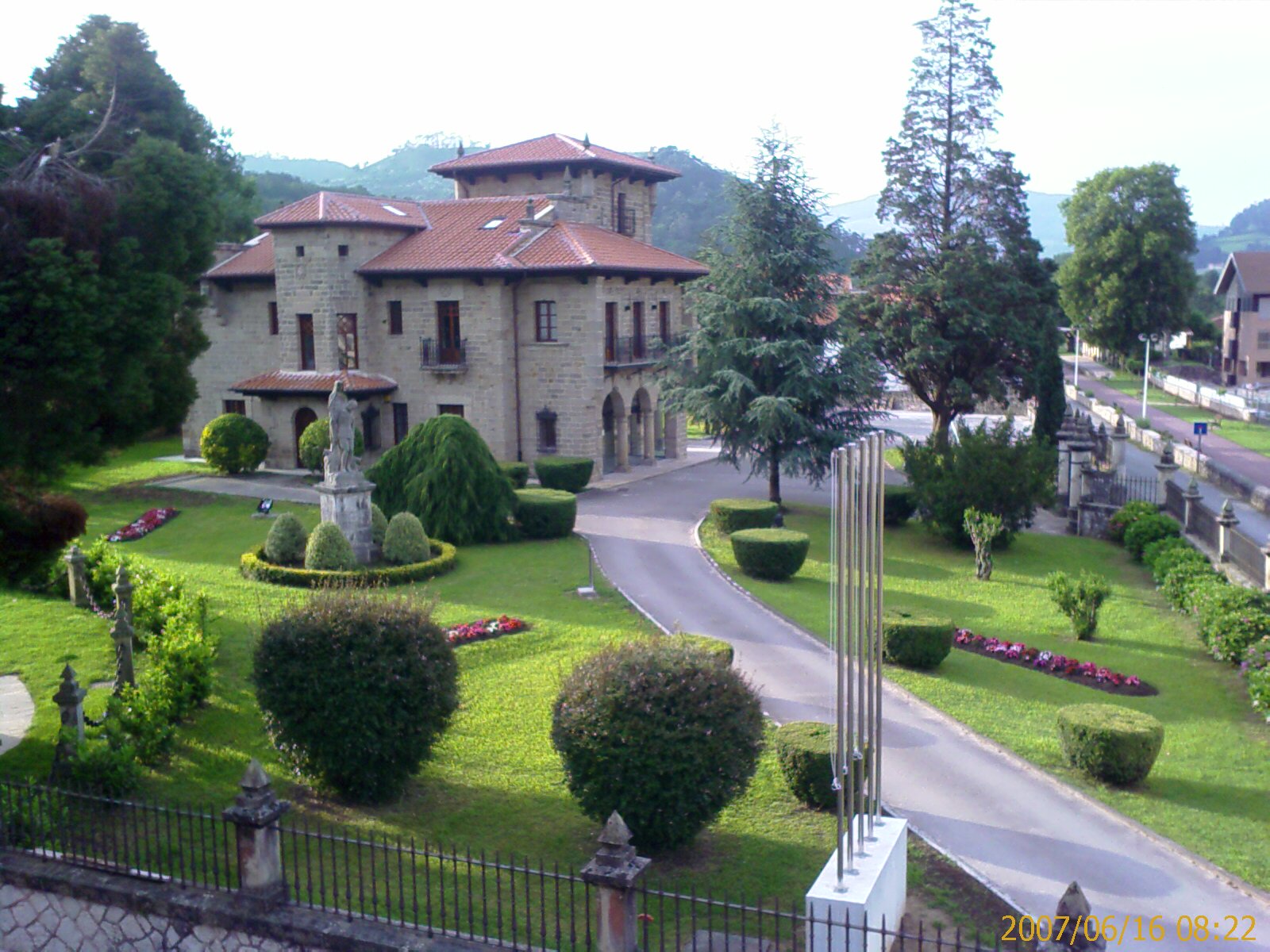
Torrelavega City Council occupies the Palacio Municipal, one of Cantabria's most imposing civic buildings, standing in the region's second-largest city.
Why wasn't this building always a town hall?
The palace began life as a private home. In 1888, Luciano Demetrio Herrero Proigas — one of Cantabria's indianos, emigrants who made their fortunes in the Americas and returned to invest in their home region — commissioned architect Joaquín Rucoba to design a residence for his family. The building covered an entire trapezoidal plot and became the largest structure ever built by an indiano anywhere in Cantabria. Rucoba himself ranked among the region's leading architects of the period, known for eclectic, monumental designs.
How did a private residence become the seat of city government?
For nearly four decades, the building remained a private home. Torrelavega's town council had previously been based on Plaza Roja, where it had operated since 1855. In 1925, the city purchased the palace for 275,000 pesetas, and on 24 January 1926 the new municipal headquarters was formally inaugurated under mayor Isidro Bustamante.
What architectural details stand out?
The Palacio Municipal is a three-story ashlar-stone block flanked on either side by two residential blocks — a layout typical of grand bourgeois residences of the era. Visitors enter through a portico of three semicircular arches. The facade's central axis is marked by a window framed in baroque-style moldings and topped by a tower, giving the building a silhouette recognizable from a distance.
Inside, the main staircase is built of marble, and the session hall is covered by a vault decorated with Romanesque-style paintings created by the Catalan painter Ramón Fraxenet.
Why is this building worth seeing while visiting Torrelavega?
Torrelavega is Cantabria's second-largest city and a major industrial hub of the region, and the Palacio Municipal ranks among its most distinctive architectural landmarks. For visitors, it offers a clear example of how fortunes made by indianos — Cantabrian emigrants returning from the Americas — reshaped local architecture at the close of the 19th century. The building remains an active seat of city government, so its facade and surroundings can be viewed from the outside year-round.
Frequently Asked Questions
Was the Palacio Municipal always Torrelavega's town hall? No. It was built in 1888 as a private family residence commissioned by the indiano Luciano Demetrio Herrero Proigas. It only became the town hall in 1926, after the city purchased it.
Who designed the building? The architect was Joaquín Rucoba, responsible for numerous grand buildings across Cantabria at the turn of the 19th and 20th centuries.
Where was the town council based before this building? From 1855, Torrelavega's town council operated on Plaza Roja, before moving to the current Palacio Municipal in 1926.
What is the building's most distinctive architectural feature? The tower crowning the facade's central axis, the three-arch portico, and the session hall's vault decorated with Romanesque-style paintings by Ramón Fraxenet.
Can visitors go inside the building? As an active seat of city administration, it is not set up as a regular tourist attraction with scheduled visits, but its facade and surroundings are open to view year-round.
Nearby places

Earn badges for the places you visit
Download NextOnTrip, discover new places and check off your trails.