About this place
The Manor House of the Calderón de la Barca Family stands in the village of Viveda, part of the municipality of Corvera de Toranzo in Cantabria, right in the heart of the Toranzo valley. It is one of the many stone "casonas" built by local nobility in the 17th and 18th centuries, a lasting mark of the wealth families accumulated in this part of northern Spain.
Who built the house, and when?
The building went up in the 18th century, commissioned by a branch of the Calderón de la Barca family — a lineage tied to the same house that produced the celebrated playwright Pedro Calderón de la Barca. A stone family crest on the façade carries the date 1752, which anchors the construction firmly in time rather than leaving it as a rough estimate.
What does the building look like?
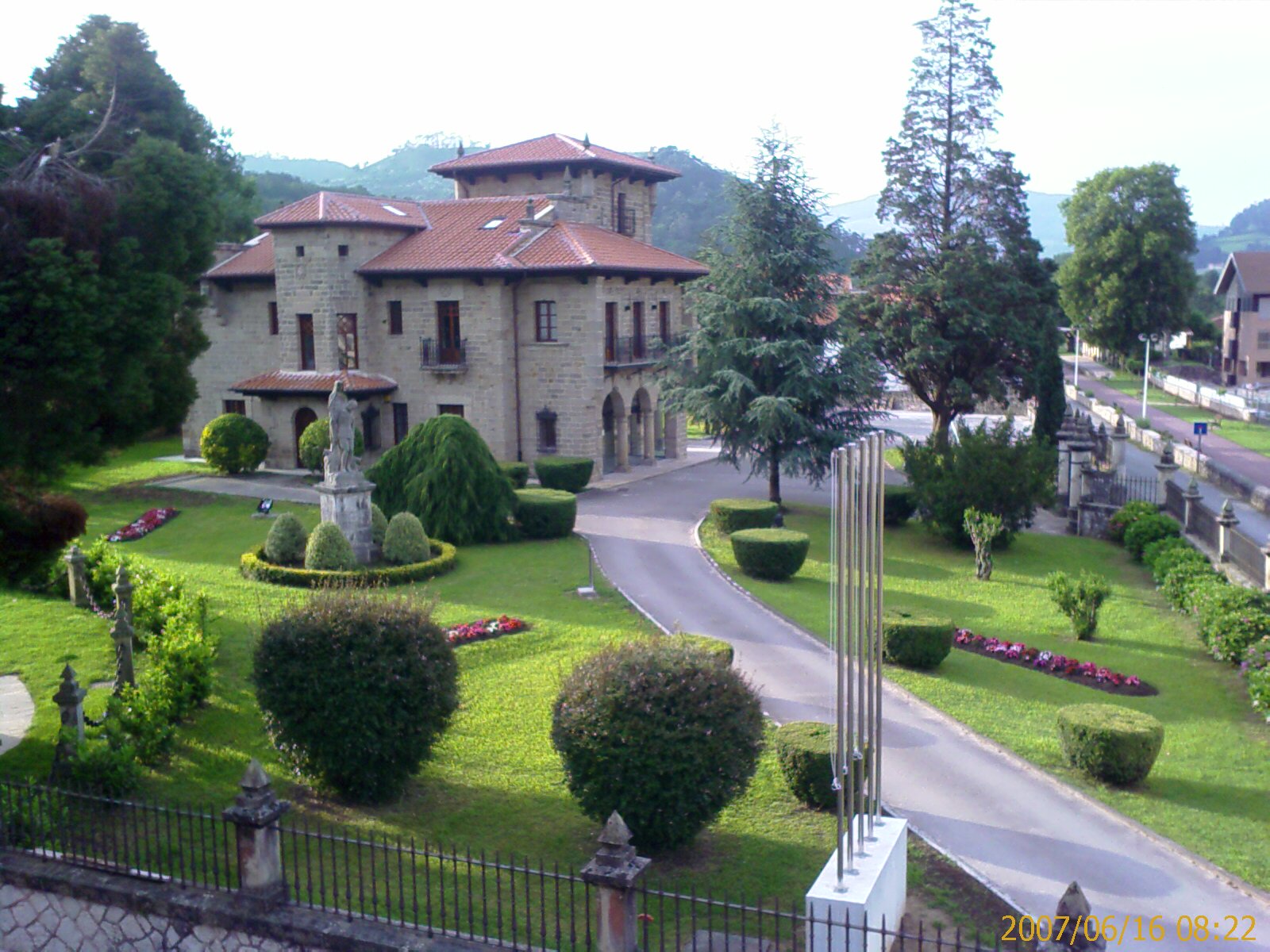
The main body of the house follows a rectangular plan across two floors. The south-facing façade is dominated by a continuous wooden balcony running the full width of the building, supported by seven timber beams — a hallmark of Cantabrian noble architecture of the period. The Calderón coat of arms sits above the balcony. A lower, two-storey stone annex was added alongside the main house, entered through a semicircular arch that opens onto the hallway.
What has happened to the property in recent years?
For a period, the manor belonged to Manos Unidas, a Spanish Catholic organisation working against hunger and poverty, which took over the building and spent many months looking for a new owner. In the early 2020s the property was listed for sale at roughly 250,000 euros, a price considered modest given its historical character and size. The casona remains part of the dense architectural heritage around San Vicente de Toranzo, an area that preserves numerous noble houses from the 17th and 18th centuries.
Why is this manor house worth a visit?
For anyone exploring the Toranzo valley, the Calderón de la Barca manor is a compact but well-preserved example of the region's residential architecture — modest in scale, but rich in telling details: the stone crest, the timber balcony, the arched entrance. It offers a tangible sense of how well-off Cantabrian families lived before the region industrialised, when social standing was built on land, lineage, and a solid stone family house.
Frequently Asked Questions
Where exactly is the manor house located? In the village of Viveda, part of the municipality of Corvera de Toranzo in Cantabria, in the Toranzo valley.
How old is the building? It dates from the 18th century — the façade carries the Calderón de la Barca family crest with the date 1752.
Is it connected to the famous playwright Pedro Calderón de la Barca? The house belonged to a family sharing that surname, but it is not a direct residence of the playwright himself — it is linked to a branch of the family that settled in Cantabria.
Can visitors tour the manor house today? The property was owned in recent years by the charity Manos Unidas and put up for sale; its current status and public access are worth checking locally before planning a visit.
Nearby places

Earn badges for the places you visit
Download NextOnTrip, discover new places and check off your trails.