About this place
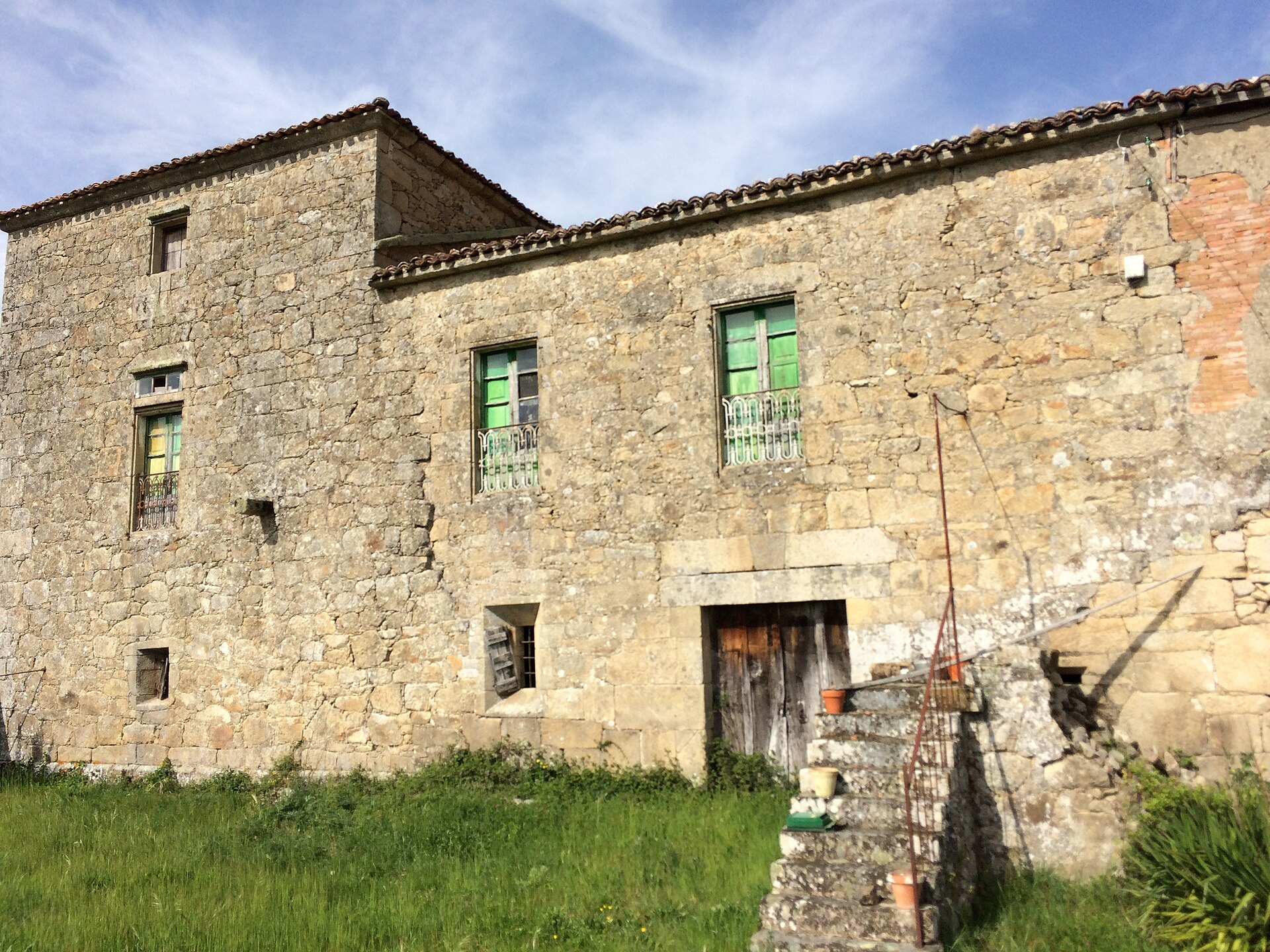
Torre do Mouro is a medieval defensive tower overlooking the Ferreira River, standing on a rise in O Castro de Ferreira, in the parish of Sirvián (municipality of Guntín, province of Lugo, Galicia). Also known as Torre de Sirvián or O Castelo dos Mouros, it is one of the few surviving physical traces of the network of fortifications that once guarded the Ferreira valley.
Where is the tower located?
Torre do Mouro sits in the Ribeira Sacra region, within the municipality of Guntín, a short drive from the city of Lugo. It occupies a small hill rising above the Ferreira River, a position that gave it a natural defensive advantage and a wide view over the surrounding land. The name of the settlement, O Castro de Ferreira, points directly to this hill: before the stone tower was built, the site held an earlier hillfort, or castro.
What is the history behind it?
The tower was raised in the 12th or 13th century as part of a wider chain of fortifications that local feudal lords used to control their lands and watch over the routes running along the river. It belonged to the Camba lineage, descendants of Count Ero and Countess Laura, who founded the monastery of Ferreira de Pallares in Guntín back in 909. That family connection underlines how important this stretch of the Ferreira valley already was between the 10th and 13th centuries, sitting at the crossing point of secular and monastic power.
Over time the tower lost its military purpose. Successive owners reworked the structure for residential use, and this is still visible today in the way the old defensive walls blend into later farmhouse-style additions.
What can you see on site?
The tower has a quadrangular, almost cubic footprint, typical of Galician defensive towers of the period. Solid stone foundations and sections of the original walls remain standing, though the upper levels no longer reach their original height. During later rebuilding, a carved granite piece from an earlier phase of construction was set into the walls; it bears a chalice with a host and a wheel motif, a clearly religious detail that hints at the site's close ties to nearby monastic life.
The surrounding countryside rewards a slow walk too: this stretch of the Ferreira valley has kept a rustic, largely unchanged character, with stone footbridges and old mills scattered along the riverbanks.
How do you get there, and when is the best time to visit?
Sirvián lies along the old pilgrim route to Santiago de Compostela, which passes through San Román, Santa Cruz, Sirvián, Entrambasaugas, Sear, Pereiro, Eirexe and Penela before reaching Guntín — a path still walked today and a fitting way to approach the tower on foot. From the village of Guntín, a riverside trail also follows the Ferreira toward A Mota castle, bringing walkers close to Torre do Mouro along the way.
Spring and early autumn are the best seasons to visit, when the Ferreira valley is at its greenest and temperatures suit longer walks. In summer, morning hours are preferable, since the surrounding area offers little shade during the hottest part of the day.
Frequently Asked Questions
Is Torre do Mouro the same tower as Torre de Sirvián? Yes. Torre do Mouro is the popular local name for Torre de Sirvián, also referred to as O Castelo dos Mouros.
How old is the tower? It dates to the 12th or 13th century, built as part of a defensive system controlling the Ferreira river valley.
Can visitors get close to the tower? The surviving walls and foundations are visible from the outside; the site consists of historical ruins partly absorbed into later farm buildings.
Are there other historical sites nearby? Yes — the municipality of Guntín holds several other medieval towers, such as Torre de Francos and Torre de Quintela, as well as A Mota castle, reachable via a trail that follows the Ferreira River.
Nearby places

Earn badges for the places you visit
Download NextOnTrip, discover new places and check off your trails.