About this place
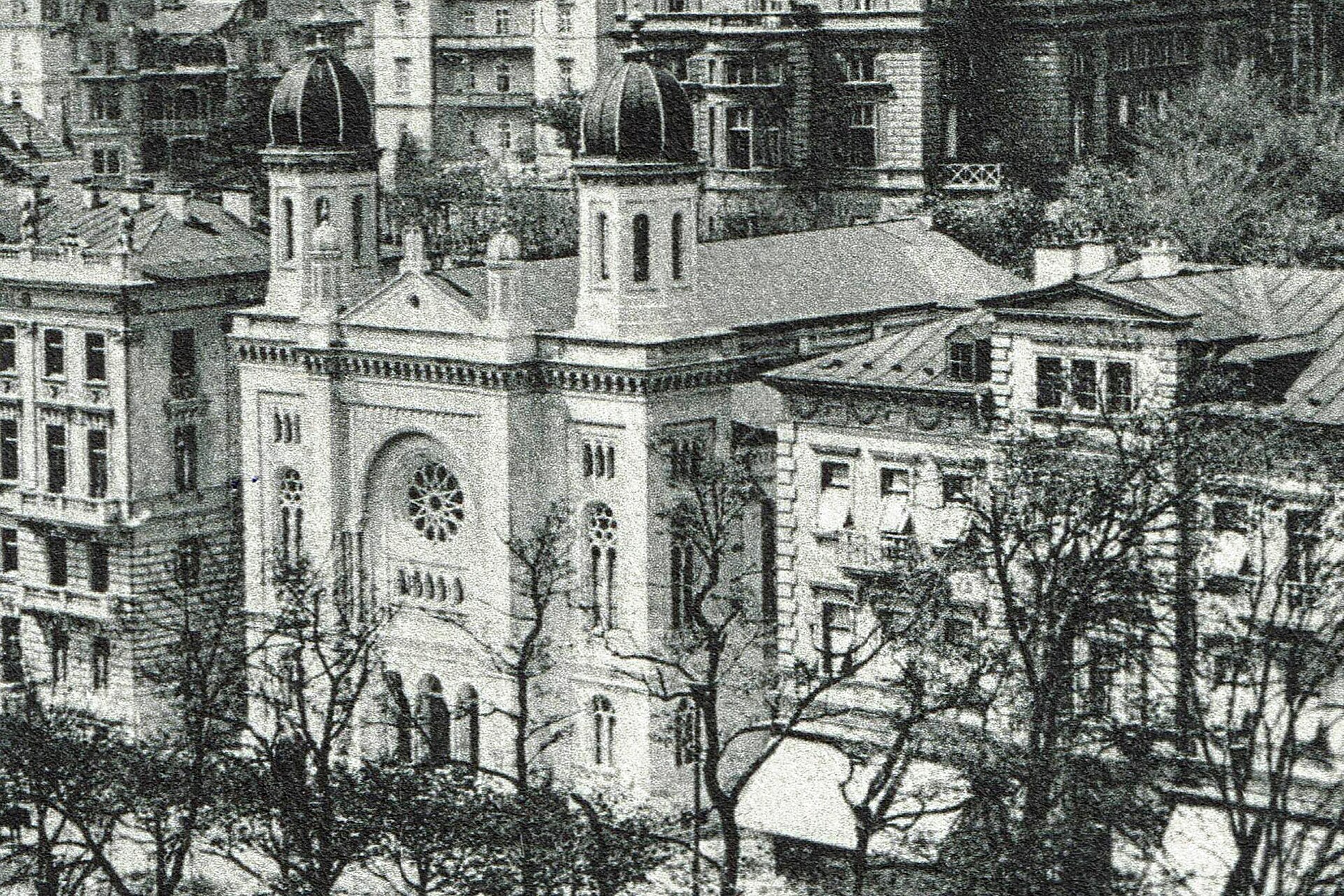
The Synagogue in Marienbad no longer stands, but its story is very much part of the town's history — for more than fifty years it stood on the main promenade of this Czech spa town before being destroyed during Kristallnacht in 1938. Recent archaeological work on the site has brought the building's history back into public view.
When was the synagogue built?
Plans for the building were drawn up in 1883 by local architect Eduard Stern, and construction began that same year. The project was funded through collections among Jewish spa guests visiting Marienbad, while the land itself was donated by Salomon Šimon, the chairman of the local Jewish community. The synagogue was officially opened on August 1, 1884, in a ceremony attended by Rabbi Dr. Bernhard Löwenstein.
What did the building look like?
The synagogue was designed in what is commonly described as Moorish style — the same style used for the town's Catholic church, a popular architectural choice for European spa towns in the 19th century. Measuring roughly 20 by 27 meters, the building held three prayer halls and could seat 488 worshippers: 318 men and 170 women, seated separately according to tradition. The interior featured stained-glass windows, marble pillars with gold inlay, and the key liturgical elements of a synagogue — the aron ha-kodesh (Torah ark) and the bimah. In the late 1880s, a donor named Max Halbmayer funded musical instruments for the building.
What happened to the synagogue during World War II?
On the night of November 9–10, 1938, during the nationwide pogrom known as Kristallnacht, SA units under the command of Sturmbannführer Müller looted the building and then set it on fire. The synagogue burned to the ground, sharing the fate of hundreds of other Jewish houses of worship destroyed that night across Nazi Germany and the annexed Sudetenland. The plot where it once stood remained empty ground for decades afterward.
What can visitors see at the site today?
In late 2023, an extensive archaeological survey began on the former synagogue site. Archaeologists uncovered the building's foundations, along with colored stained-glass fragments bearing Hebrew inscriptions and the remains of a mikveh, the ritual purification bath used in Jewish tradition. These finds helped confirm the layout of the interior described in archival records and shed new light on how the building was furnished.
Why is this site worth a visit?
Even though no walls remain standing, the former synagogue plot carries real historical and educational value. It offers a window into the Jewish community that helped shape spa life in Marienbad for decades, and it illustrates the scale of destruction wrought by Kristallnacht not only in major cities but in smaller resort towns as well. For visitors interested in 20th-century history and the Jewish heritage of Central Europe, it is a meaningful stop on a broader trail of memory dedicated to the region's lost synagogues.
Frequently asked questions
When was the synagogue in Marienbad built? Construction began in 1883 based on a design by architect Eduard Stern, and the building officially opened on August 1, 1884.
How many people could the synagogue hold? It had seating for 488 people — 318 men and 170 women — spread across three prayer halls.
What happened to the synagogue during Kristallnacht? On the night of November 9–10, 1938, SA units looted and then burned the building, which was destroyed completely.
Can visitors see any remains of the synagogue today? Yes — archaeological excavations began on the site in 2023, uncovering foundations, stained-glass fragments with Hebrew inscriptions, and remains of a mikveh.
Nearby places
-

Karl Josef Heidler von Heilborn
Mariańskie Łaźnie
-
Bust of Václav Skalník
Mariańskie Łaźnie
-
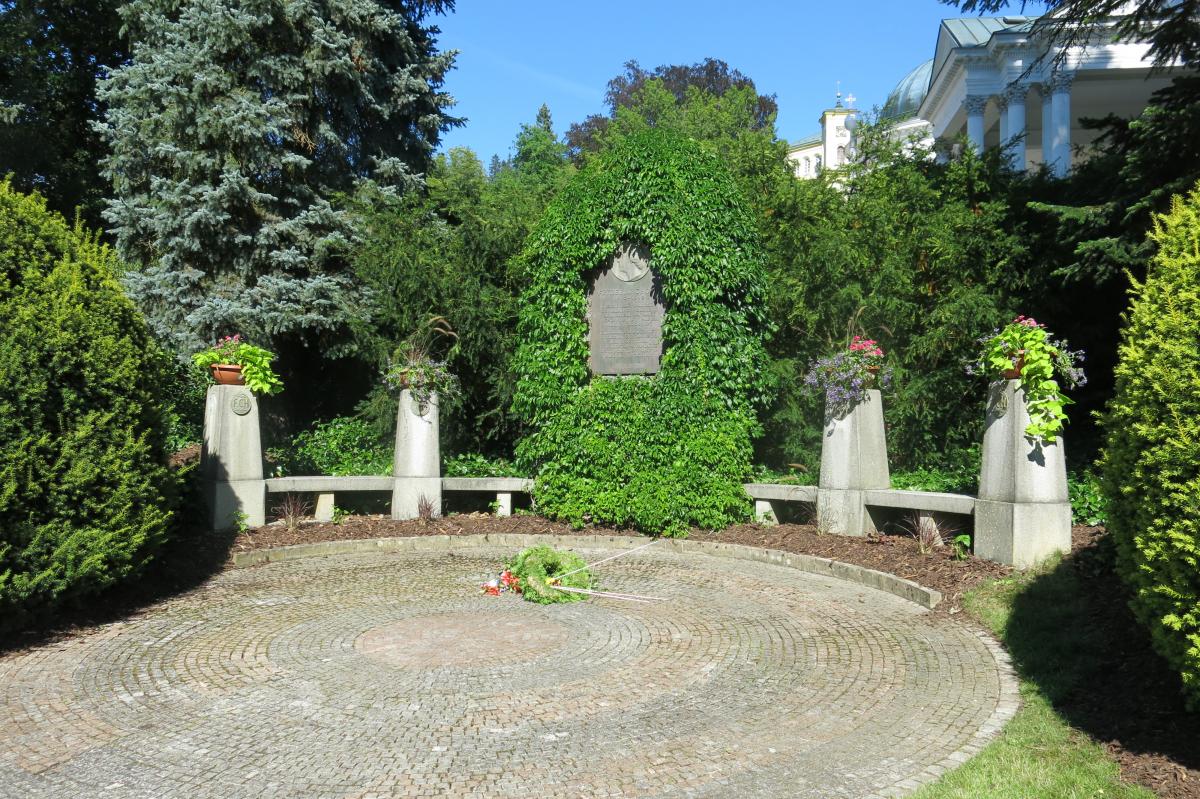
Chopinův pomník
Mariańskie Łaźnie
-
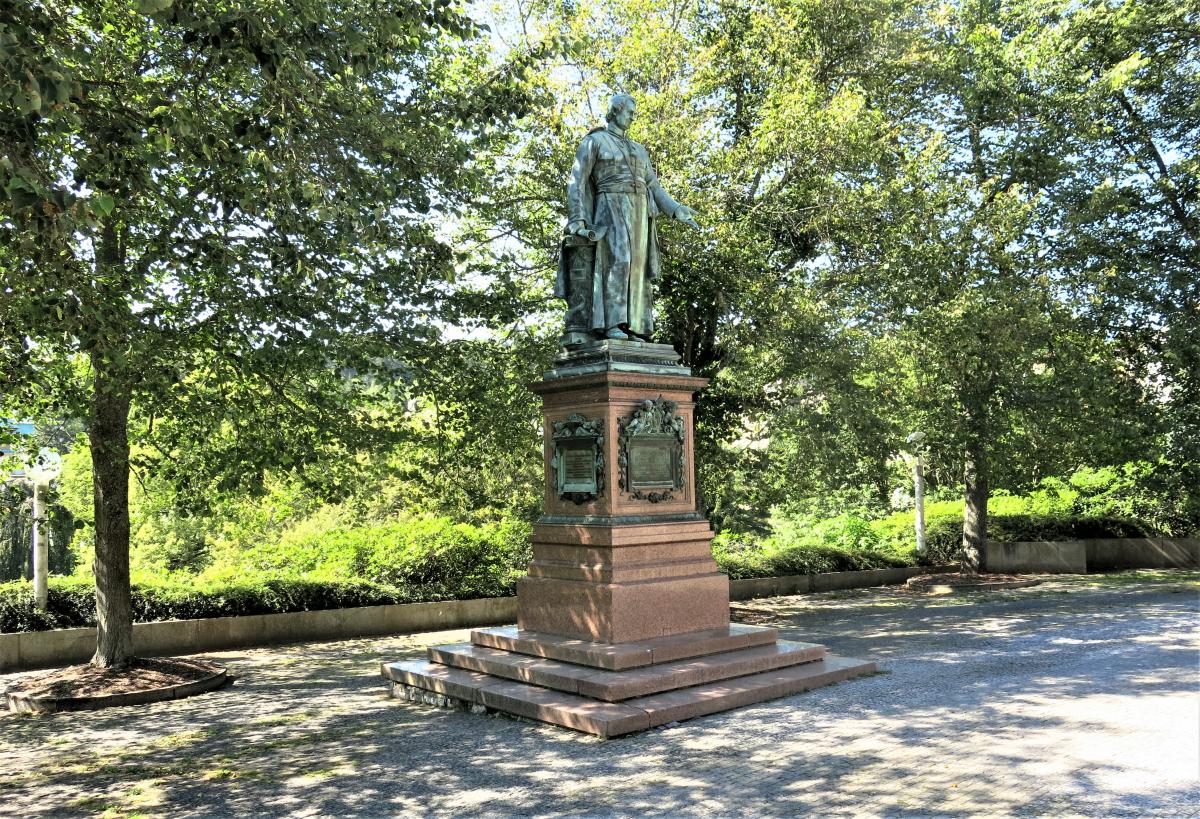
Statue of Karel Kašpar Reitenberger in Mariánské Lázně
Mariańskie Łaźnie
-
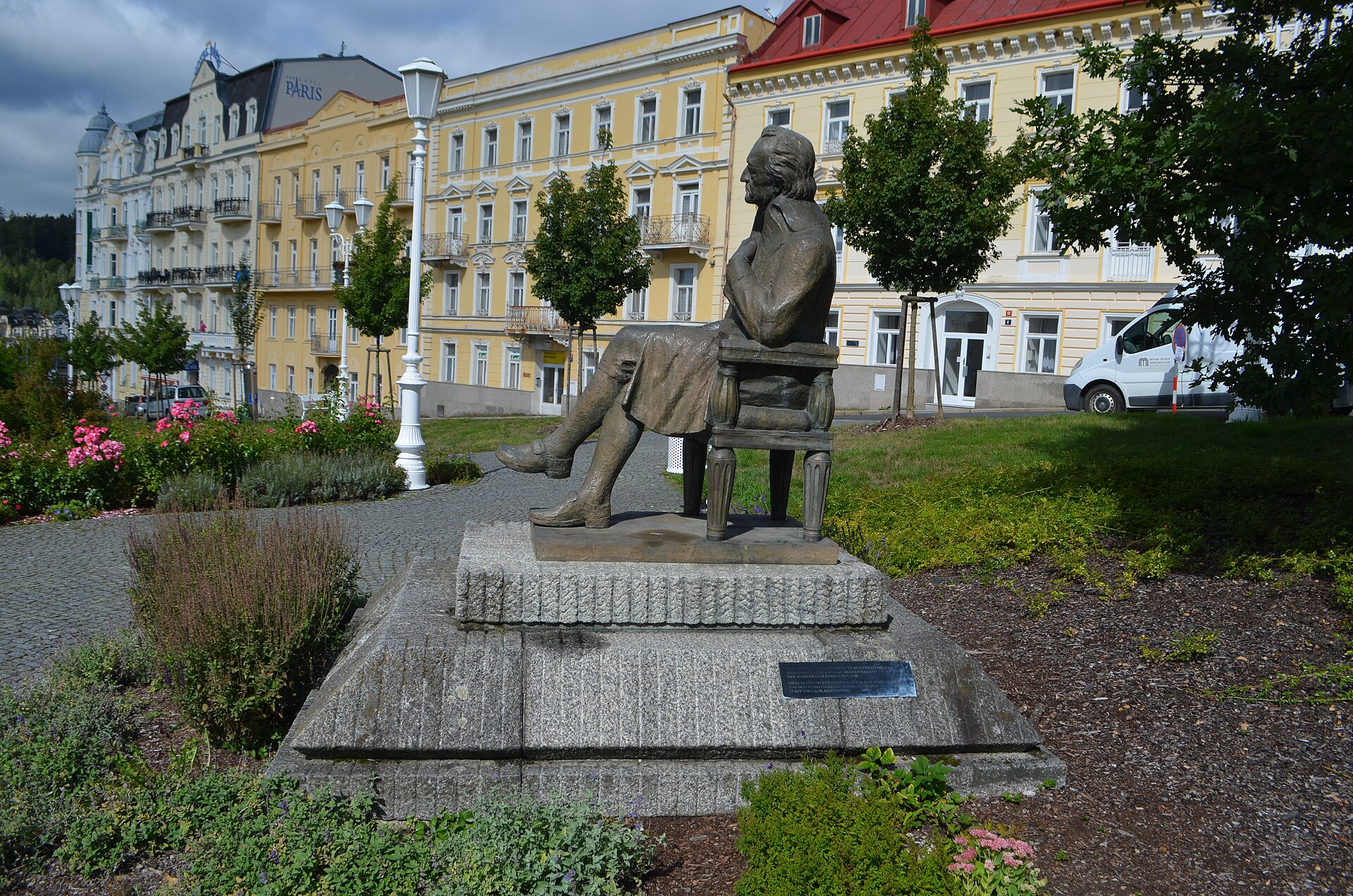
statue of sitting Goethe in Mariánské Lázně
Mariańskie Łaźnie
-
Dr. Joseph Johann Nehr
Mariańskie Łaźnie
Earn badges for the places you visit
Download NextOnTrip, discover new places and check off your trails.