About this place
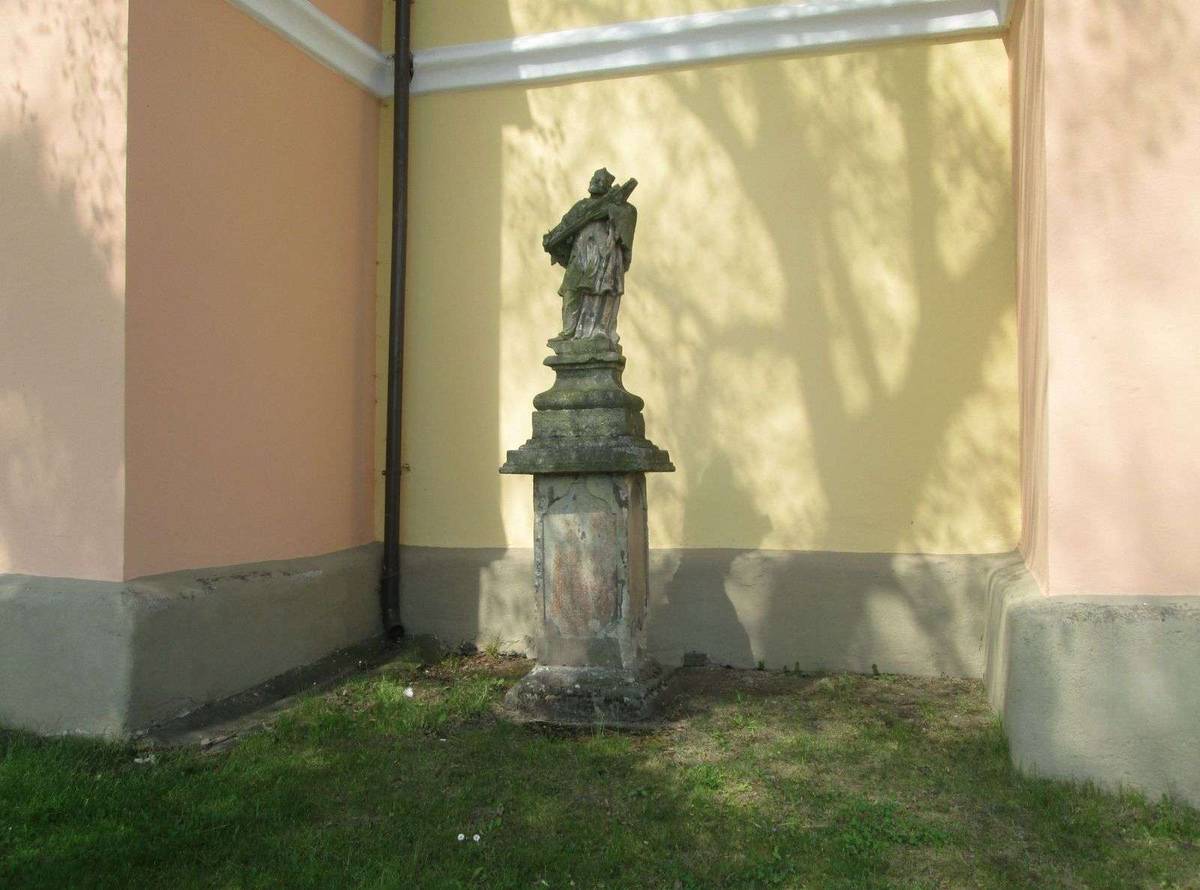
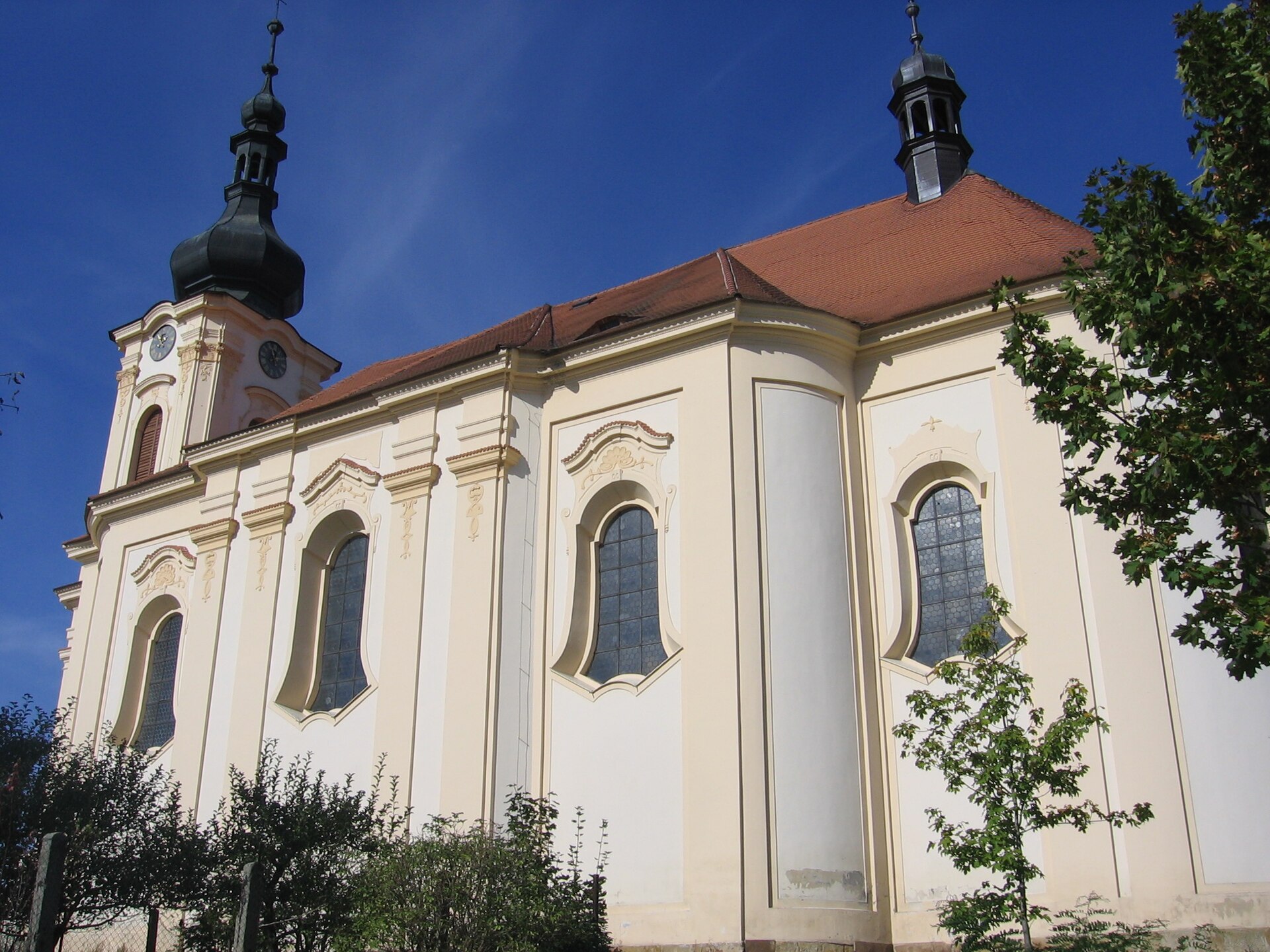
The statue of St. John of Nepomuk in Všeruby is a modest but distinctive Baroque monument standing beside the local Church of the Holy Spirit, in the Plzeň-sever district of the Plzeň Region. It's one of thousands of such statues scattered across the Czech Republic — yet each carries its own history worth knowing before you move on.
Where exactly does the statue stand?
The statue is located in Všeruby, a village in the Plzeň-sever district, roughly 20 kilometers north of Plzeň — not to be confused with the other Czech village of the same name in the Karlovy Vary district, much further west. It stands right next to the local Church of the Holy Spirit, a typical placement for this kind of Baroque monument: such statues were usually erected by churches, on town squares, or along important roads, wherever residents would pass them every day.
Who was the saint honored by this monument?
John of Nepomuk (died 1393) is one of the best-known Czech saints, canonized in 1729. In popular tradition he is venerated above all as the patron of bridges, water, and protection from floods, as well as a guardian against false accusation and slander — which is why his statues were raised not only by bridges and rivers, but simply as an expression of a community's piety. A wave of such monuments swept across the Czech lands especially during the 18th century, at the height of the Baroque period, and the statue in Všeruby belongs to that tradition.
What does it look like, and what is it made of?
The monument was carved from medium- to coarse-grained sandstone. The saint is shown in the characteristic pose, leaning slightly to the right, dressed in a surplice, rochet, and a cloak with a fur collar, wearing a beret, his face framed by a beard. He holds a cross in his bent right arm, supports it with his left hand, and tilts his head toward it in a gesture of prayerful concentration. Clear traces of the original polychrome paintwork survive on the surface — meaning the whole statue was originally painted in color, visible today only in fragments after two and a half centuries.
When was this particular statue made?
The exact year of its creation — 1765 — is recorded on the pedestal as a chronogram, an inscription in which selected letters, read as Roman numerals, add up to the date. This was a common device in Baroque art. On the back of the pedestal, beneath the plinth, there is also an abbreviated inscription, W:B:S:F, whose full meaning — most likely referring to a founder or the mason who carved it — has not been definitively established. The front bears a Latin inscription referring to the saint's role as patron of the homeland.
Is this a well-known, heavily visited monument?
This statue is not a tourist draw on the scale of the famous one on Prague's Charles Bridge — it's a modest, local monument, listed in the Czech Republic's heritage catalogue (Památkový katalog), appreciated more by enthusiasts of small sacred monuments than by mass tourism. Its value lies in being an authentic, two-and-a-half-century-old testament to local devotion, largely unchanged since it was carved.
Frequently asked questions
Where exactly is the statue located? In Všeruby, Plzeň-sever district, next to the Church of the Holy Spirit — not to be confused with the other Všeruby, in the Karlovy Vary district.
What year does the monument date from? 1765, recorded on the pedestal as a chronogram.
What material is it made of? Medium- to coarse-grained sandstone, with surviving traces of its original polychrome paintwork.
Is this the same statue as the one on Charles Bridge in Prague? No. It's a completely different, local monument — one of many thousands of St. John of Nepomuk statues across the Czech Republic.
Why were so many statues of St. John of Nepomuk erected? He is regarded as the patron of bridges, water, and protection from floods, and a guardian against false accusation, making his image one of the most common in Czech Baroque sacred art.
Nearby places

Earn badges for the places you visit
Download NextOnTrip, discover new places and check off your trails.