About this place
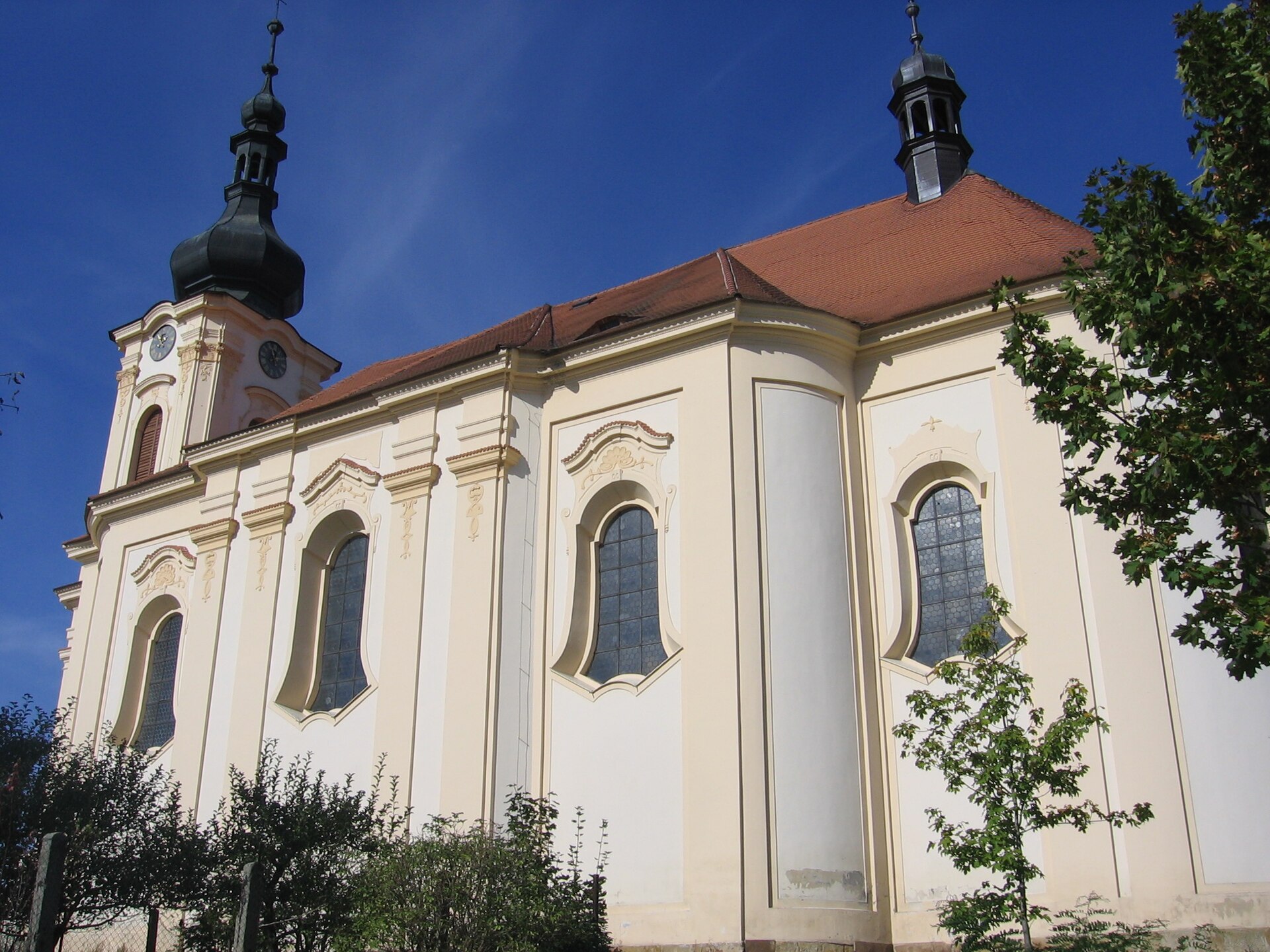
The Church of Saint George stands in Malesice, a district on the eastern edge of Pilsen (Plzeň), where together with the neighboring chateau it forms the historic heart of what was once an independent village and is now part of Plzeň 9-Malesice. Listed as a protected cultural monument, it offers a compact but rewarding stop for anyone curious about the layered architectural history of the Plzeň region.
How do you get there?
Malesice sits east of central Pilsen and is reachable by local public transport or a short drive from downtown. The church occupies a prominent spot next to the former chateau, making the pair an easy combined stop for a short walk through the district.
What is the story behind the church?
Records place the building as a parish church as early as the end of the 14th century, pointing to medieval origins. The original Gothic structure was later extended with a Baroque nave, and its exterior carries a distinctive sgraffito finish. This layering of styles — Gothic core, Baroque additions, Renaissance-era decoration — makes the church a small but telling case study of how Czech village churches evolved over centuries rather than being built in a single campaign.
What can you see on site?
The church is a single-nave building combining a square Gothic presbytery with a Baroque nave. The presbytery, the oldest surviving part, is covered by a cross vault crowned with a keystone carved as a rosette with three rows of petals — a detail worth a closer look for anyone interested in Gothic stonework. On the south side, a prismatic tower decorated with sgraffito dating to 1597 and topped with a helmet-shaped spire rises above the building, giving the church its recognizable silhouette from a distance.
Inside, the most valuable piece is a late Gothic altarpiece of St. George from 1520, originally housed in the Church of the Elevation of the Holy Cross in Chotíkov before being moved here. It depicts St. George as a knight in so-called Maximilian armor fighting the dragon, with the landscape around Malesice and Chotíkov painted in the background — a detail that ties the religious scene directly to the local terrain. Other noted items in the church's furnishings include a monstrance associated with Anna Šefránková.
Who should visit?
This is a destination for travelers interested in sacred architecture, regional history around Plzeň, and quieter corners of the city away from the main tourist trail. It rewards visitors who want to see Pilsen beyond its historic center and explore the former villages that have been absorbed into the growing city.
Frequently asked questions
Where exactly is the Church of Saint George located? In the Malesice district on the eastern side of Pilsen, in the Plzeň region, next to the local chateau.
How old is the church? It is documented as a parish church from the late 14th century, though its current form combines a Gothic core with a later Baroque nave.
What is the most valuable object inside? A late Gothic altarpiece of St. George from 1520, moved here from a church in Chotíkov, showing the saint battling a dragon against a backdrop of the local landscape.
Can visitors go inside? As an active place of worship, the church is not always open; it is accessible during occasional events such as Church Night (Noc kostelů), so checking current opening times before a visit is recommended.
Nearby places

Earn badges for the places you visit
Download NextOnTrip, discover new places and check off your trails.