About this place
St. Barbara's Church is one of the most striking sacred landmarks in the Karviná region — really the story of two churches sharing the same dedication, separated by almost two centuries of history and the drama of a coal-mining town. It stands in the Karviná-Louky district (formerly the independent village of Olší nad Olzou), later absorbed into the growing town of Karviná in the Czech part of Cieszyn Silesia (Zaolzie).
What is the history behind the church?
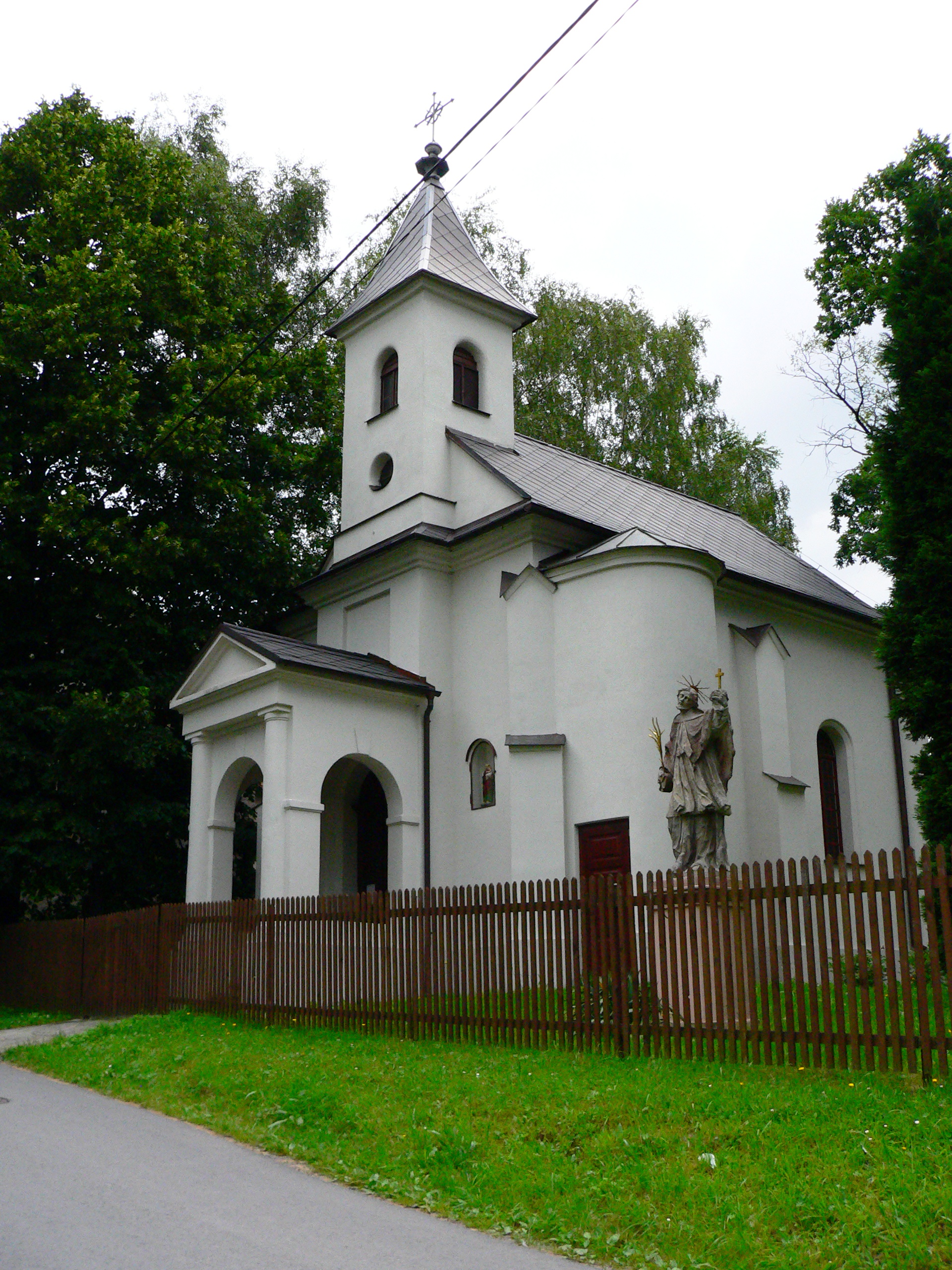
A wooden chapel already stood on this spot around the year 1500. Because of frequent flooding from the nearby river and the poor condition of that original structure, a brick church was built in its place between 1809 and 1818. The design is usually attributed to Antonín Englisch of Opava, the architect responsible for most churches built in Cieszyn Silesia during that era. This building served the community of Louky and the surrounding area for nearly two hundred years.
Why was a new church built?
Karviná is a coal-mining town, and underground extraction beneath Louky caused serious ground subsidence over the decades. In the 1990s, the historic Baroque church began tilting dangerously as the soil beneath it lost stability due to mining damage. In 1995 the building was taken out of use as unsafe for worshippers. In the following years, the entire village of Louky nad Olzou was largely demolished — houses were torn down, residents relocated, and the landscape turned into post-mining terrain.
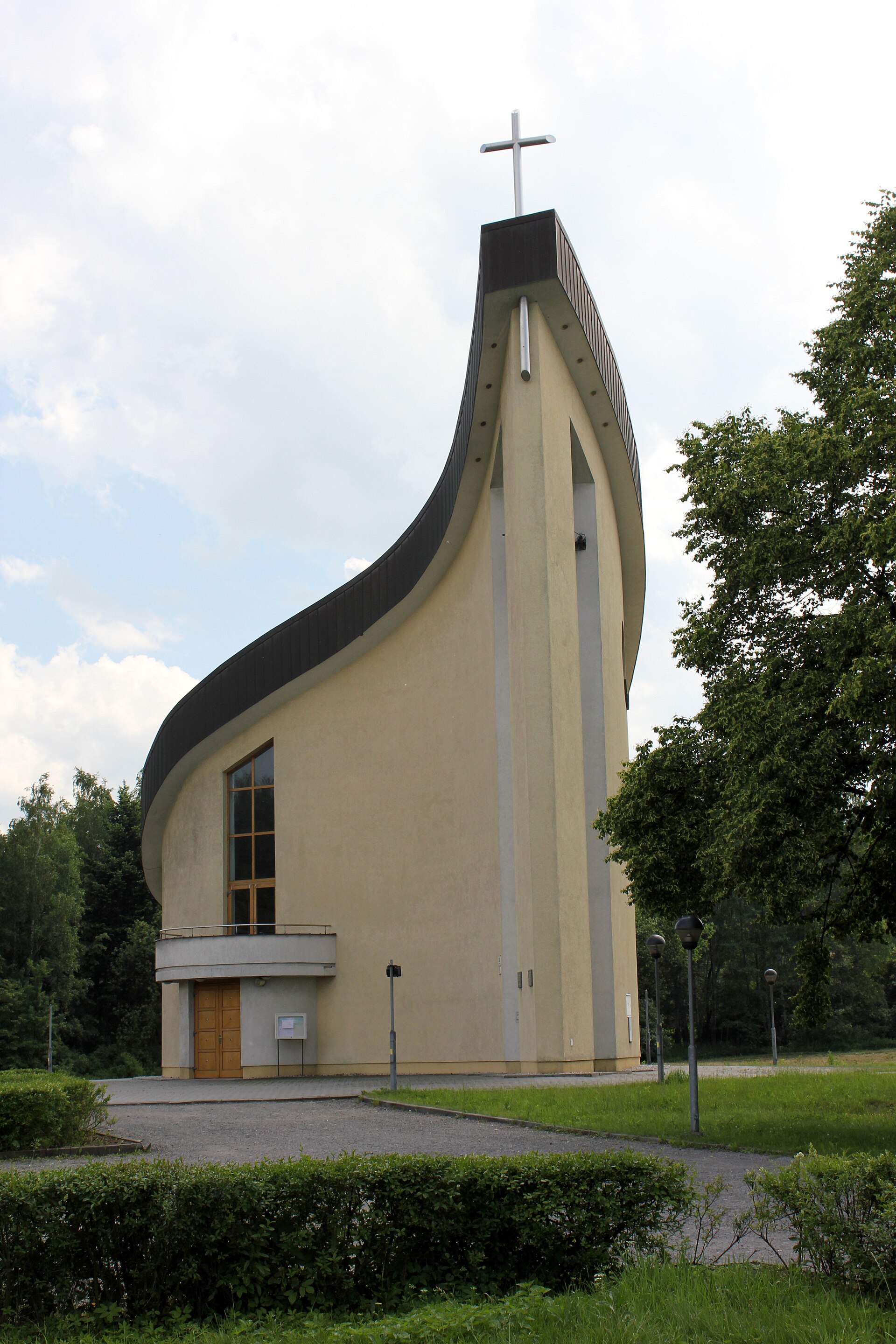
In response to this loss, a new St. Barbara's Church was built between 2000 and 2001, about 1.6 km south of the old one. It was designed by architect Ladislav Mirta, who shaped the building like a teardrop — a deliberate symbol of the residents' grief over the destruction of their home village and the landscape that disappeared underground along with the coal.
What can you see there?
The main draw for visitors is the unusual, symbolic architecture of the new church: its flowing, teardrop-shaped form stands out clearly from the typical rectangular churches found elsewhere in the region. It is a rare example of sacred architecture built explicitly as a memorial to a lost community. It is also worth learning the story of the old church and the fate of Louky nad Olzou — a striking illustration of how coal mining could literally erase a village from the map, one of the most telling stories in the whole Zaolzie region.
How do you get there, and when should you visit?
Karviná-Louky lies in the southern part of the town, well connected to Karviná's centre and nearby Český Těšín. The site is best visited during daylight hours, when the church's shape and surroundings are easiest to appreciate. The area is not a typical tourist hotspot, so it is worth combining a visit with other sacred landmarks in Karviná, such as the Church of the Elevation of the Holy Cross in Fryštát.
Frequently asked questions
Can the old St. Barbara's Church still be visited? The building was decommissioned in 1995 due to mining damage and unstable ground beneath it. Access to the interior is limited, so it is worth checking locally before visiting.
Why does the new church have such an unusual shape? Architect Ladislav Mirta designed the building in the shape of a teardrop to symbolically express the residents' grief over the loss of their home village of Louky nad Olzou, destroyed by underground coal mining.
How far apart are the two churches? The new church stands roughly 1.6 km south of the old Baroque building constructed between 1809 and 1818.
What happened to the residents of Louky nad Olzou? The village, once an independent municipality, was largely demolished due to mining damage — houses were torn down and residents relocated, which directly led to the construction of the new church as a memorial.
Nearby places

Earn badges for the places you visit
Download NextOnTrip, discover new places and check off your trails.