About this place
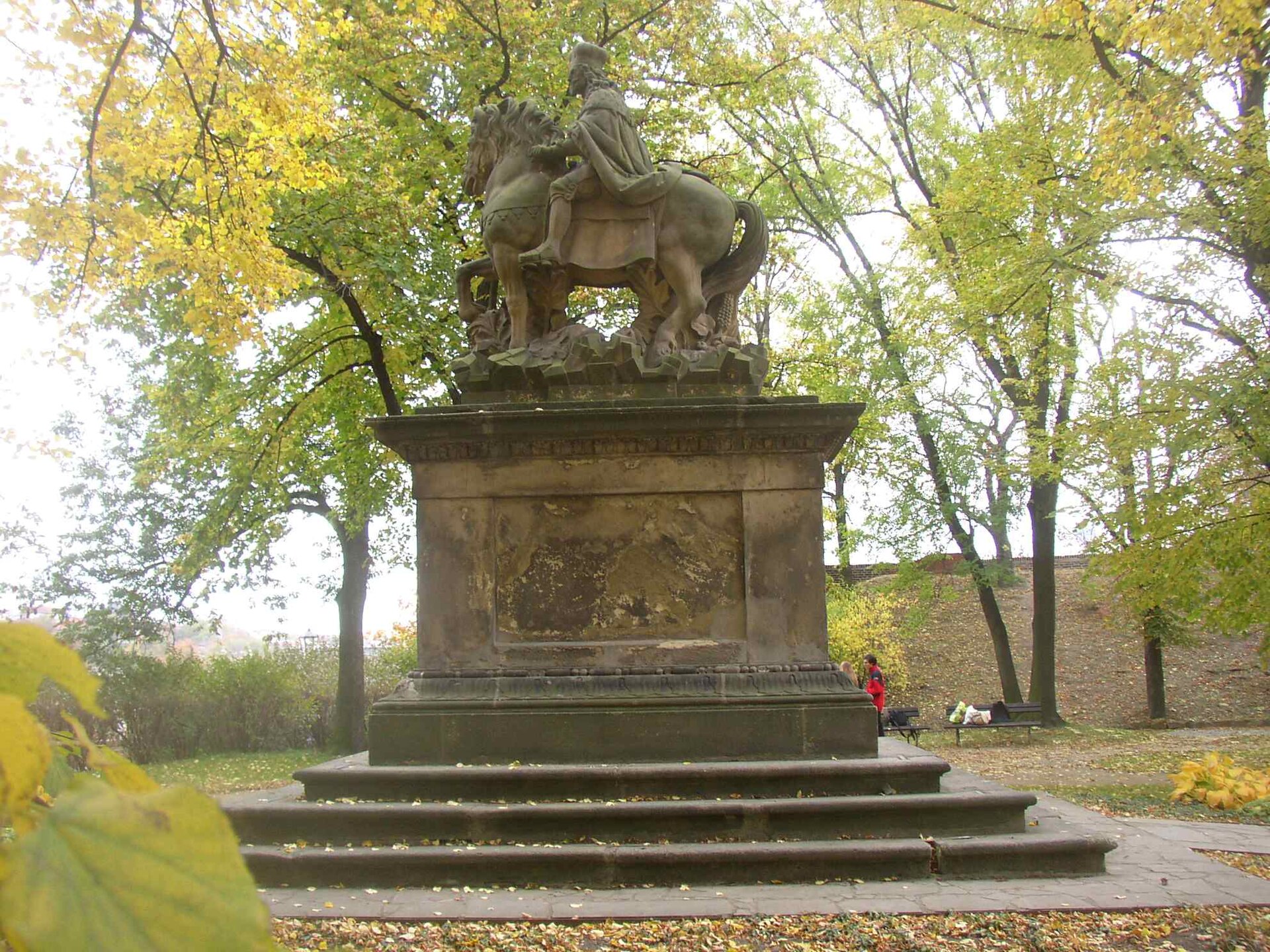
The Statue of Saint Procopius is a modest but intriguing sculpture set into a courtyard wall at Vyšehrad in Prague — one of those small details easy to walk past between the fortress ramparts and the Basilica of St. Peter and St. Paul, yet it carries its own small piece of the site's story.
Where exactly is the statue located?
The sculpture sits in a niche of the wall enclosing the courtyard of a former farmstead at K Rotundě 16/3, right inside the Vyšehrad fortress in Prague. Its coordinates are 50.06402, 14.42092 — an area most visitors pass through while walking between the Rotunda of St. Martin and the Vyšehrad cemetery and basilica.
What is it made of, and who created it?
The statue is a modern sandstone sculpture. Neither the sculptor's name nor the exact year it was made is recorded at the site itself — unlike many other, better-documented Vyšehrad monuments, this figure remains, in that sense, anonymous. That's not unusual for Vyšehrad: alongside its well-documented major monuments stand humbler works whose origins have simply faded from record over time.
What is the courtyard at K Rotundě 16/3?
The wall holding the statue belongs to a former economic farmstead of the Vyšehrad chapter — a complex dating back to the Baroque era, now made up of three buildings around a shared courtyard. Its present form and extent, however, date from the 19th century, when the courtyard took on the shape still visible today. Farmsteads like this one once served as the working, agricultural backbone supporting the chapter attached to the church and fortress.
Why isn't the statue a protected monument, despite standing inside Vyšehrad?
This is one of the site's small paradoxes: although the Vyšehrad fortress itself is a protected heritage complex, the Statue of Saint Procopius is not formally protected as a cultural monument. It is only mentioned in the description of the fortress in the state heritage register as one of the elements that could potentially be considered for protection in the future — making it one of the few Vyšehrad artifacts without that formal status.
Who was Saint Procopius, and why does he matter to Czechs?
The figure is shown with his characteristic attribute — a devil chained at his feet, the detail that most readily identifies him in Czech religious art. Procopius ranks fifth or sixth among the Czech national patron saints, and he is especially venerated by farmers, miners, and winemakers — occupational groups that have long looked to him as their protector. Placing his image on the wall of a farmstead courtyard once tied to the chapter's agricultural operations is therefore fitting, echoing the saint's long-standing patronage of rural and working life.
Frequently asked questions
Where exactly is the Statue of Saint Procopius? In a niche of the courtyard wall of a former farmstead at K Rotundě 16/3 at Vyšehrad in Prague, at coordinates 50.06402, 14.42092.
What material is the statue made of? Sandstone — it's a modern sculpture, with no sculptor's name or creation date recorded at the site.
Is the statue a legally protected monument? No. It's one of the few Vyšehrad objects without formal heritage protection, though it's listed as a potential candidate in the fortress's heritage register description.
How do you recognize Saint Procopius in art? By his signature attribute: a devil chained at his feet.
Why is Saint Procopius significant in Czech tradition? He ranks fifth or sixth among the Czech national patron saints and is especially venerated by farmers, miners, and winemakers.
Nearby places

Earn badges for the places you visit
Download NextOnTrip, discover new places and check off your trails.