About this place
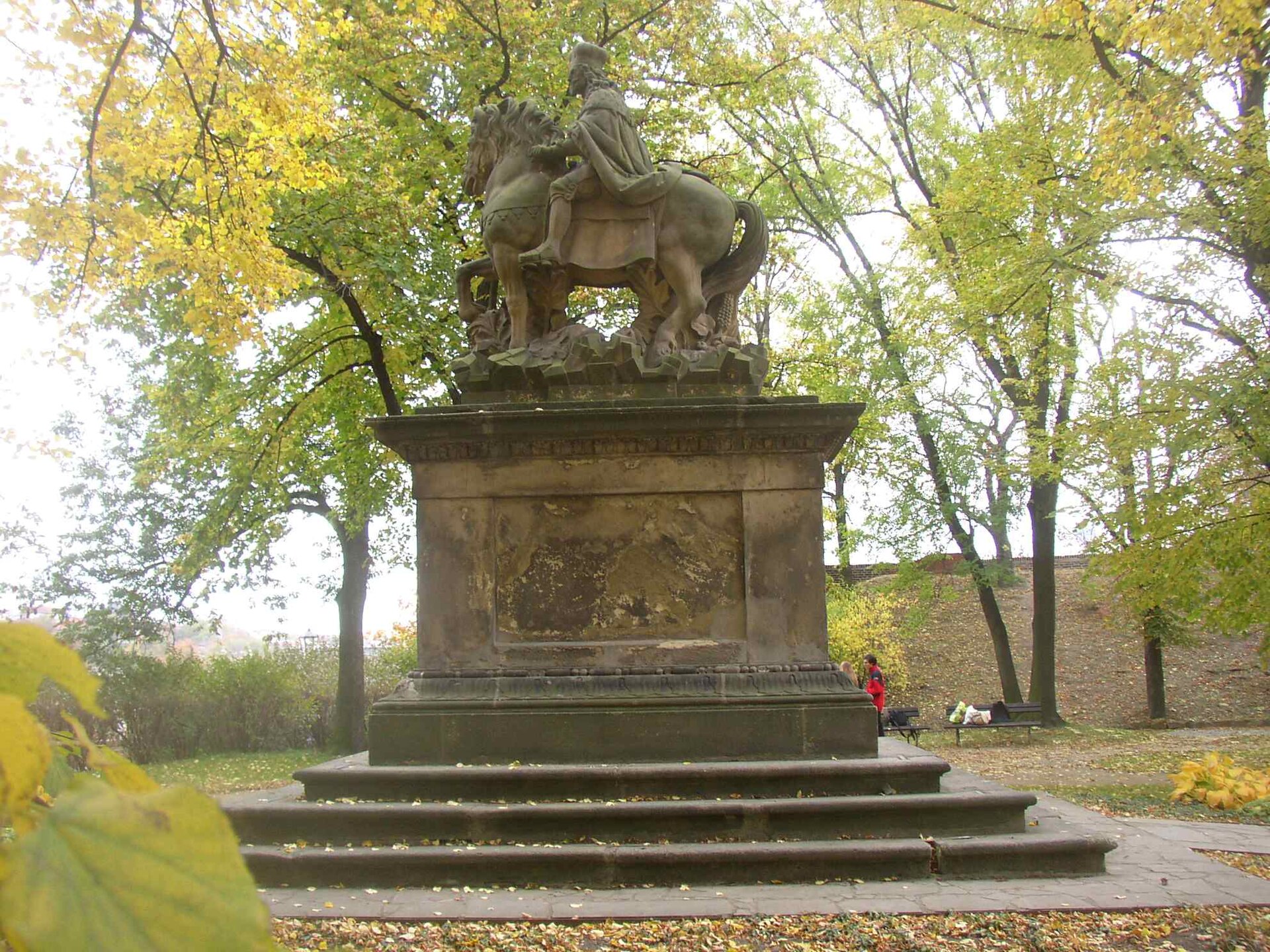
Statue of Saint Sebastian is a stucco sculpture standing within the grounds of Vyšehrad, the historic fortress complex on a rocky bluff above the Vltava River in Prague. The work depicts the martyrdom of Saint Sebastian, the Roman soldier venerated as a protector against plague, and forms part of the wider collection of outdoor art scattered across the Vyšehrad citadel.
Where exactly is it?
The statue stands inside Vyšehrad, the fortified hilltop site south of Prague's historic centre that served as a seat of Czech princes in the early Middle Ages and was later rebuilt as a Baroque fortress. Vyšehrad as a whole is protected as a national cultural monument, and the Saint Sebastian statue is registered both in the Czech Monuments Catalogue and in Prague's "Art for the City" (Umění pro město) inventory of public sculpture, which tracks statues, memorials and decorative works maintained across the capital. Day-to-day care of the piece falls under the Prague City Gallery, the institution responsible for a large share of the city's public art collection.
What does the statue show?
The sculpture portrays Saint Sebastian at the moment of his ordeal — bound and pierced by arrows, the scene traditionally used in Christian art to recall his survival of a first execution attempt under the Roman emperor Diocletian before his eventual death. Because of this episode, Sebastian became one of the saints most frequently invoked for protection against epidemics, and statues like this one were often placed in public view as a form of communal appeal for health and safety. The identity of the sculptor and the exact date of creation are not recorded in the official catalogue entries, which is common for many of the smaller devotional and memorial statues scattered around Vyšehrad's grounds — the site accumulated such works gradually over centuries rather than through a single decorative program.
Why visit Vyšehrad while you're here?
The Saint Sebastian statue is a modest stop compared to Vyšehrad's headline attractions, but it fits naturally into a walk around the complex. The fortress grounds hold the twin-spired Basilica of St Peter and St Paul, the Vyšehrad Cemetery and its Slavín monument, where many of the country's most celebrated writers, artists and scientists are buried, as well as underground casemates and the Gorlice hall used for temporary exhibitions. The ramparts above the river offer some of the widest open views over Prague and the Vltava valley, away from the crowds that fill Charles Bridge and the Old Town.
How to get there?
Vyšehrad is reached easily from central Prague by metro, using the red Line C to the Vyšehrad station, which sits right next to the fortress park entrance. Trams running along the Vltava embankment also stop within walking distance of the site. The grounds themselves are open to the public without an admission fee, though some individual attractions inside — such as the casemates or the cemetery's Slavín tomb — may have separate opening hours or small entry charges.
When is the best time to see it?
Because the statue stands outdoors within an open park-like complex, it can be visited at any time the Vyšehrad grounds are accessible, typically from early morning until evening. Spring and summer bring the longest daylight for exploring the wider fortress area, while a visit outside peak tourist season allows a quieter walk among the historic buildings and monuments.
Frequently asked questions
What does the Statue of Saint Sebastian depict? It shows the martyrdom of Saint Sebastian, tied and pierced by arrows, referencing his survival of an execution ordered under the Roman emperor Diocletian.
Where is the statue located? Within the grounds of Vyšehrad, the historic fortress complex above the Vltava River in Prague, a short walk from the Vyšehrad metro station.
Who made the statue and when? The sculptor and exact date of creation are not documented in the official heritage catalogues covering the piece.
Is there an entry fee to see the statue? No — the Vyšehrad grounds, including the statue, are open to the public free of charge, though some individual sites inside the complex may charge separately.
Nearby places

Earn badges for the places you visit
Download NextOnTrip, discover new places and check off your trails.