About this place
The Old Cathedral of Coimbra (Sé Velha de Coimbra) is a 12th-century Romanesque church, regarded as one of the best-preserved in Portugal. It stands in the historic heart of a city that once served as capital of the young Portuguese kingdom.
How did the Old Cathedral come to be?
After the Battle of Ourique in 1139, Afonso Henriques declared himself King of Portugal and made Coimbra his capital. Work on the cathedral began in 1164 at the initiative of Bishop Miguel Salomão, on the site of an earlier church destroyed in an attack by Muslim forces. The design is credited to a French master named Robert, and the first king of Portugal funded the project. The building was consecrated in 1184, though not all of it was finished. The following year, Sancho I, the country's second king, was crowned here.
What does the building look like?
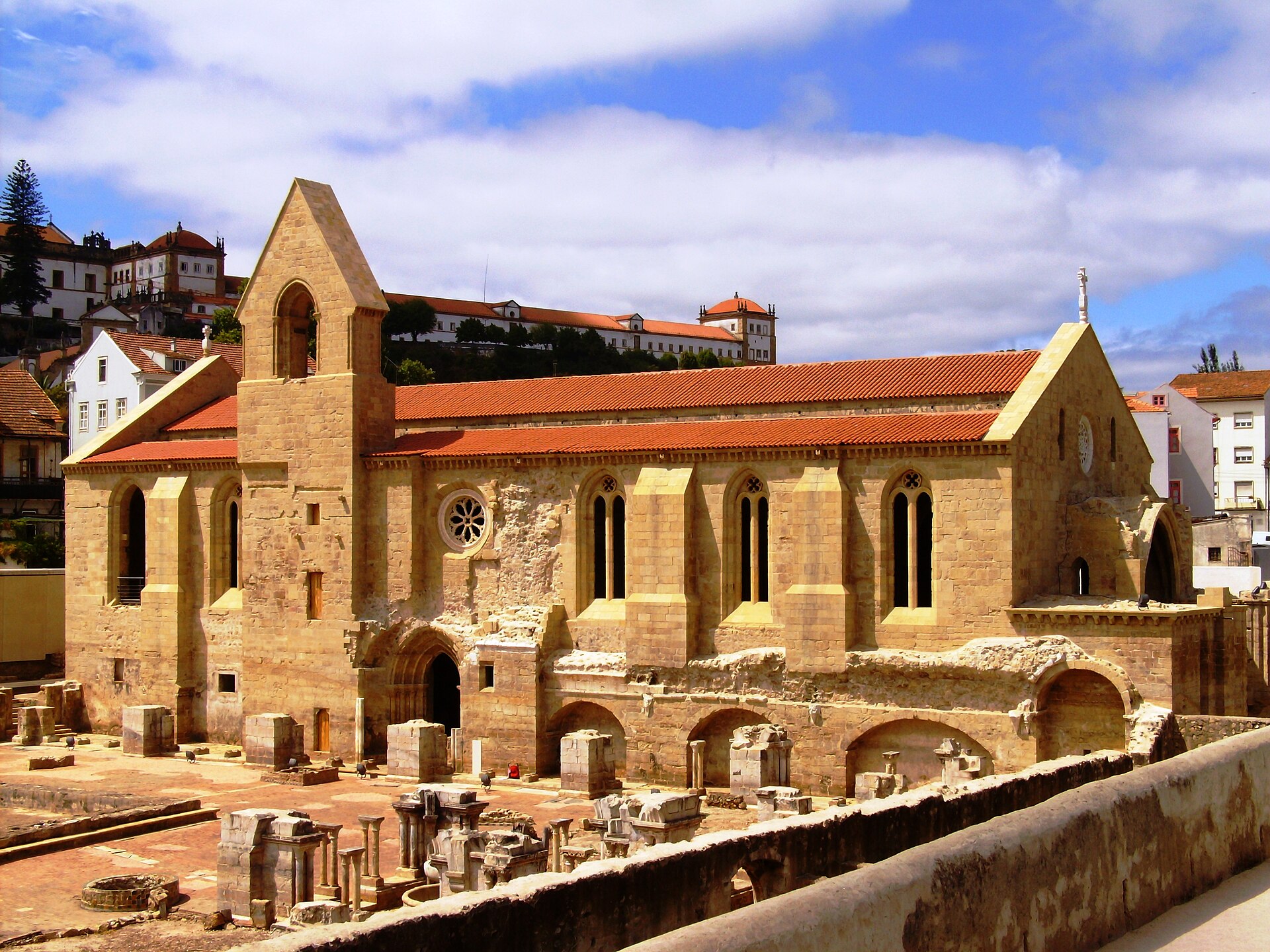
It resembles a fortress more than a church: narrow windows and battlements give it a severe, defensive look. A tall tower on the west facade blends Romanesque and Arabic elements, and heavy buttresses reinforce the corners. The interior is plain and monumental. The carved capitals show birds and four-legged animals but no human figures, which is explained by the many Mozarabic craftsmen involved, Christians who had worked in Arab lands and were unused to depicting people.
What to see inside
- Gothic main altarpiece – gilded, made by Flemish sculptors in the early 1500s, and the showpiece of the interior.
- Seville tiles – ceramic azulejos brought over in 1503.
- Cloister – dating from 1218 and considered the first in Portugal built in the Gothic style.
- Later additions – Gothic altarpieces and Baroque paintings.
Frequently asked questions
When was the Old Cathedral built? In the 12th century; construction started in 1164 and it was consecrated in 1184.
Why is it called "Old"? The name distinguishes it from the later New Cathedral of Coimbra. "Sé Velha" literally means "old cathedral".
Why are there no human figures on the capitals? Many of the builders were Mozarabic artisans, for whom depicting people was not customary.
Is the cloister worth a visit? Yes. It is the first Gothic cloister in Portugal and complements the Romanesque nave well.
Who will enjoy it? Anyone interested in history, medieval architecture and the beginnings of the Portuguese state. A visit is usually short, so it combines easily with a walk through Coimbra's old town.
Nearby places

Earn badges for the places you visit
Download NextOnTrip, discover new places and check off your trails.