About this place
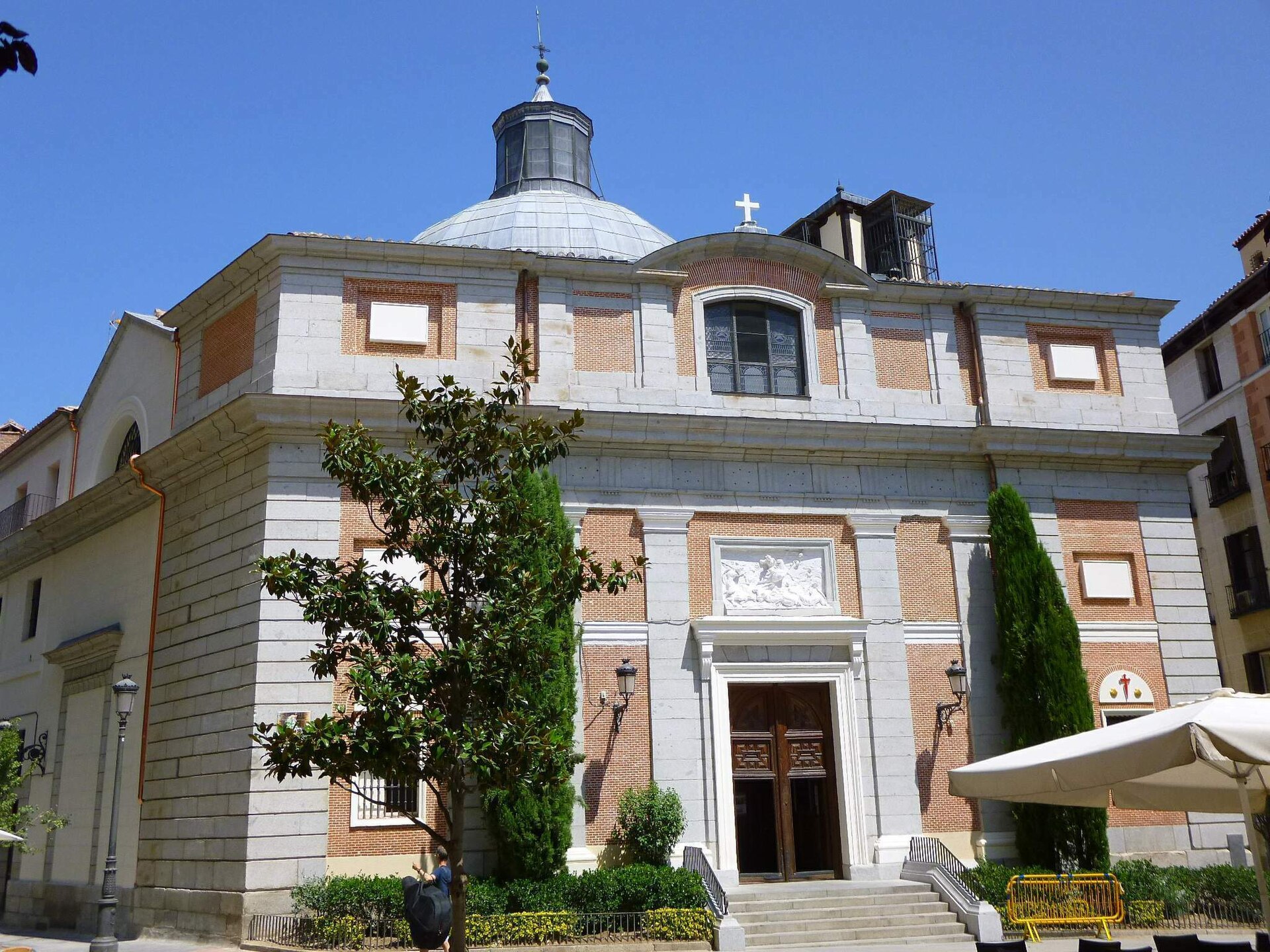
St. Isidore's Collegiate Church is a Baroque Catholic church in the heart of Madrid, standing on Calle de Toledo just steps from Plaza Mayor. Known locally as the Colegiata, it takes its name from Madrid's patron saint, Isidore the Farmhand, whose relics — along with those of his wife, Santa María de la Cabeza — are kept inside, making it one of the city's most significant places of devotion.
How do you get there?
The church sits on Calle de Toledo, a lively street running through the historic La Latina district that links Plaza Mayor with the area around the Mercado de la Cebada. It's an easy walk from Puerta del Sol, roughly ten to fifteen minutes on foot through the old town. If you'd rather take the metro, La Latina and Tirso de Molina stations are both within a short stroll of the entrance. The surrounding streets are packed with tapas bars, markets and narrow lanes, so a visit pairs naturally with exploring the rest of the neighborhood.
What will you see?
The building dates to the 17th century, when it was raised as the church of the Colegio Imperial, a college run by the Jesuit order and one of the most influential schools in Spain at the time. Its Baroque façade, framed by twin towers, remains one of the most recognizable pieces of architecture in this part of the city. Step inside and the scale is immediately striking: a single broad nave draws the eye toward the dome and main altar, where the reliquaries of the two patron saints are displayed.
After the Jesuits were expelled from Spain in 1767, the church was rededicated to Saint Isidore, and the relics of the saint and his wife were transferred here. From that point on, the building became a central place of pilgrimage for Madrid's patron, drawing residents and visitors throughout the year.
One detail surprises many first-time visitors: for close to a century, from 1885 to 1993, this church served as Madrid's provisional cathedral while the Almudena Cathedral was still under construction. That chapter of its history explains the status it still carries today as a minor basilica.
When should you visit?
The church welcomes visitors year-round, and mornings or early afternoons on weekdays tend to be the quietest times to explore the interior. The busiest date by far is May 15th, the feast day of Saint Isidore, when Madrid holds citywide celebrations and the Colegiata becomes the focal point of the religious festivities. If you prefer a calmer visit, aim for any day outside that particular week.
Frequently asked questions
Where exactly is St. Isidore's Collegiate Church located? On Calle de Toledo in the La Latina district, within Madrid's historic center, a short walk from Plaza Mayor.
Why is this church so significant to Madrid? It holds the relics of Saint Isidore the Farmhand and his wife, Santa María de la Cabeza, the city's patron saints, and it served as Madrid's cathedral for nearly a century.
Who originally built the church? It was constructed in the 17th century as the church of the Jesuit-run Colegio Imperial, before being rededicated to Saint Isidore after the Jesuits' expulsion in 1767.
Is the interior worth seeing, or just the façade? The interior is well worth the visit — the spacious nave, dome and Baroque altarpieces are just as impressive as the exterior.
Nearby places

Earn badges for the places you visit
Download NextOnTrip, discover new places and check off your trails.