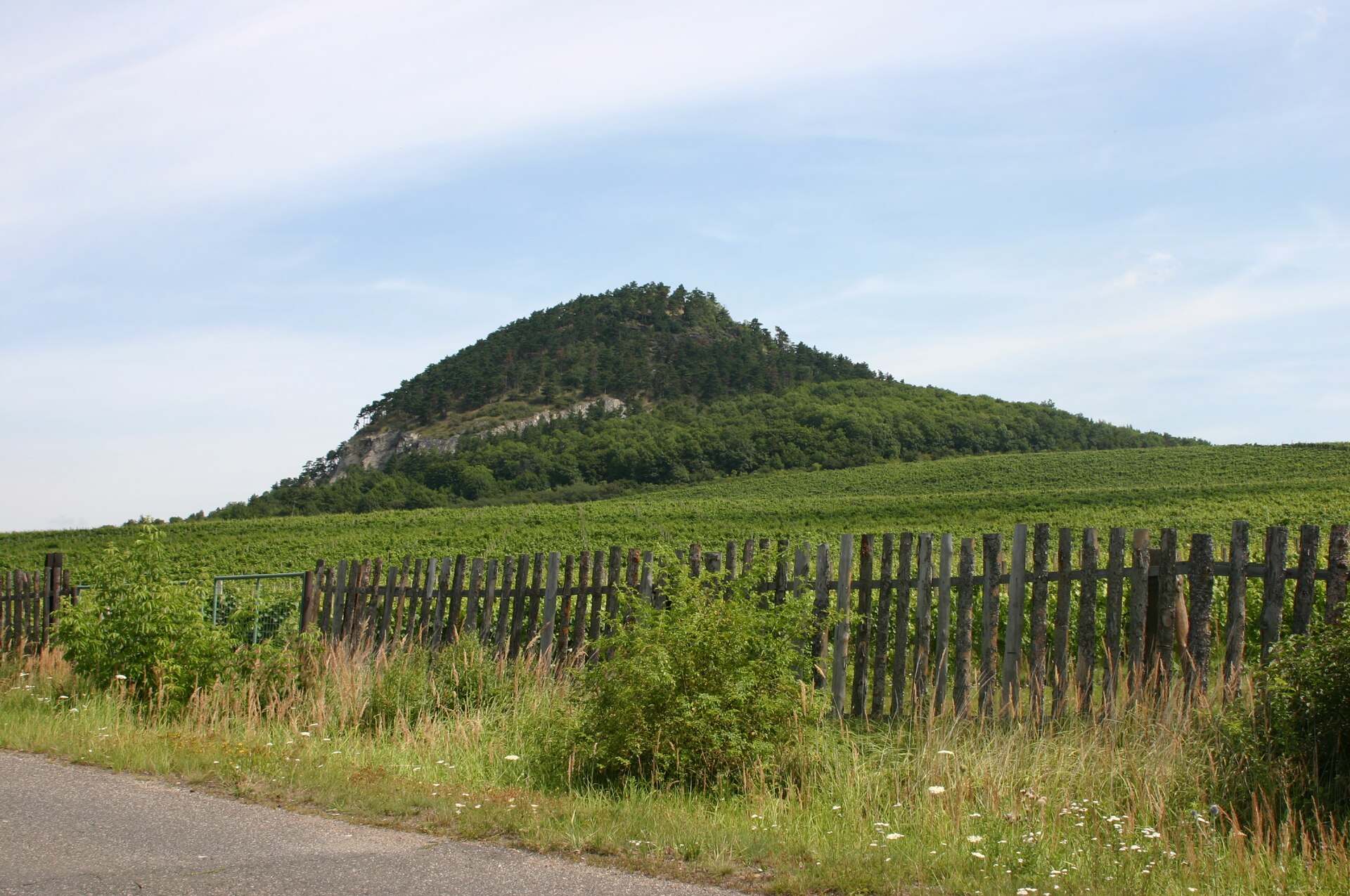
About this place
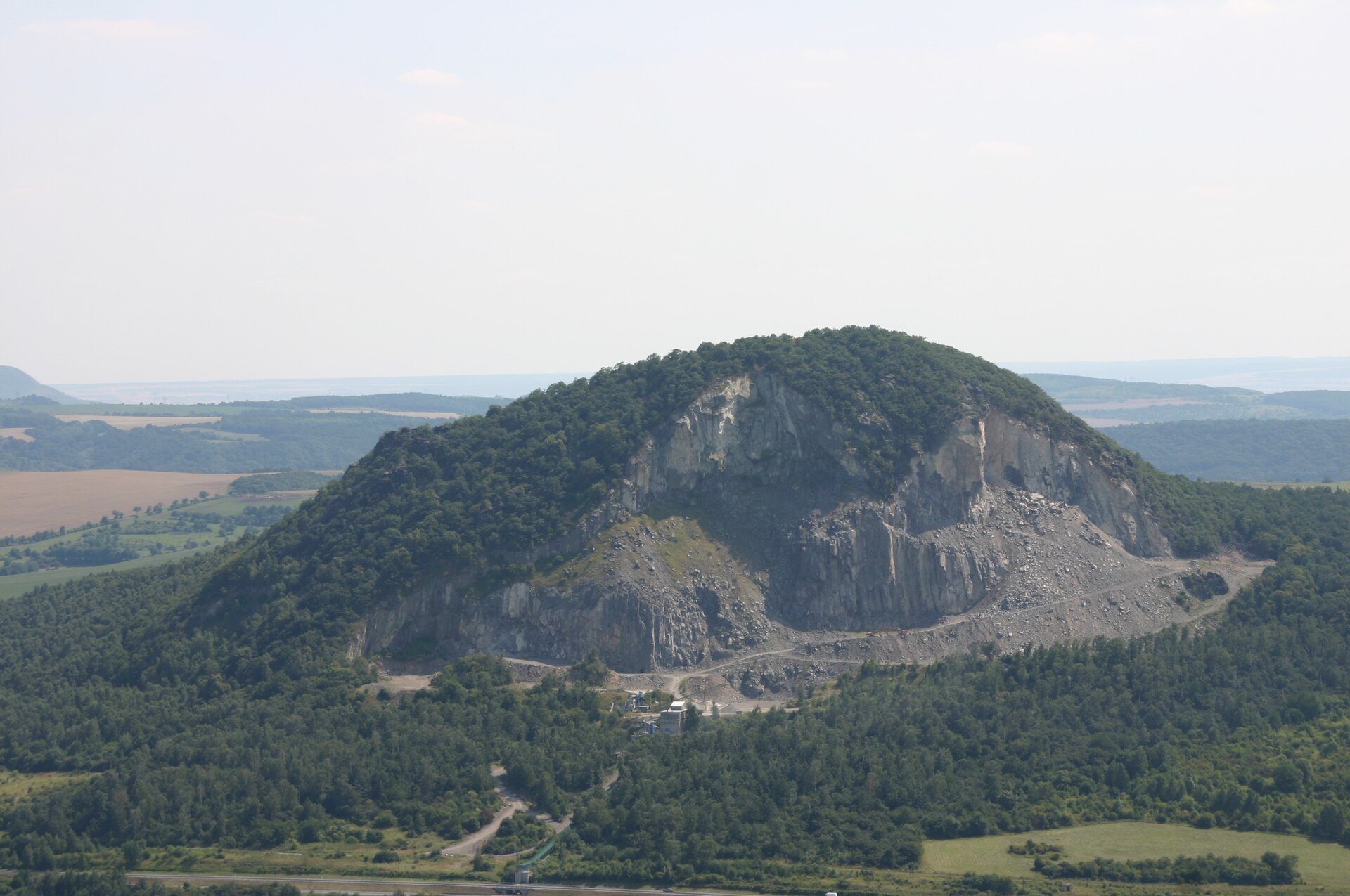
Špičák is a rocky summit rising above the town of Most, in the Ústí region of northern Czechia. This modest but distinctive hill, reaching 399 meters above sea level, combines a long history of stone quarrying with a present-day reputation as a popular rock-climbing spot.
Where is Špičák located?
The hill sits northeast of central Most, directly above the town's airport, on the massif's southern slopes. The nearest starting point for hikers is the village of Braňany, from which a trail leads up to the summit. Its coordinates are 50.5197N, 13.6678E. The area belongs to the foothills of the Ore Mountains (Krušné hory), a region long shaped by mining — both coal and stone.
How did this hill come to be?
Špičák is a remnant of Tertiary volcanic activity, built from phonolite, a hard crystalline rock estimated at around 32 million years old. Geologists note the rock carries low concentrations of nickel and chromium but noticeably elevated levels of zirconium and niobium, a composition typical of this type of volcanic rock. Because phonolite resists weathering so well, the hill has survived erosion better than the surrounding landscape, leaving today's sharply defined summit standing above the valley.
The quarry that helped build Most
A stone quarry operated on the slopes of Špičák from medieval times onward. The phonolite extracted here went into construction projects in Most itself — including, notably, the town's Gothic deanery church, a building that later became famous when it was relocated in its entirety by several hundred meters during the 20th century to make way for coal mining beneath the old town. The quarrying history of Špičák is a reminder of how closely the region's industrial landscape and its architectural heritage are intertwined.
A destination for climbers
Today Špičák is best known as a well-regarded sport-climbing area. Its rock walls, roughly 30 meters high, offer so-called "slab" routes — climbs up flat, angled rock faces — generally in a moderate difficulty range (graded roughly 3 to 6+ on the local scale). All protection points are drilled steel bolts, making the climbing here relatively approachable for properly prepared visitors. Active development of the crag dates mainly to the first decade of the 2000s: numerous first ascents have been recorded here since 2007, credited to climbers including Miroslav Vlk, Dan Hölzl, and Ladislav Vörös. A helmet is recommended, since loose rock can occasionally fall — typical for this kind of rock structure.
A view, and an unbuilt tower
No lookout tower has been built on Špičák's summit so far, though the idea has come up repeatedly in local discussions — the hill's position above the surrounding countryside and the airport naturally lends itself to serving as a vantage point over the Most valley and the Ore Mountains foothills. The site remains freely accessible to visitors, making it an appealing destination both for climbers and for anyone looking for a short walk with a view.
Frequently asked questions
How high is Špičák near Most? The summit reaches 399 meters above sea level.
What rock is the hill made of? Phonolite, a hard volcanic rock formed around 32 million years ago, with elevated zirconium and niobium content.
Can you go climbing on Špičák? Yes — it's a popular sport-climbing crag with routes up to about 30 meters, graded roughly 3–6+, protected by drilled steel bolts.
What's the connection between Špičák and the history of Most? Stone quarried here since medieval times was used to build the town, including its deanery church, which was later famously relocated due to coal mining.
How do you reach the summit? The most convenient approach starts from the village of Braňany, with a hiking trail leading up to the summit above Most Airport.
Nearby places

Earn badges for the places you visit
Download NextOnTrip, discover new places and check off your trails.