About this place
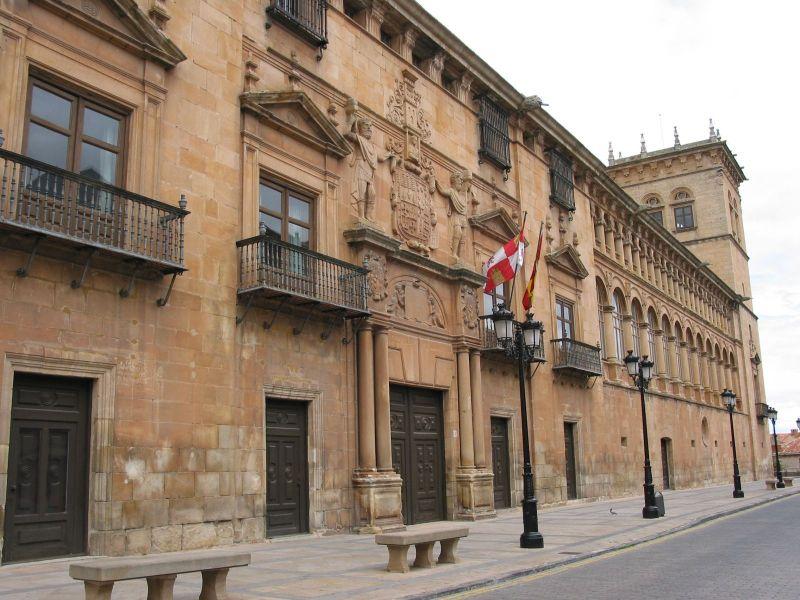
Soria town hall is the seat of local government in Soria, a city in Castilla y León on the banks of the Duero river, best known today for its lasting connection to the poet Antonio Machado.
Where is the town hall located?
The building sits in Soria's historic centre, a short walk from the Duero, which has shaped the city's layout for centuries. Soria itself is compact but dense with heritage sites, so the walk between the town hall and the riverbanks rarely takes more than a quarter of an hour, making it an easy stop on a stroll through the old town.
Why does Soria matter historically?
The earliest traces of human presence in the area date back to the Bronze Age, with pastoral groups leaving rock paintings at Monte Valonsadero, a few kilometres from the modern city. Closer still, at Numancia, the Celtiberian Arevaci held out against Roman conquest for more than twenty years before the settlement fell in 133 BC during a siege led by Scipio.
The present-day city, however, has a later origin story. In the early 12th century, King Alfonso I of Aragon, known as "el Batallador," resettled the valley between the Cerro del Mirón hill and the castle, right along the Duero. By the 11th and 12th centuries Soria had already become the head of the Extremadura region and a frontier territory between Christian and Muslim lands. In 1212, Alfonso VIII granted the city the Fuero de Soria, one of medieval Spain's most significant legal charters, which shaped municipal life there for centuries afterward.
What role has the Duero river played?
The Duero has been Soria's defining reference point since the city first took shape as a permanent settlement. Soria was founded to guard a river ford on a shifting frontier — first between Arabs and Christians, later between the kingdoms of Aragon and Castile. The river supplied water, offered a line of defence, and dictated the direction of urban growth. For centuries its banks hosted tanneries, leatherworking shops, mills, and wool-washing facilities, while religious orders settled along the water too — the Hospitallers at San Juan de Duero and the Templars at San Polo.
What is Soria's connection to Antonio Machado?
Antonio Machado lived and taught in Soria in the early 20th century, and the city's landscape — its hills, the Duero, the stark Castilian sky — became a recurring reference point in his poetry. That literary link is a large part of why Soria is remembered today not just as a medieval frontier town but as a place tied to Spanish poetry.
What else is worth seeing near the town hall?
The historic centre around the town hall sits close to sites tied to Soria's defensive and religious past, from castle remains to monastic buildings along the Duero. It's a natural starting point for exploring the old town on foot, without needing to rely on transport.
Frequently Asked Questions
Can visitors go inside Soria's town hall? The building serves an administrative function, so interior access depends on current opening hours and the purpose of the visit — it's worth checking ahead of a trip.
How far is the town hall from the Duero river? Soria's historic centre, including the area around the town hall, lies within easy walking distance of the riverbanks — typically just a few minutes on foot.
What makes Soria stand out among cities in Castilla y León? Its combination of Celtiberian remains at Numancia, a medieval Christian-Muslim frontier history, and a strong literary legacy tied to Antonio Machado.
Are there remnants of medieval military orders in Soria? Yes — the Hospitallers and Templars both had a presence along the Duero, at San Juan de Duero and San Polo respectively, and their former sites are still part of the city's landscape today.
Nearby places

Earn badges for the places you visit
Download NextOnTrip, discover new places and check off your trails.