About this place
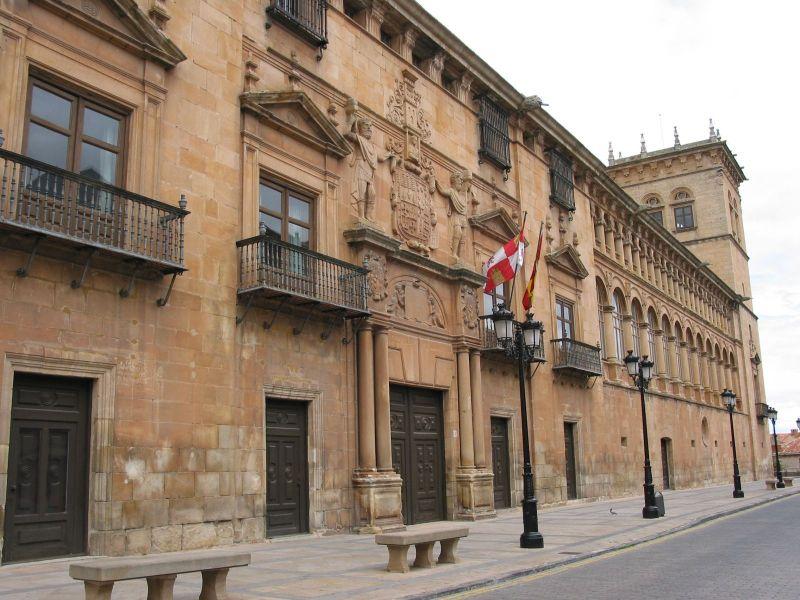
The Palace of los Ríos y Salcedo is a historic urban residence in Soria, the capital of the province of the same name, in the northeastern part of the autonomous community of Castile and León, Spain. The building was declared a Bien de Interés Cultural (BIC) in 1982, the highest category of heritage protection in the Spanish legal system, reserved for properties of outstanding historical or architectural significance. That designation alone marks the palace as a recognised part of the city's heritage, standing alongside the many other noble houses and mansions that have survived in Soria from earlier centuries.
What should you know about the palace?
For centuries, Soria was home to noble and merchant families who built stone houses and palaces across the town, many adorned with carved coats of arms and wrought-iron balconies — a common sight in the historic centres of Castilian towns from that era. The Palace of los Ríos y Salcedo belongs to this tradition as one of the residential buildings now legally protected for its historical value. BIC status means that any work carried out on the building, from routine conservation to major restoration, is subject to heritage oversight, intended to preserve its original character for future generations.
How do you get there?
Soria sits in the heart of Castile and León, in the valley of the Duero river, and is well connected by road to Madrid and other major cities in the region, such as Zaragoza and Logroño. Car or bus are the most convenient ways to reach the town, since Soria has no direct high-speed rail connection. The historic centre itself, where the palace stands, is compact and best explored on foot, wandering the narrow streets lined with the stone façades of former noble residences.
What else is worth seeing nearby?
For its size, Soria holds an unusually rich heritage. On the banks of the Duero stands the Hermitage of San Saturio, perched on a rock above the river and one of the town's best-known landmarks. Nearby lie the ruins of the Monastery of San Juan de Duero, famous for a cloister with interlacing Romanesque-Mudejar arches unlike anything else in the region. Also worth a visit are the co-cathedral of San Pedro and the Palace of the Counts of Gómara, one of the town's grandest Renaissance residences. Soria is closely associated with the poet Antonio Machado, who lived there in the early 20th century and dedicated much of his collection "Campos de Castilla" to the town and its landscapes. Just outside the town lies the archaeological site of Numantia, renowned for its ancient resistance against Roman forces.
When should you visit?
Castile and León has a continental climate, with cold winters and hot summers, so spring and early autumn are the most pleasant times to explore Soria and its historic sites — including the old town where the Palace of los Ríos y Salcedo stands — when temperatures are milder and the town is quieter than during the peak of summer.
Frequently Asked Questions
What does Bien de Interés Cultural status mean? It is the highest level of legal heritage protection in Spain, granted to buildings of outstanding historical or architectural value — the Palace of los Ríos y Salcedo received this designation in 1982.
Is the palace located in central Soria? Yes, the building stands in Soria, the capital of the province of the same name, surrounded by other historic houses and mansions in the town's old quarter.
What else can you see in Soria besides the palace? The Hermitage of San Saturio, the ruins of the Monastery of San Juan de Duero, the co-cathedral of San Pedro, and the Palace of the Counts of Gómara, all within short distance of one another in the town.
What's the best way to reach Soria? By car or bus from Madrid or other cities in the region, as Soria has no direct high-speed rail link.
Nearby places

Earn badges for the places you visit
Download NextOnTrip, discover new places and check off your trails.