About this place
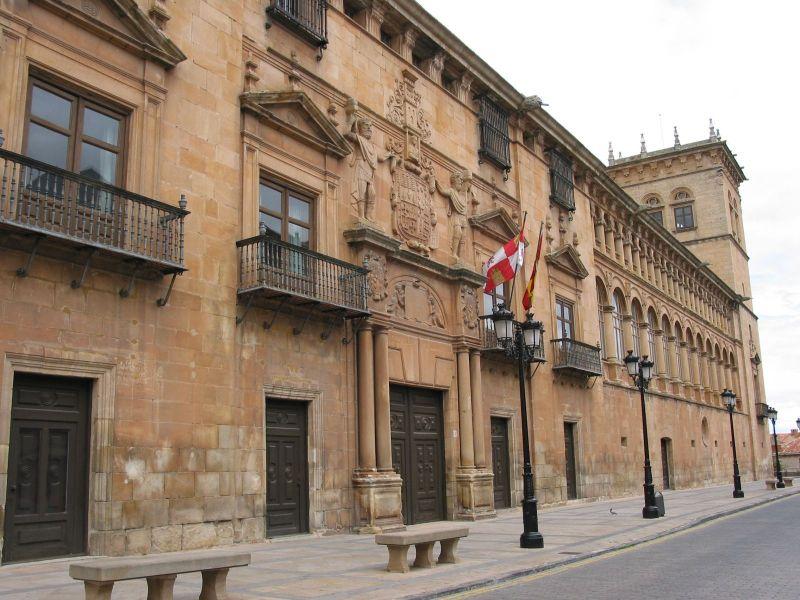
The Palace of los Condes de Gómara is a 16th-century noble residence in Soria, a historic town in the Castile and León region of northern Spain. It belongs to a small group of Renaissance-era city palaces that have survived in Soria, standing as evidence of the wealth accumulated by local noble families during Spain's Golden Age.
Where exactly is it located?
The palace sits within Soria's historic center, a town on the banks of the Duero river, surrounded by the high, austere plateau landscape typical of this part of Castile. Its coordinates are roughly 41.7647°N, -2.4646°W, placing it right in the middle of the old town, within walking distance of Soria's other heritage sites.
How do you get there?
Soria isn't served by high-speed rail, so the most practical way to reach it is by car or long-distance bus, with direct connections to Madrid, Zaragoza, and Logroño. Once in town, the palace — like most of Soria's landmarks — sits in the pedestrian-friendly old quarter, so it's best to park near the center and continue on foot. Soria itself is compact enough that crossing the entire historic core rarely takes more than 20–30 minutes.
What's the story behind the building?
The palace was built in the 16th century as the residence of a family holding the title of Counts of Gómara, one of the noble titles granted in Castile during that period. Buildings of this kind were raised across Spain as a statement of social status: once the Reconquista era gave way to a more consolidated royal power, noble families increasingly invested in grand urban residences that combined a home with a public display of prestige. Today the palace is listed as a cultural property in Soria, confirming its recognized value as a piece of the region's architectural and historical heritage.
What will you see on site?
Visitors encounter architecture typical of a 16th-century Castilian noble residence — a representative stone facade and the kind of layout common to city palaces of the period, where formal reception spaces were combined with more functional service areas. It's worth pairing a visit to the palace with a walk through the rest of historic Soria, a town known for its Romanesque churches, remnants of its old defensive walls, and atmospheric old-town streets that together paint a coherent picture of a medieval-to-Renaissance Castilian city.
When is the best time to visit?
The most comfortable conditions for exploring Soria and its monuments fall in spring (April to June) and early autumn (September to October), when temperatures are mild and the region hasn't yet entered its harsh Castilian winter. Summer days can get hot, while winter here is notably cold by Spanish standards — Soria is one of the country's chillier towns, which is worth factoring in if you're planning a trip outside the summer months.
Frequently asked questions
Can you visit the inside of the palace? Access to the interior depends on the building's current use and any visiting arrangements in place — it's worth checking current details locally or with Soria's tourist information office before your visit.
How long does it take to see the palace? Viewing the exterior takes only a few minutes, but it's worth allowing extra time for a longer walk through Soria's historic center to see the palace in context alongside the town's other buildings.
Is there an entrance fee? Access conditions depend on the building's current status and function — it's best to confirm this locally, since buildings of this type are sometimes open only partially or on an occasional basis.
What else is worth seeing in Soria nearby? The surrounding historic center holds other landmarks, including Romanesque churches and remains of the old city walls — Soria is best explored on foot, linking several sights together into a single walking route.
Nearby places

Earn badges for the places you visit
Download NextOnTrip, discover new places and check off your trails.