About this place
Solar del Cid is a small but meaningful square in Burgos that marks the spot where, according to local tradition, the house of Rodrigo Díaz de Vivar — the legendary knight known as El Cid — once stood. It sits on Calle Fernán González, right in the heart of the old town, along the natural walking route between the cathedral and other landmarks tied to his story.
What will you actually see there?
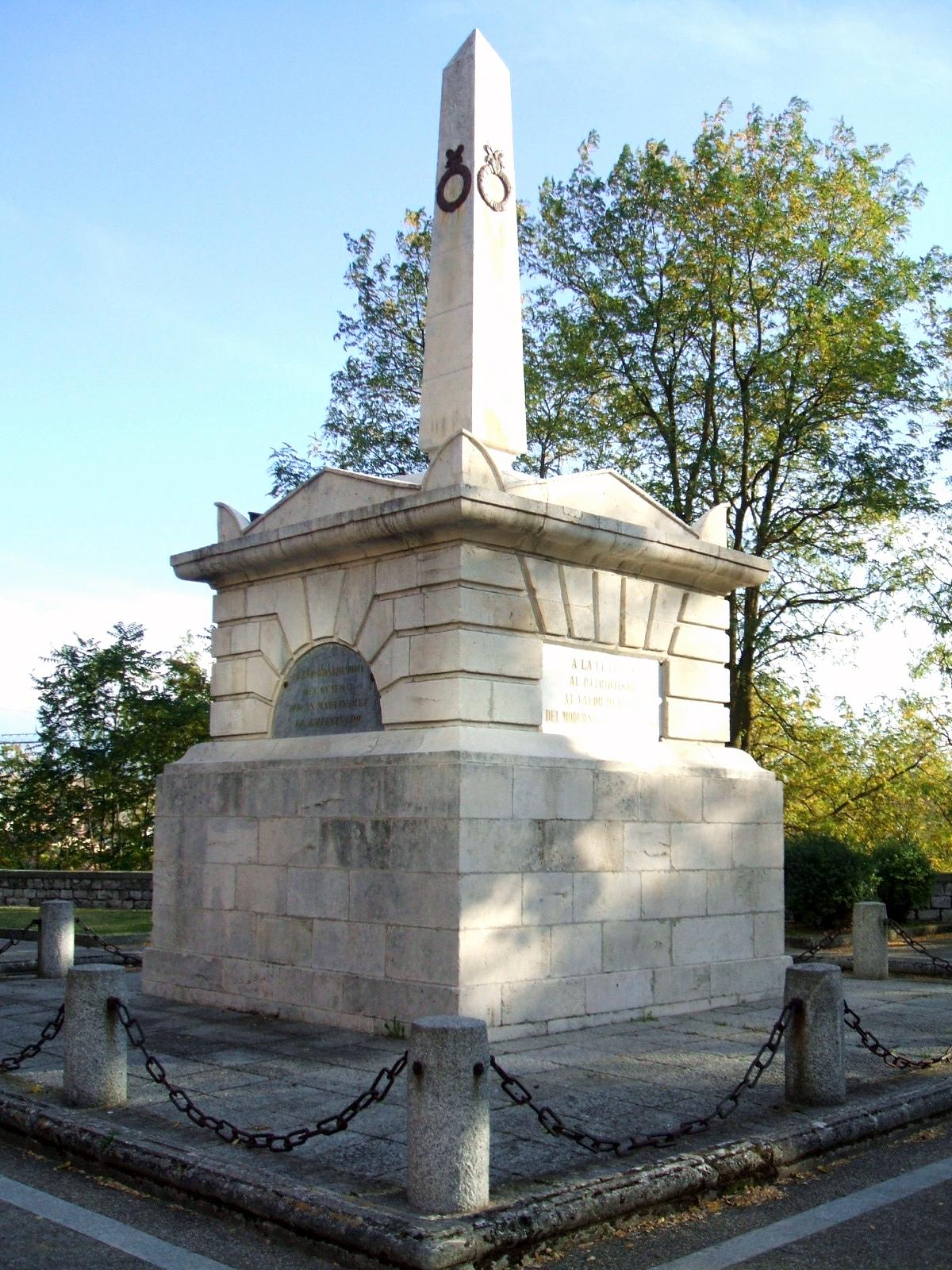
The monument standing today isn't the original house. It was built in 1784, designed by architect José Cortés del Valle, on the very plot where the Cid's residence is said to have been. Interestingly, some of the stones from that earlier building were reused in the new structure, so the monument literally carries a physical trace of the medieval house it replaces.
The design is built from three stone blocks brought from Hontoria de la Cantera, a quarry town near Burgos. The central block is the focal point: it bears El Cid's coat of arms along with an inscription noting the dates of his birth and death. Two flanking obelisks display the coats of arms of the city of Burgos and of the knight himself. Together they form a console-shaped composition that, despite its modest scale, has an almost altar-like formality.
The square around the monument has been refreshed in recent years, with new paving that also improved safety near the nearby school, which shares the same name — Colegio Solar del Cid.
How do you get to Solar del Cid?
The square sits inside the fully walkable historic center of Burgos, so the easiest approach is on foot from the cathedral or from the main downtown squares — it's only a few minutes along Calle Fernán González. There's no dedicated visitor parking here, and car access in this part of town is limited, so it's best to park on the edge of the old quarter and cover the last stretch on foot. The coordinates are roughly 42.3414, -3.7106.
When is the best time to visit?
Solar del Cid is an open public square, available year-round with no tickets and no opening hours to worry about. Early morning or late afternoon tends to work best, when the light falls nicely on the stone monoliths and the area is quieter. It pairs naturally with a visit to the nearby cathedral and other sites connected to the Cid legend, since the whole route between them can be covered on foot in a short walk.
Frequently asked questions
Is this the original house of El Cid? No. The house where Rodrigo Díaz de Vivar is said to have lived no longer exists. The current monument dates from 1784 and was erected on the same site, partly using stones from the earlier building.
How long does a visit take? It's a compact square built around a single monument, so a few minutes is enough to take it in. Most visitors treat it as a short stop on the way between other attractions in old Burgos.
Is there an entrance fee? No, it's a public open space, free to visit at any time.
What do the symbols on the monument mean? The central stone carries El Cid's coat of arms together with an inscription marking his birth and death, while the two side obelisks show the coats of arms of Burgos and of the knight, underlining the city's connection to his legend.
Nearby places

Earn badges for the places you visit
Download NextOnTrip, discover new places and check off your trails.