About this place
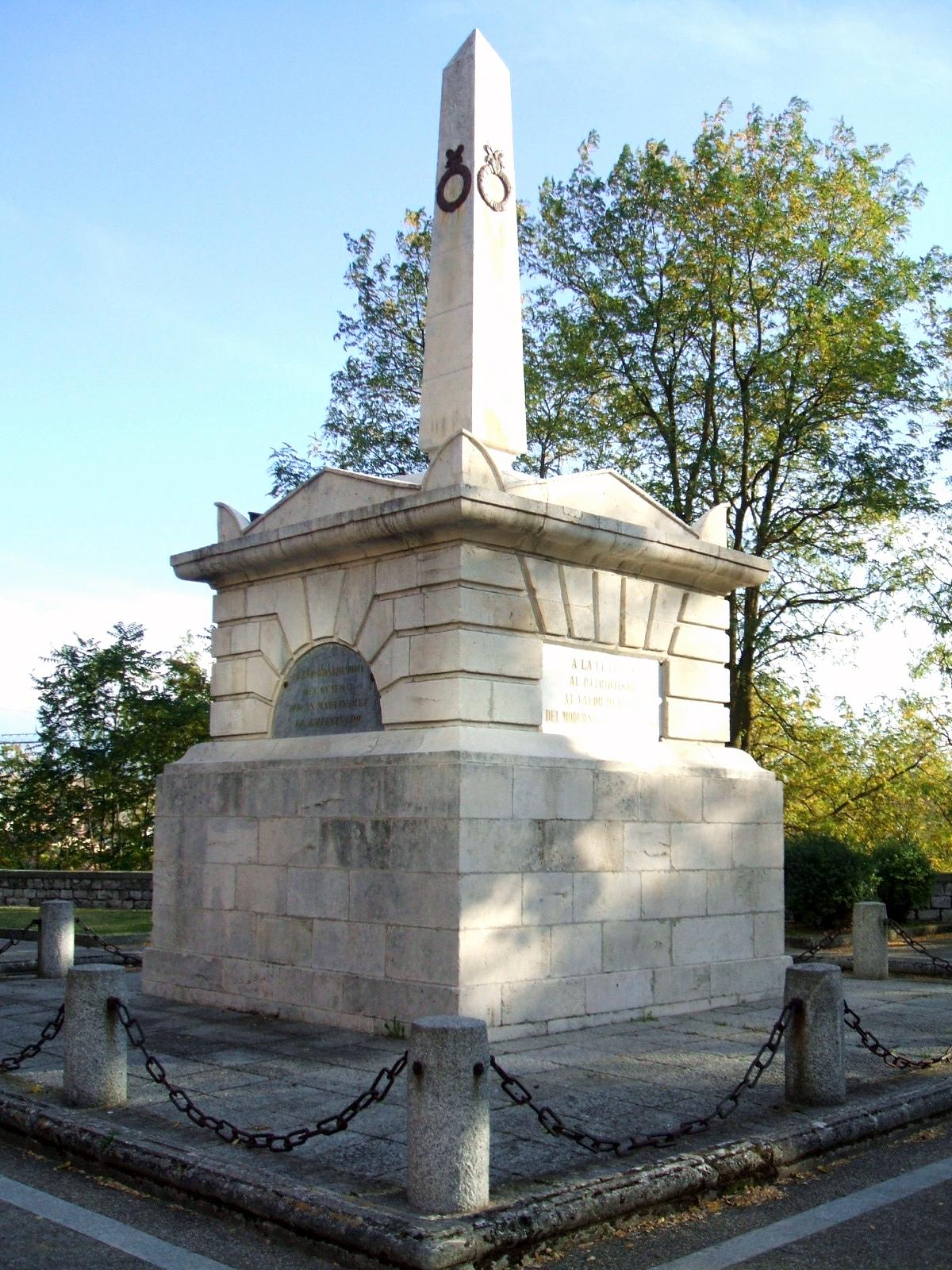
The Monument to El Empecinado stands on Calle Fernán González in Burgos, right in the heart of the historic old town, and ranks among the city's most notable tributes to a hero of the Spanish War of Independence.
Who was El Empecinado?
The monument honors Juan Martín Díez, nicknamed "El Empecinado," one of the most famous guerrilla leaders who fought against Napoleon's forces during the Peninsular War. He was born in 1775 in Castrillo de Duero, in the province of Valladolid, and died in 1825 in Roa, in the province of Burgos. His nickname — roughly translating to "the stubborn one" — eventually became a family surname: his son, who petitioned for the monument's construction, signed himself Juan Martín Empecinado.
Where did this monument come from?
The story begins in 1837, when the Spanish Cortes approved a resolution to build a monument following a petition from the guerrilla leader's son. The monument itself, a plain monolithic obelisk, was formally unveiled in 1848. His remains were placed inside, which makes the site both a monument and a mausoleum.
What will you see there?
The monument follows a neoclassical style — a stark, geometric obelisk with little ornamentation, typical of mid-19th-century tributes to national heroes. Inscriptions on the base recall his role in resisting the French occupation. The site offers a quiet moment of reflection, standing in contrast to the Gothic cathedral and medieval streetscape that dominate this part of Burgos.
How do you get there?
The monument sits on Calle Fernán González, right in the old town, just a few minutes' walk from Burgos Cathedral and the other main landmarks of the historic center. It's a natural stop while exploring downtown — no special trip is needed, just a walk through the old quarter.
When should you visit?
Since the monument stands in an open public space, it can be seen year-round at any hour. Spring and autumn offer the best conditions for photography and quiet sightseeing, with milder temperatures and fewer crowds than midsummer. Consider pairing your visit with an afternoon stroll through the old town, when the light works best for photographing the stone obelisk.
Why is this monument worth seeing?
El Empecinado symbolizes Spanish resistance to the Napoleonic occupation and forms part of the broader story of the War of Independence, which left a deep mark on the history of the Burgos region. For anyone interested in 19th-century history and the Peninsular War campaigns, this is a small but meaningful stop — easy to fit into a walk without needing a dedicated excursion.
Frequently asked questions
Is there an entrance fee for the monument? No, the monument stands in an open public space and can be visited free of charge at any time of day.
Are El Empecinado's remains actually inside the monument? Yes, following its unveiling in 1848, Juan Martín Díez's remains were placed inside, making the site both a monument and a mausoleum.
How much time should I set aside? It's a compact site — a few minutes are enough to read the inscriptions and view the obelisk. It works well as a brief stop on a walking route through the old town.
Should I combine this with other attractions in Burgos? Yes, the monument is close to the cathedral and the main sights of the historic center, so it fits naturally into a route through the old part of the city.
Nearby places

Earn badges for the places you visit
Download NextOnTrip, discover new places and check off your trails.