About this place
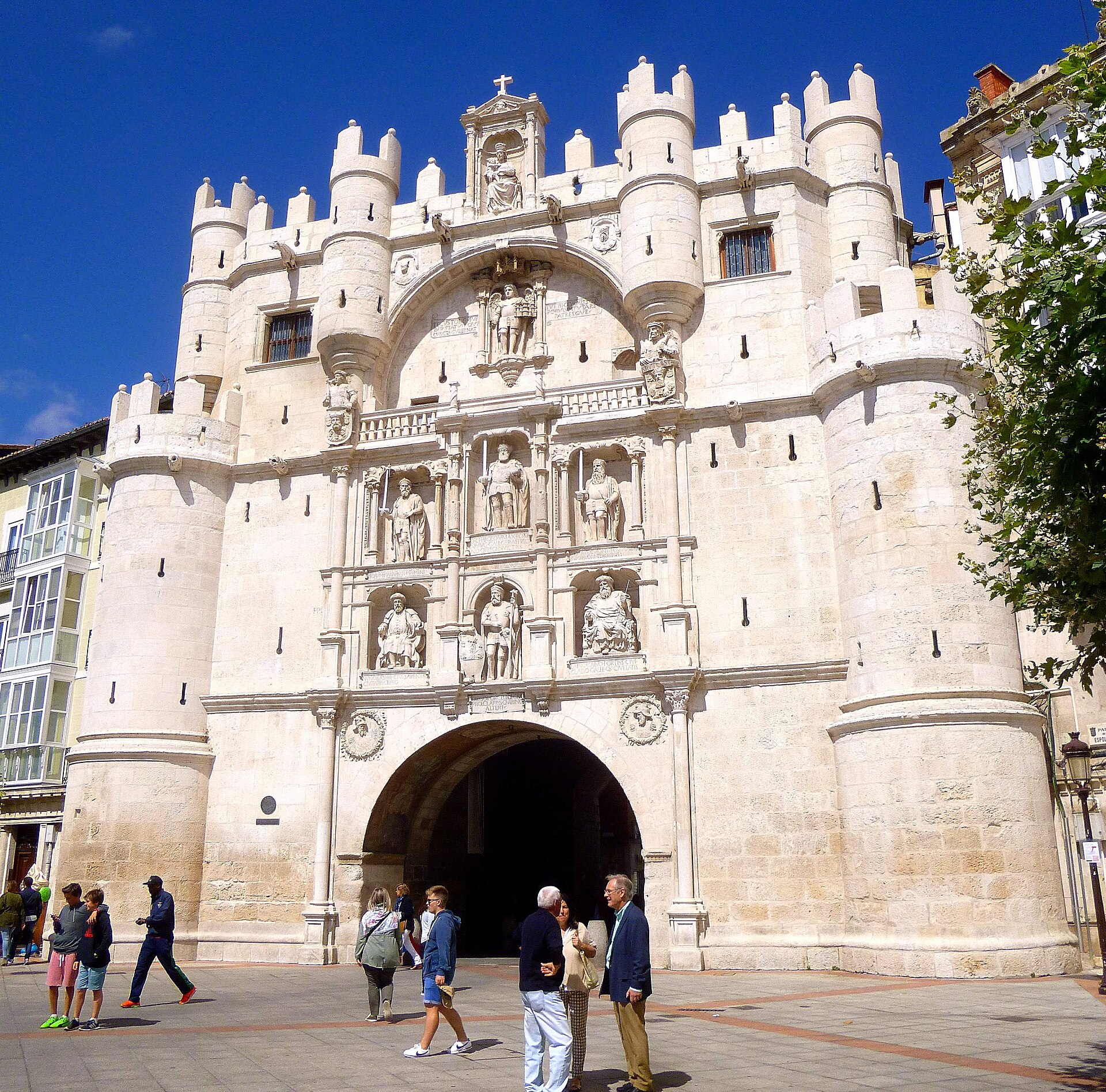
Arco de Santa María is a monumental city gate in Burgos, one of twelve that once guarded the medieval city and today the most recognizable entrance to its historic center.
What is the history behind the gate?
The original gate was part of Burgos's defensive city walls. It gained its current, monumental appearance in the 16th century, when it was rebuilt on the orders of Emperor Charles V. This rebuilding wasn't arbitrary: the citizens of Burgos had backed the emperor during the Revolt of the Comuneros, and the renewed gate became a kind of thank-you and a public statement of the city's loyalty to the crown. What had been a defensive structure turned into a ceremonial triumphal arch, dressed in an elaborate stone facade.
What will you see on the facade?
The facade reads like a stone gallery of figures central to the history of Burgos and Castile. Charles V occupies the middle position, flanked by two men of deep regional significance: Count Fernán González, regarded as the founder of Castile's independence, and El Cid, the most famous knight of medieval Spain and closely tied to Burgos. Above them stand Laín Calvo and Nuño Rasura, the legendary 9th-century "Judges of Castile," who by tradition are the forefathers of El Cid and Fernán González respectively. Completing the composition is Diego Rodríguez Porcelos, credited with founding Burgos in 884. Together, the figures form a kind of history lesson carved in stone — from legendary origins, through the age of the Castilian counts, to the Habsburg era.
How do you get to Arco de Santa María?
The gate stands right in the center of Burgos, on the bank of the Arlanzón river, and serves as the natural gateway into the old town from the Puente de Santa María bridge. It's an easy walk of a few minutes from most hotels in the city center. It also makes a convenient starting point for further sightseeing, since Burgos Cathedral and other landmarks of the historic center are just a short walk away.
When is the best time to visit, and how long does it take?
The gate can be viewed at any time, since it's part of the open cityscape with no fixed opening hours. The best light for photographing the facade is early morning or late afternoon, when the sun hits the stone figures at an angle that brings out the carved detail. A visit typically takes just a few minutes, but it's worth pairing it with a walk along the Arlanzón river and further exploration of the old town.
Frequently asked questions
Is there an entrance fee for Arco de Santa María? No. It's a piece of urban architecture viewed from the outside, with no ticket or booking required.
Who are the figures on the facade? Charles V stands at the center, flanked by Fernán González and El Cid, with the legendary Castilian judges Laín Calvo and Nuño Rasura above them, alongside Diego Rodríguez Porcelos, the city's founder.
Why was the gate rebuilt specifically in the 16th century? Because the people of Burgos supported Emperor Charles V during the Revolt of the Comuneros, and the rebuilt gate was meant to showcase the city's loyalty to him.
Is it easy to combine with other Burgos sights? Yes. The gate sits right in the center, close to the cathedral and the main landmarks of the old town, making it a natural stop on any walking route through the historic quarter.
Nearby places

Earn badges for the places you visit
Download NextOnTrip, discover new places and check off your trails.