About this place
Smrček is a forested summit rising to 859 metres above sea level, standing above Czeladna on the Czech side of the Silesian-Moravian Beskids. It belongs to the Smrk massif, one of the best-known ranges in this part of the Beskids, and appeals to hikers who want a quiet, wooded walk away from the crowds drawn to the region's taller peaks.
Where exactly is Smrček?
The summit sits between the villages of Ostravice and Czeladna, in the Frýdek-Místek district of the Moravian-Silesian Region. It's a secondary peak of the massif whose highest point is Smrk (Great Smrk) — at 1,277 metres the second-highest summit in the entire Silesian-Moravian Beskids. Smrček lies right next to it, and within a stretch of less than a mile and a half sit two more minor tops belonging to the same massif: Smrček SV (838 m, roughly 300 metres away) and Malý Smrček (712 m).
How do you get up there?
Marked hiking trails lead to Smrček from both Czeladna and Ostravice, the two villages at the foot of the massif on the Moravian side of the border. The climb needs no special gear or climbing experience — it's a straightforward forest walk suitable for anyone with average fitness. There's no chairlift and no mountain hut at the top, so it's worth carrying enough water and food, especially if the plan is to continue toward the massif's main summit, Smrk.
What will you actually see up there?
The top of Smrček is densely wooded, so don't expect sweeping panoramas — this is a spot for quiet forest walking rather than viewpoints. The summit itself is marked by a modest, roughly one-metre stone cairn and a wooden sign bearing its name, which makes it easy to identify even under thick tree cover. The old spruce stands typical of the higher parts of the Silesian-Moravian Beskids are the reason the surrounding Smrk massif has, since the late 1990s and early 2000s, gained several nature reserves protecting these relatively undisturbed patches of forest.
Who is this hike for?
Smrček suits visitors who'd rather skip the busier trails leading to the region's highest peaks while still getting a genuinely forested, unhurried Beskid experience. It works well as a standalone few-hour outing from Czeladna, but it can equally serve as a waypoint on the way to the much taller Smrk next door, for anyone wanting to link both summits into a single ridge route.
When's the best time to visit?
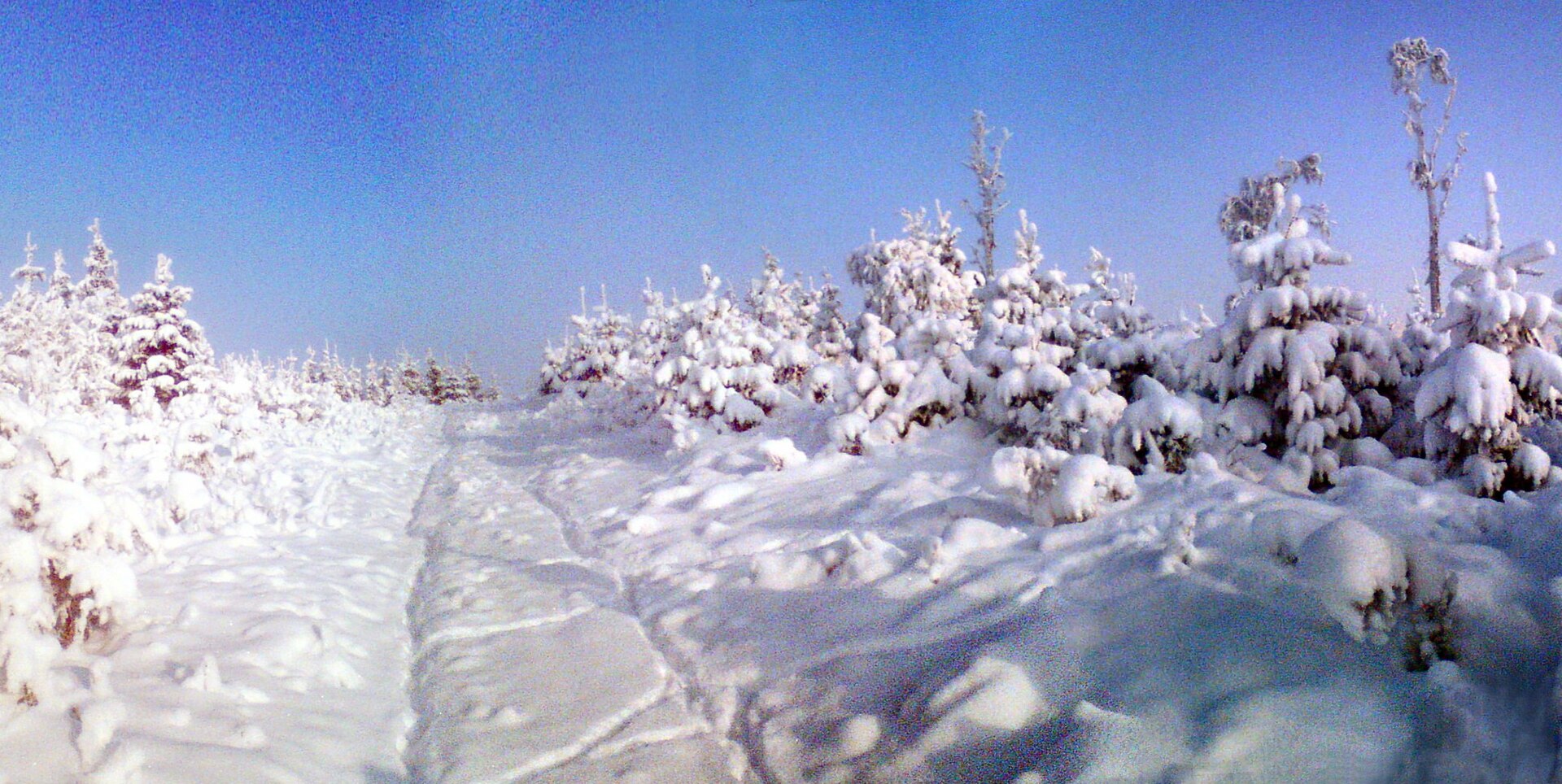
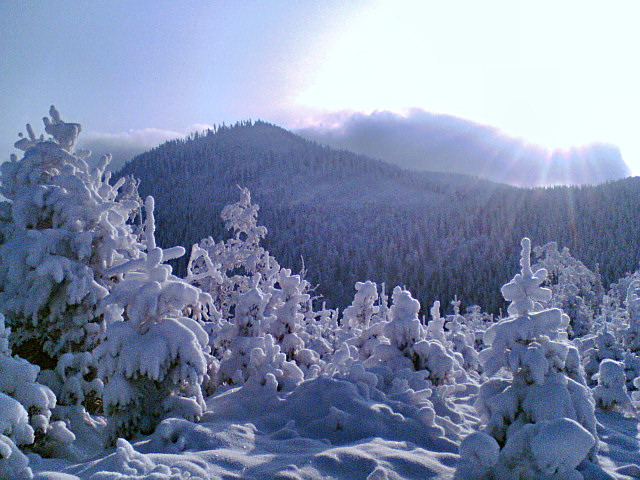
May through October is the most reliable window, when the forest paths are dry and easy to walk. In autumn the mix of dark spruce and deciduous trees around Smrček gives the woods an extra dose of colour. In winter the route calls for proper footwear and caution — paths can ice over, and the waymarking is harder to spot under snow.
Frequently asked questions
How high is Smrček? The summit reaches 859 metres above sea level and is one of the secondary peaks of the Smrk massif in the Silesian-Moravian Beskids.
Are there views from the top of Smrček? No — the summit is densely forested, so there's no panoramic outlook. It's a hike for people who enjoy quiet woodland rather than viewpoints.
Where's the best starting point for the climb? Marked trails start from both Czeladna and neighbouring Ostravice, the two villages at the foot of the massif on the Czech side.
Can Smrček be combined with a climb of Smrk? Yes — the massif's main summit, Smrk (1,277 m), lies only about 1.5 km from Smrček, making it easy to combine both peaks in a single, longer ridge hike.
Nearby places

Earn badges for the places you visit
Download NextOnTrip, discover new places and check off your trails.