About this place
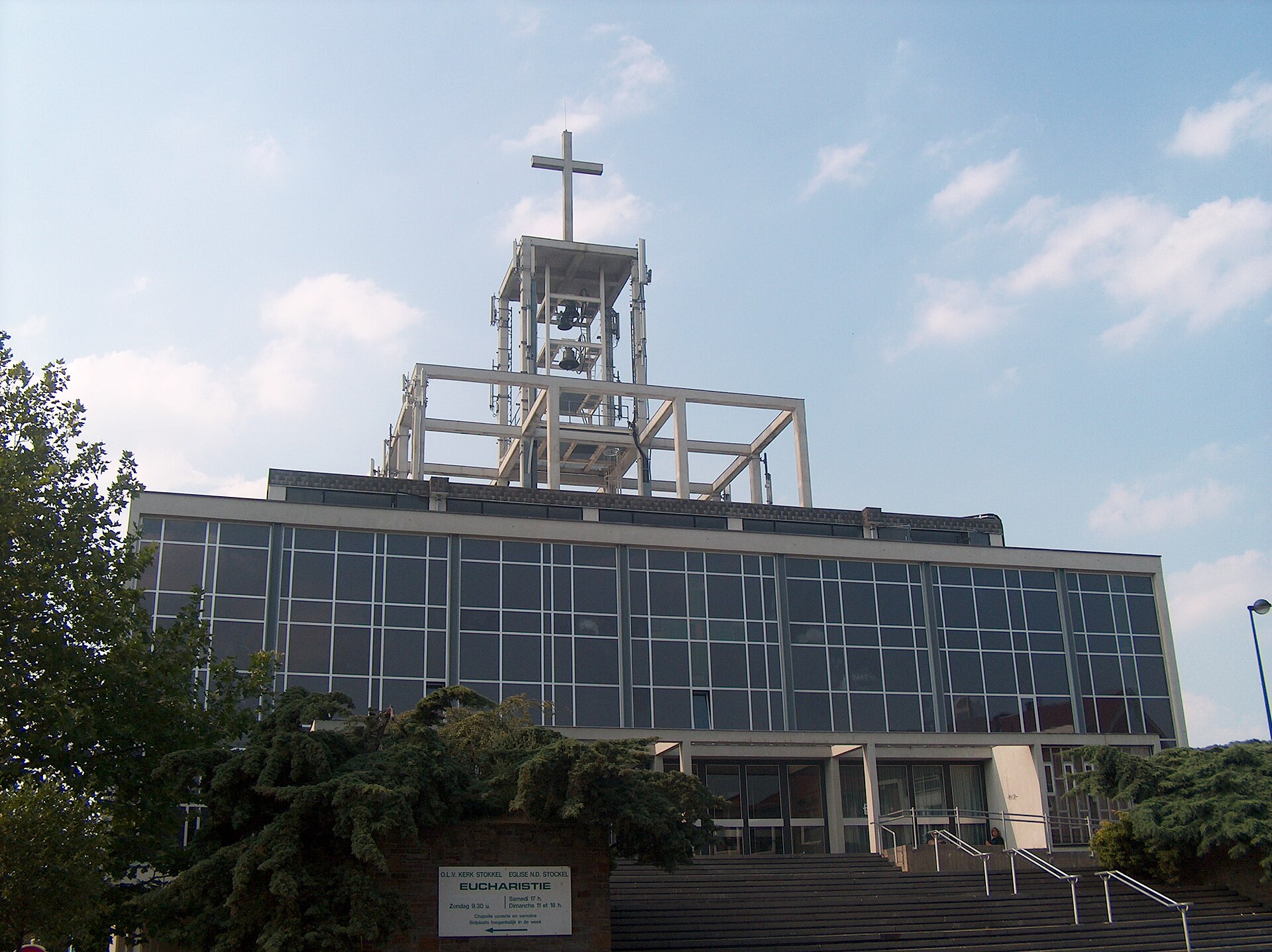
Sint-Jozefskerk is a modernist parish church in Wezembeek-Oppem, a municipality on the eastern edge of Brussels in the Flemish Brabant province. It stands at the heart of the Schone Lucht neighborhood (also known as Bel Air), inside what is called the Residentiepark, a planned residential quarter that took shape here in the mid-20th century.
Where did this church come from?
After the Second World War, Wezembeek-Oppem saw rapid population growth. The development of the Kapelleveld district, locally known as Schone Lucht or Bel Air, drew in new residents, many of them French-speaking. To serve this growing community, a temporary chapel was first set up at the corner of Oppemlaan and Schone Luchtlaan — a stopgap solution meant to last only until a proper church could be built.
The decision to build a permanent church came at the end of the 1940s. In 1949, architect Robert Schuiten was commissioned to design a new church together with a sacristy for the emerging "bourgeois centre" of the Residentiepark development. Construction began in 1956, and the church was completed in 1957 — conceived from the start as a fully-formed modernist parish church rather than a temporary structure.
What is the setting around the church?
Sint-Jozefskerk was never meant to stand in isolation; it was planned as part of a larger, coherent urban design typical of its era. Its immediate surroundings include single-family houses, a parish hall, a library, and a neighborhood school. This combination — church, school, library, and parish hall clustered around a shared space — was a common pattern in post-war Belgian neighborhood planning, aimed at creating compact, self-sufficient centres for a new local community.
Why does the architecture matter here?
The design is the work of Robert Schuiten, an architect working in the mid-20th-century modernist idiom. The church was built during a period when Belgium, like much of Western Europe, saw a wave of new churches with bold, contemporary forms, moving away from the neo-Gothic conventions of earlier decades toward simpler volumes and modern building materials. Sint-Jozefskerk fits squarely into this trend: it responded to a specific, freshly created pastoral need in a brand-new neighborhood, rather than continuing an older parish rooted in the municipality's historic centre.
What should visitors know about the surrounding area?
The church sits in the eastern part of Wezembeek-Oppem, in a quiet, green residential district set apart from the municipality's main administrative centre. It is a worthwhile stop for anyone interested in post-war religious architecture and the planned suburbs around Brussels — Schone Lucht/Bel Air is an example of a neighborhood designed from scratch in the 1950s, where the church served as the central reference point for its new community.
Frequently asked questions
When was Sint-Jozefskerk built? Construction began in 1956 and the church was completed in 1957.
Who designed the church? Architect Robert Schuiten, commissioned for the task in 1949.
Why was it built in this particular location? Because of the post-war influx of residents into the newly developed Kapelleveld/Schone Lucht (Bel Air) district, which until then had been served only by a temporary chapel.
What else can be found nearby? A parish hall, a library, and a neighborhood school, all designed as part of the same post-war neighborhood plan.
Nearby places

Earn badges for the places you visit
Download NextOnTrip, discover new places and check off your trails.