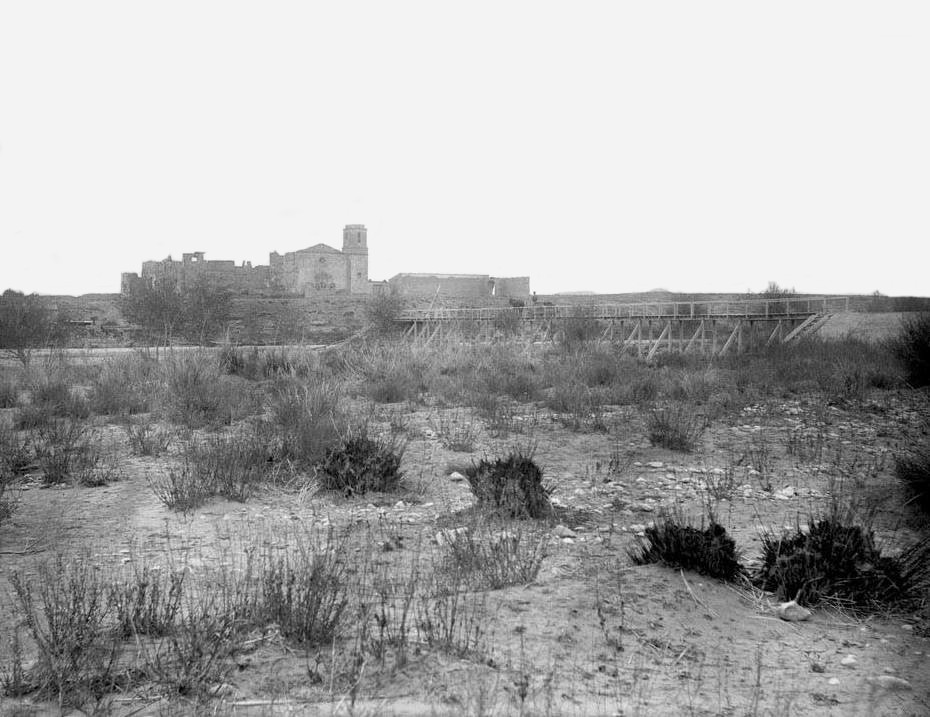
About this place
Santa Maria d'Escarp is a medieval Cistercian monastery in the municipality of Massalcoreig, in the Segrià region of Catalonia, standing on the right bank of the Segre River just before it meets the Cinca. Today its ruins sit on the edge of the Escarp plain, at a spot where routes along both rivers have crossed for centuries.
How do you get there?
Massalcoreig lies in western Catalonia, close to the border with Aragon, not far from Fraga and Mequinensa. The easiest way in is by car, via local roads branching off the route between Lleida and Fraga, both of which connect to the region's larger transport hubs. From the centre of Massalcoreig, a short road leads toward the Segre valley and the monastery site; since the ruins sit off the main track on land that may be private or agricultural, it's worth checking current access with the town hall before setting off.
What will you see?
The best-preserved part of the complex is its tower, built in regular ashlar stonework, along with fragments of the church and outbuildings. Much of what stands today reflects a neoclassical rebuilding in the 17th and 18th centuries, layered over the original medieval structure. The whole complex is now in ruins — a state that itself appeals to visitors drawn to historic architecture and sites with a long, layered past rather than polished restorations.
A brief history
The site was recorded as early as 1082 as a Saracen almúnia (agricultural estate) within the territory of Escarp castle. Everything changed in 1212, when King Peter II of Aragon (Peter the Catholic) granted the land to Abbot Arnau of Cîteaux so he could establish a daughter house of the mother abbey of Cîteaux. The new foundation gained influence quickly: in 1223 it took part in transferring the monastery of Lavaix to the Cistercian order, and in 1227 it founded its own priory, Santa Susanna, in Maella, just across the border in Aragon.
The 13th and 14th centuries were the monastery's most prosperous period. From the 15th century onward, though, it entered a slow decline under a succession of commendatory abbots — figures who held the title without necessarily living at or actively developing the monastery. By the mid-16th century, Santa Maria d'Escarp had come under the authority of the great abbey of Poblet, one of Catalonia's most important Cistercian centres. A reduced community held on for several more centuries, until the Spanish confiscation of monasteries in 1836 brought its life as an active religious institution to an end.
When should you visit?
Given the open, agricultural landscape around Massalcoreig, spring and autumn are the best times to visit, since summers here run hot and dry. It's worth pairing a stop at the monastery ruins with a visit to Massalcoreig itself and nearby villages along the Segre and Cinca rivers, turning the trip into a full day exploring the history of the Segrià region.
Frequently asked questions
Can you visit the monastery ruins? The site is a ruin with no organised visitor infrastructure, so it's worth checking current access conditions with the Massalcoreig town hall before you go.
Who founded the monastery? It was founded in 1212 at the initiative of King Peter II of Aragon, who granted the land to Abbot Arnau of Cîteaux to establish a new Cistercian house.
Why did the monastery decline? From the 15th century, management passed to commendatory abbots, starting a gradual decline; the 1836 confiscation of monasteries in Spain marked its definitive end.
What's worth seeing on site? The stone monastery tower is the best-preserved feature, along with remains of the church and outbuildings rebuilt in neoclassical style during the 17th and 18th centuries.
Nearby places

Earn badges for the places you visit
Download NextOnTrip, discover new places and check off your trails.